Rubus macrocarpus
Benth.
Ceylon Blackberry
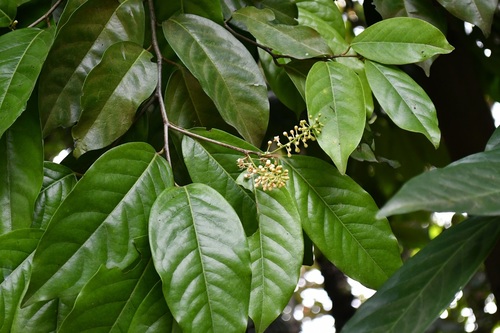
gbif· cc-by-nc
Samantha Heller
gbif· cc-by-nc
Madrone Ruggiero
gbif· cc-by-nc
Archer Lamason
Description
A straggling shrub. The flowers are large. The fruit are oval and 5 cm long. They are red.
This description is brief — help expand it
Edible Uses
The fruit are eaten fresh and used in juice, preserves, and desserts.
Traditional Uses
The fruit are eaten fresh and used in juice and preserves as well as desserts.
This uses section is brief — help expand it
Distribution
A tropical plant. It grows in the tropical highlands. In the Andes it grows between 2,000-3,400 m above sea level.
Where It Grows
Andes*, Asia, Colombia, Ecuador, Peru, South America, Sri Lanka,
Cultivation
Plants are grown by seed or cuttings.
Notes
There are about 250 Rubus species.
Dangerous Lookalikes
This plant can be confused with the following toxic species. Always verify identification carefully before consuming any wild plant.
Red Baneberry
Actaea rubra
Walter Siegmund (talk)
Ceylon Blackberry
Rubus macrocarpus
Samantha Heller
Red Baneberry: Short herbaceous plant (no thorns), berries on thick red stems, each berry has a single seed, compound sharply-toothed leaves.
Ceylon Blackberry: Thorny woody canes (brambles), aggregate berry made of many drupelets, berries pull easily from receptacle.
Also Known As
Mora
References (7)
- Castillo, R. O., 1995, Plant Genetic Resources in the Andes: Impact, Conservation, and Management. Crop Science 35:355-360
- Macmillan, H.F. (Revised Barlow, H.S., et al) 1991, Tropical Planting and Gardening. Sixth edition. Malayan Nature Society. Kuala Lumpur. p 319
- Mansfield's Encyclopedia of Agricultural and Horticultural Crops
- Martin, F. W., et al, 1987, Perennial Edible Fruits of the Tropics. USDA Handbook 642 p 55
- NYBG herbarium "edible"
Show all 7 references Hide references
- Pl. hartw. 129. 1844
- Roa, J. A. G. & Boada, D. S. G., 2018, Fundación para el Fortalecimiento de la Fruticultura y Plantas Alimenticias no Convencionales en Colombia.