Rubus leucodermis
Dougl. ex Torr. & A. Gray
Whitebark raspberry, Western raspberry
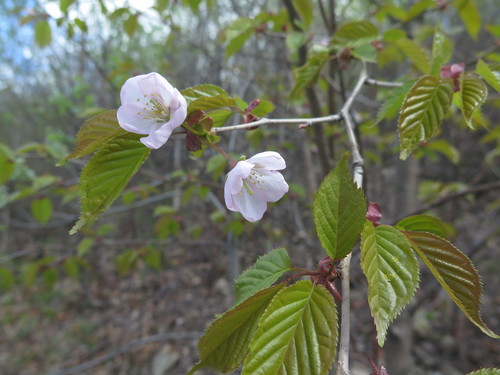
iNaturalist· cc-by-nc
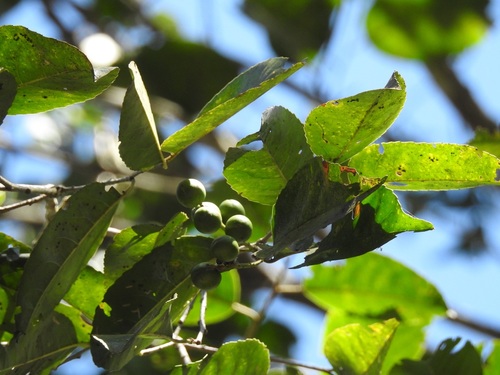
(c) John D Reynolds, some rights reserved (CC BY-NC)
iNaturalist· cc-by-nc
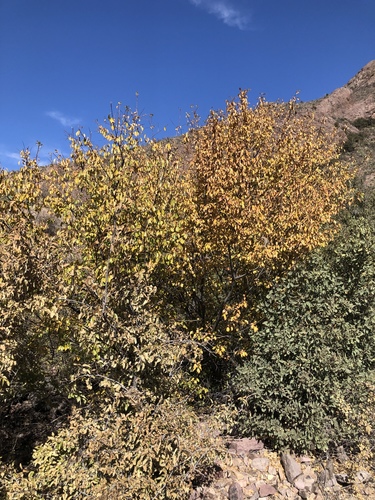
(c) John D Reynolds, some rights reserved (CC BY-NC)
iNaturalist· cc-by
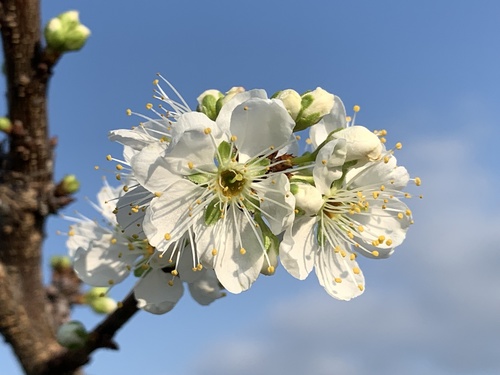
(c) Alex Abair, some rights reserved (CC BY)
Summary
Source: WikipediaRubus leucodermis, also called whitebark raspberry, blackcap raspberry, blue raspberry, or Chkohpeen by the Yurok is a species of Rubus native to western North America. Despite its name, it has no connection to the artificial flavoring known as blue raspberry.
Description
A shrub. It loses its leaves during the year. The canes arch over and have prickles. The bark is smooth and red with a waxy covering. The leaves have prickles on the veins. The leaves are compound and white underneath. There are 2 side leaflets and a larger one at the end. The flowers are white and often in clusters. The fruit is a purple to black berry.
Edible Uses
The black raspberry fruit can be eaten raw or cooked in pies, jams, and similar preparations, and can also be dried for winter use. The fruit is generally considered too soft for commercial growing, but develops excellent flavour in British gardens — particularly on the eastern side of the country — and can yield well there. Fresh leaves make a refreshing tea that is high in vitamin C. Young shoots can be harvested as they emerge in spring, peeled, and eaten raw or cooked like asparagus.
Traditional Uses
The fruit are eaten raw. They are also dried or made into jams and sauces. The leaves are used for tea. The young tender shoots are eaten.
This uses section is brief — help expand it
Medicinal Uses
The whole plant is astringent. An infusion of the root or leaves has been used to treat diarrhoea and upset stomachs, while a mild infusion of the roots has been used in the treatment of influenza. A poultice made from powdered stems has been applied to cuts and wounds.
Distribution
It is a temperate plant. It grows in open clearings in woods.
Where It Grows
Asia, Australia, Canada, Europe, Mexico, North America*, Pakistan, USA,
Cultivation
Easily grown in a good well-drained loamy soil in sun or semi-shade. Plants strongly dislike windy situations. This species is loosely allied to R. occidentalis. Cultivated for its edible fruit in N. America. This species is a raspberry with biennial stems, it produces a number of new stems each year from the perennial rootstock, these stems fruit in their second year and then die. Plants in this genus are notably susceptible to honey fungus.
Propagation
Seed requires stratification and is best sown in early autumn in a cold frame. Stored seed requires one month stratification at about 3°c and should be sown as early in the year as possible. Prick out seedlings when large enough to handle and grow on in a cold frame, then plant out into permanent positions in late spring of the following year. Cuttings of half-ripe wood can be taken in July/August in a frame. Tip layering in July, planting out in autumn. Division can be done in early spring or just before leaf-fall in autumn.
Other Uses
A purple to dull blue dye is obtained from the fruit.
Notes
There are about 250 Rubus species.
Dangerous Lookalikes
This plant can be confused with the following toxic species. Always verify identification carefully before consuming any wild plant.
Red Baneberry
Actaea rubra
Walter Siegmund (talk)
Whitebark raspberry
Rubus leucodermis
(c) John D Reynolds, some rights reserved (CC BY-NC)
Red Baneberry: Short herbaceous plant (no thorns), berries on thick red stems, each berry has a single seed, compound sharply-toothed leaves.
Whitebark raspberry: Thorny woody canes (brambles), aggregate berry made of many drupelets, berries pull easily from receptacle.
Nutrition
| Part | Moisture | kJ | kcal | Protein | Vit A | Vit C | Iron | Zinc |
|---|---|---|---|---|---|---|---|---|
| Fruit | 79 | 364 | 87 | 1.2 | — | 6.5 | 0.7 | 0.6 |
Synonyms
Also Known As
Blackcap raspberry, Frambuesa azul, Thora baganra, Usukw'ltlh
References (18)
- Bocek, B. R., 1984, Ethnobotany of Costanoan Indians, California, Based on Collections by John P. Harrington. Economic Botany 38(2): 240-255
- Facciola, S., 1998, Cornucopia 2: a Source Book of Edible Plants. Kampong Publications, p 209
- Hedrick, U.P., 1919, (Ed.), Sturtevant's edible plants of the world. p 578
- Hibbert, M., 2002, The Aussie Plant Finder 2002, Florilegium. p 282
- Kermath, B. M., et al, 2014, Food Plants in the Americas: A survey of the domesticated, cultivated and wild plants used for Human food in North, Central and South America and the Caribbean. On line draft. p 762
Show all 18 references Hide references
- Khan, M. T., et al, 2016, Ethnobotanical Study of Wild Flora in the Remote Areas of Northern Pakistan. Wulfenia Journal Vol. 23, No 10 p 159
- Kiple, K.F. & Ornelas, K.C., (eds), 2000, The Cambridge World History of Food. CUP p 1843
- Kuhnlein, H. V., et al, 2009, Indigenous Peoples' food systems. FAO Rome p 33
- MacKinnon, A., et al, 2009, Edible & Medicinal Plants of Canada. Lone Pine. p 94
- Mansfield's Encyclopedia of Agricultural and Horticultural Crops p 423
- Medsger, O. P., 1939, Edible Wild Plants. Macmillan Company. p 27
- Moerman, D. F., 2010, Native American Ethnobotany. Timber Press. p 489
- Plants for a Future database, The Field, Penpol, Lostwithiel, Cornwall, PL22 0NG, UK. http://www.scs.leeds.ac.uk/pfaf/
- Ryan, S., 2008, Dicksonia. Rare Plants Manual. Hyland House. p 50
- Segura, S., et al, 2018, The edible fruit species in Mexico. Genet Resour Crop Evol (2018) 65:1767–1793
- Turner, N., 1995, Food Plants of Coastal First Peoples. Royal BC Museum Handbook p 121
- Turner, N., 1997, Food Plants of Interior First Peoples. Royal BC Museum Handbook p 154
- Turner, N., et al, 2011, "Up on the Mountain": Ethnobotanical Important of Montane Sites in Pacific Coastal North America. Journal of Ethnobiology 31(1): 4-43