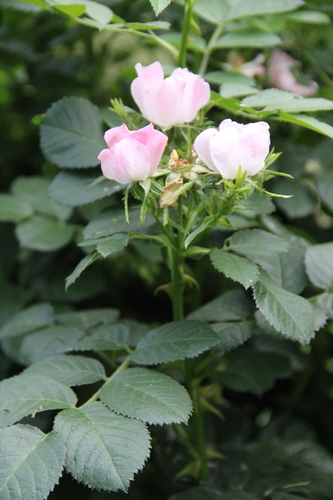
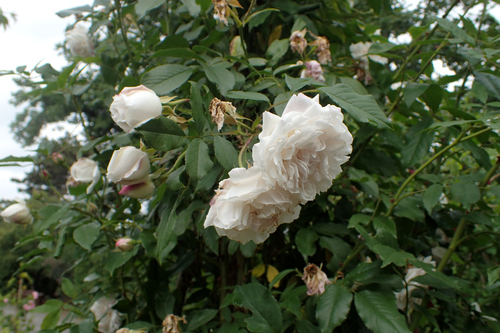
Chaenomeles x superba
(Frahm) Rehder
Dwarf quince
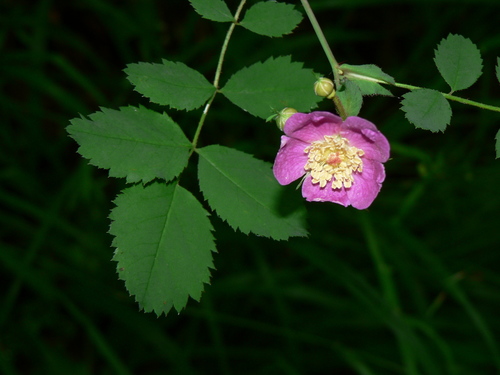
iNaturalist· cc-by-nc
(c) Oliver Stöhr, some rights reserved (CC BY-NC)
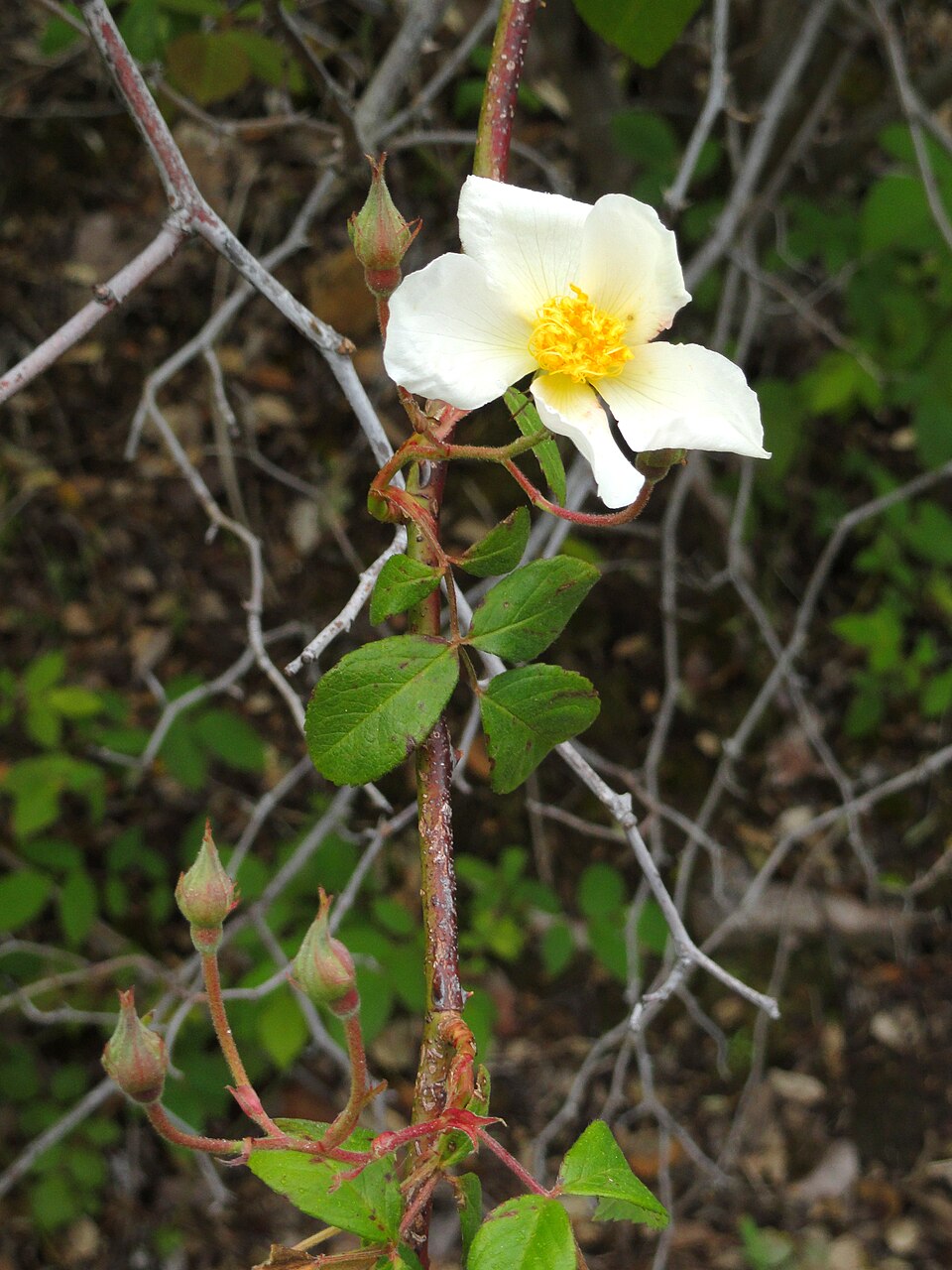
iNaturalist· cc-by-nc
(c) Oliver Stöhr, some rights reserved (CC BY-NC)
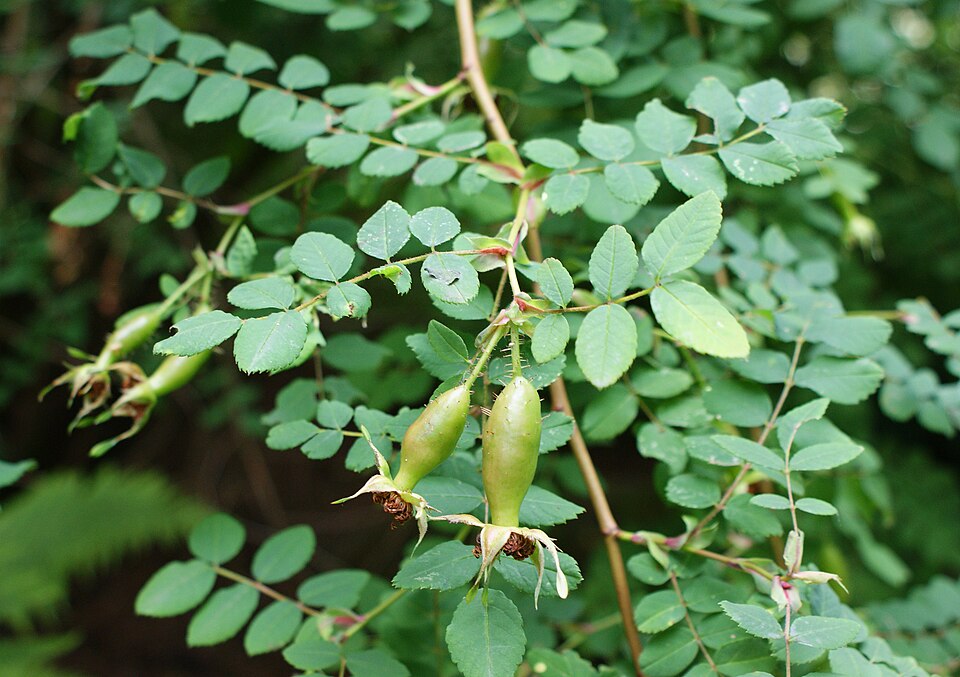
iNaturalist· cc-by-nc
(c) Oliver Stöhr, some rights reserved (CC BY-NC)
Summary
Source: WikipediaA deciduous shrub reaching 1 m tall and 2 m wide, growing at a fast rate. Hardy to UK zone 5. Blooms February to June with seeds ripening in October. Hermaphroditic flowers attract bees and wildlife. Tolerates light sandy, medium loamy, and heavy clay soils, preferring well-drained conditions but capable of growing in heavy clay. Grows in full shade, semi-shade, or full sun, preferring moist soil. Can tolerate atmospheric pollution.
Description
A spiny rounded shrub. It grows 1.5 m high and spreads 1.8 m wide. The leaves are 6 cm long. They are oblong and mid green. The flowers can be pink, orange or scarlet. The fruit can be 8 cm long. It becomes yellow when ripe. It has a scent.
Edible Uses
The fruit is very harsh and sharply acidic when eaten raw, but becomes fragrant and pleasant once cooked. It works well in jams, jellies, and as a flavouring alongside cooked apples. The fruit can be apple- or pear-shaped, reaching up to 6cm long and 6cm wide.
Medicinal Uses
None known.
Distribution
It is a temperate to subtropical plant. It suits hardiness zones 6-10.
Where It Grows
Australia,
Cultivation
Easily cultivated in any reasonably good soil. Prefers a deep moist well-drained loam. Grows well in heavy clay soils. Tolerates full shade but requires a sunny position for best fruit production. Becomes chlorotic on very alkaline soils. Tolerates atmospheric pollution. Plants are hardy to about -25°c. A very ornamental plant, there are many named varieties. A good bee plant, flowering early in the year and providing pollen and nectar. Plants in this genus are notably resistant to honey fungus. In garden design, as well as the above-ground architecture of a plant, root structure considerations help in choosing plants that work together for their optimal soil requirements including nutrients and water.
Propagation
Seed is best sown as soon as it is ripe in a sheltered position outdoors or in a cold frame. Stored seed should be sown in February in a greenhouse; germination typically occurs within 6 weeks. Prick out seedlings into individual pots as soon as they are large enough to handle. Well-grown seedlings may be ready to plant out by summer, but should be given some protection through their first winter; otherwise plant out in late spring the following year. As this plant is a hybrid, it will not come true from seed. Cuttings of half-ripe wood taken in July or August root easily in a frame. Cuttings of mature wood from the current year's growth can be taken in November and placed in a cold frame. Layering in late spring or autumn is a reliable and straightforward method, though it takes 12 months.
Other Uses
Plants can be grown as a medium-sized hedge. Some cultivars, such as 'Crimson and Gold', produce suckers prolifically and are well suited to ground cover use.
Notes
There are about 3 Chaenomeles species.
Synonyms
References (4)
- Cundall, P., (ed.), 2004, Gardening Australia: flora: the gardener's bible. ABC Books. p 363
- Etherington, K., & Imwold, D., (Eds), 2001, Botanica's Trees & Shrubs. The illustrated A-Z of over 8500 trees and shrubs. Random House, Australia. p 202
- J. Arnold Arbor. 2:58. 1920
- Plants for a Future database, The Field, Penpol, Lostwithiel, Cornwall, PL22 0NG, UK. http://www.scs.leeds.ac.uk/pfaf/