Rothmannia octomera
(Hooker) Fagerl.
Uri
iNaturalist· cc-by-nc
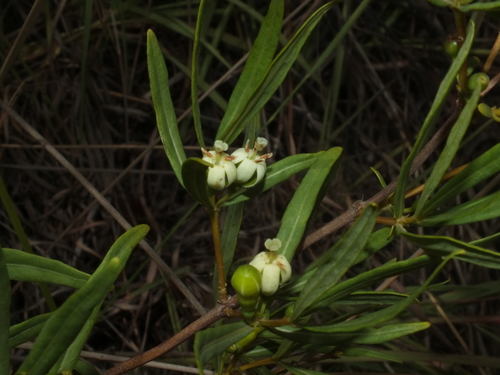
(c) Bart Wursten, some rights reserved (CC BY-NC), uploaded by Bart Wursten
iNaturalist· cc-by-nc
(c) Bart Wursten, some rights reserved (CC BY-NC)
Description
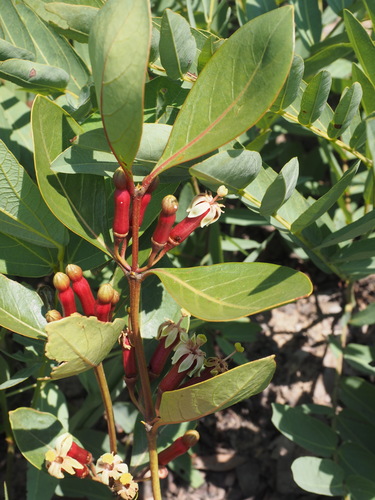
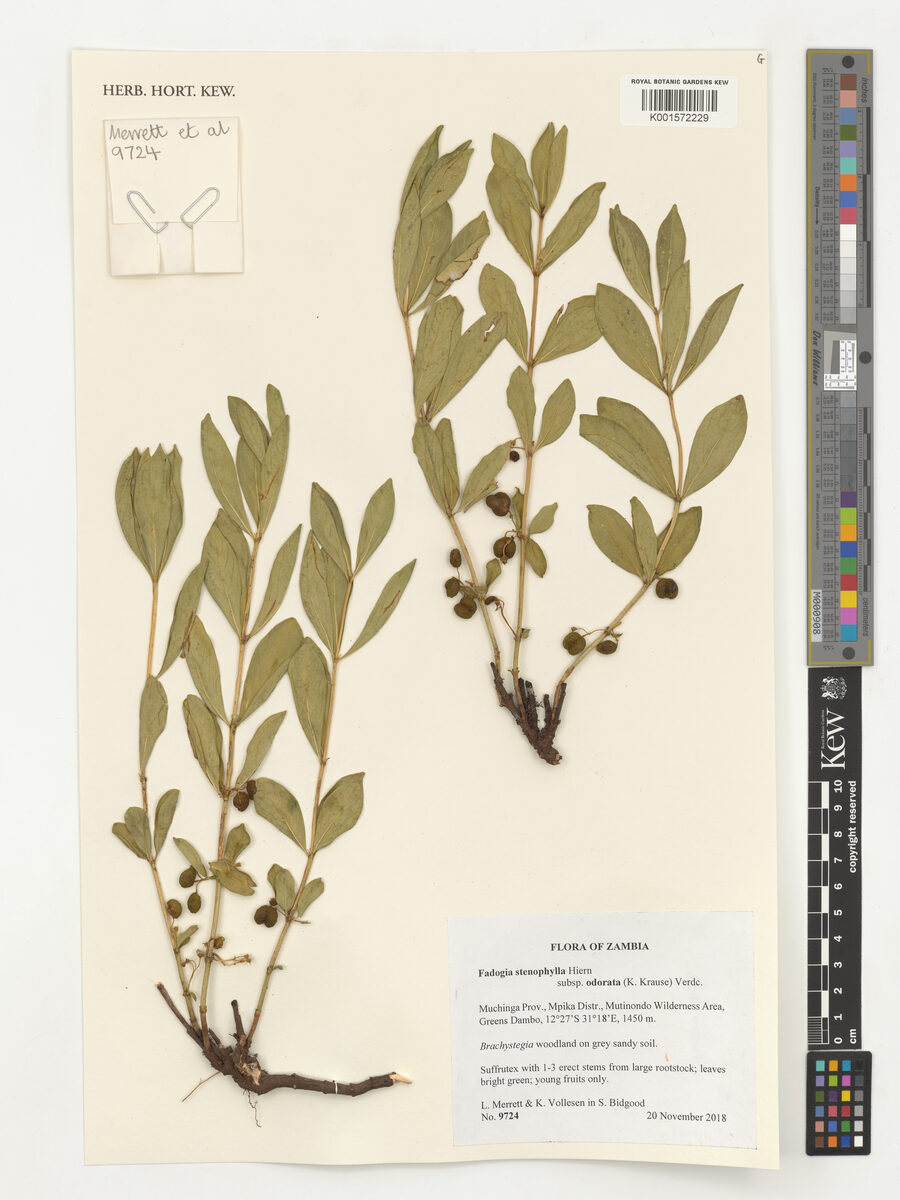
A shrub or small tree. It grows 2-6 m tall. The leaves and stems have soft hairs. The young leaves are thin and papery. The leaves are 9-29 cm long by 5-11 cm wide. The flowers have a tube 20 cm long. The flowers are upright and remain open for more than one night. The fruit are 11 cm long and dark green with white marks.
Edible Uses
The leaves are pulverised and eaten in bananas, and the fruit is used for colouring.
Traditional Uses
The leaves are pulverised and eaten in bananas.
This uses section is brief — help expand it
Distribution
A tropical plant. It grows in the understorey in mixed forests. It can be near seasonally flooded areas.
Where It Grows
Africa, Cameroon, Central Africa, Central African Republic, CAR, Congo DR, Congo R, Gabon, Nigeria, West Africa,
Synonyms
References (3)
- Jardin, C., 1970, List of Foods Used In Africa, FAO Nutrition Information Document Series No 2.p 98
- Latham, P & Mbuta, A., 2017, Useful Plants of Central Province, Democratic Republic of Congo. Volume 2. Salvation Army p 142
- Martin, F.W. & Ruberte, R.M., 1979, Edible Leaves of the Tropics. Antillian College Press, Mayaguez, Puerto Rico. p 217 (Also as Randia octomera)