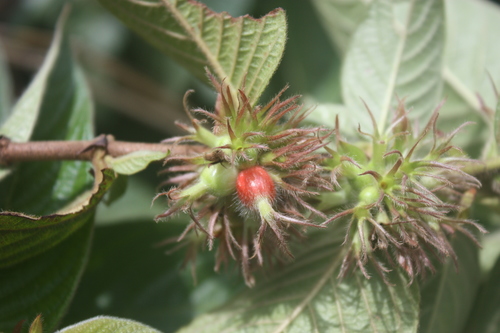
Galium aparine
L.
Cleavers, Goosegrass, Bedstraw
iNaturalist· cc-by-nc
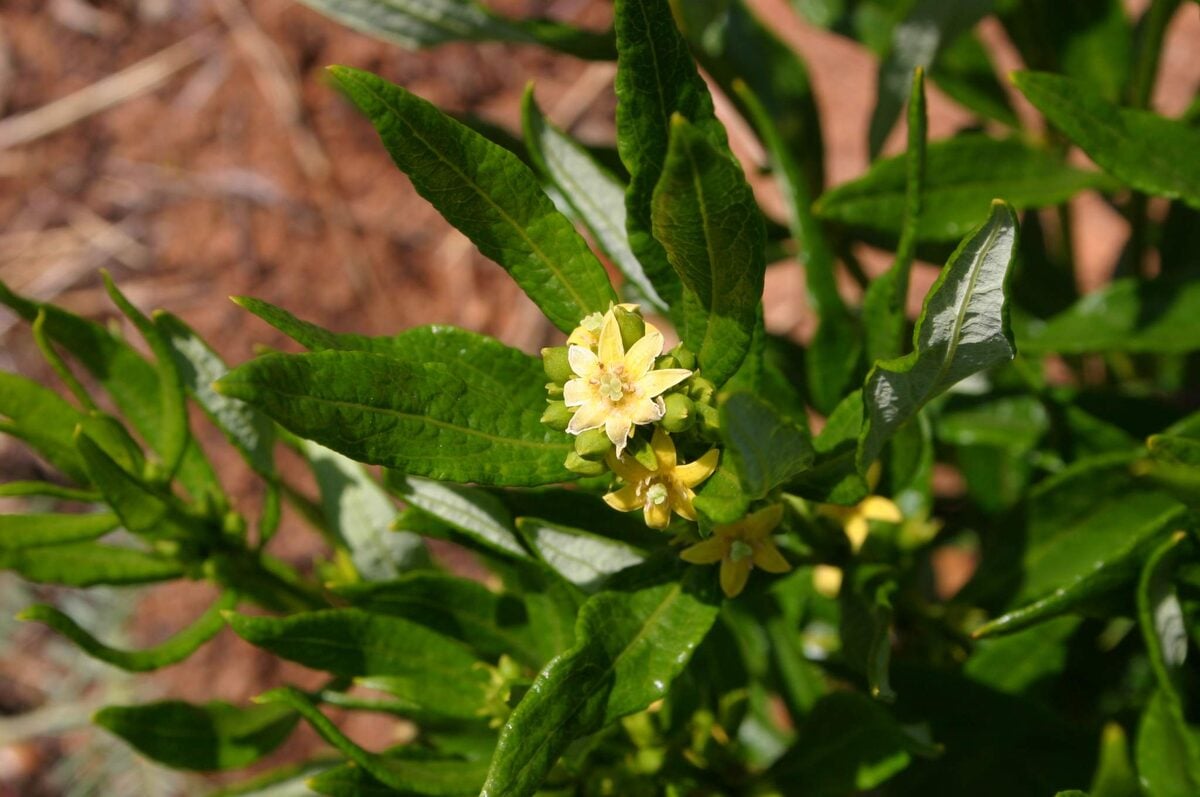
(c) pedrosanz-anapri, some rights reserved (CC BY-NC), uploaded by pedrosanz-anapri
iNaturalist· cc-by-nc
(c) Jane Akerman, some rights reserved (CC BY-NC)
iNaturalist· cc-by-sa
(c) Magnus Hagdorn, some rights reserved (CC BY-SA)
Summary
Source: WikipediaGalium aparine, with common names including cleavers, clivers, catchweed, robin-run-the-hedge, goosegrass, and sticky willy, is an annual, herbaceous plant of the family Rubiaceae.
Description
An annual herb. The stems are bristly and sticky. They are square in cross section. It trails over other plants. It climbs by hooked bristles. The leaves are bristly and sprout from the stems in clusters of 6-8. The leaves do not have stalks. The flowers are small and white. The seed pods are bristly and have 2 round segments about 3 mm wide.
Edible Uses
The tender young shoot tips can be eaten raw or cooked as a pot-herb. They have a rather bitter flavour that some find unpalatable, and are best used in spring, where they make a useful addition to vegetable soups. Using this plant as a vegetable is said to have a slimming effect on the body. The roasted seed makes one of the better coffee substitutes — it simply needs to be dried and lightly roasted and closely resembles coffee in flavour. A decoction of the whole dried plant produces a drink comparable to tea.
Traditional Uses
The young shoots are boiled and eaten. They are added to salads. The ripe fruit (seeds) are roasted and ground and used as a coffee substitute. The dried plant is used as a tea. The stalks and leaves are rubbed between the hands and used as a fermenting agent for yoghurt.
Medicinal Uses
Goosegrass has a long history of domestic medicinal use and is widely used by modern herbalists. It is a valuable diuretic, often taken for skin conditions such as seborrhoea, eczema, and psoriasis, and as a general detoxifying agent in serious illnesses such as cancer. The whole plant, excluding the root, is alterative, antiphlogistic, aperient, astringent, depurative, diaphoretic, diuretic, febrifuge, tonic, and vulnerary. Harvested in May and June as it comes into flower, it can be used fresh or dried. It is applied both internally and externally for a wide range of ailments, including as a poultice for wounds, ulcers, and skin problems, and as a decoction for insomnia and where a strong diuretic is needed. It has shown benefit in treating glandular fever, ME, tonsillitis, hepatitis, and cystitis. The plant is often included in spring tonic drinks with other herbs. A tea made from the plant has traditionally been used internally and externally for cancer — one report suggests the juice may be more effective than a tea, though the treatment has never been proved or disproved. Both Asperuloside (a terpenoid) and Coumarin (a benzopyrone) occur in some species of Galium. Asperuloside can be converted into prostaglandins, which stimulate the uterus and affect blood vessels, making the genus of significant interest to the pharmaceutical industry. A homeopathic remedy has also been made from the plant.
Known Hazards
For some people, contact with the plant can cause skin irritation. Although the plant's hairs are small, they can scratch more sensitive parts of the skin. Numerous such scratches can resemble a rash.
Distribution
It grows in temperate places. It grows in rich, moist soils and in forests. It grows in high rainfall areas. In Argentea it grows from sea level to 3,500 m above sea level. Tasmania Herbarium. In Sichuan.
Where It Grows
Afghanistan, Africa, Argentina, Asia, Australia, Balkans, Belgium, Bolivia, Bosnia, Britain, Canada, Central Asia, Chile, China, Dominican Republic*, Europe*, Falklands, Haiti, Himalayas, India, Iran, Italy, Korea, Libya, Luxembourg, Mediterranean, Mexico, Middle East, Nepal, Netherlands, New Zealand, North Africa, North America, Norway, NW India, Pakistan, Scandinavia, Siberia, Slovenia, South America*, Sweden, Tajikistan, Tasmania, Turkey, Türkiye, Uruguay, USA, West Indies*,
Cultivation
Prefers a loose moist leafy soil in some shade. Plants tolerate dry soils, but they quickly become scorched when growing in full sun. They do not thrive in a hot climate. Another report says that plants succeed in most soils in full sun or heavy shade. A scrambling plant, the stems and leaves are covered with little hooked bristles by which it can adhere to other plants and climb into them. A good species to grow in the wild garden, it provides food for the larvae of many butterfly species.
Propagation
Seed is best sown in situ as soon as it is ripe in late summer. It can also be sown in spring, though germination may be very slow. Once established, the plant reproduces readily without assistance.
Other Uses
A red dye is obtained from the root, which when ingested can dye the bones red. The dried plant can be used as a tinder. Rubbing the plant on the hands removes pitch and tar. Stems layered 8cm or more thick can be used as a sieve for filtering liquids.
Notes
There are about 300-400 Galium species. There are 60 species in tropical America.
Synonyms
Also Known As
Bur-weed, Catchweed, Cobansuzgeci, Cochna, Gaillet gratteron, Ierva catene, Khorti, Kleefkruid, Klengemaure, Lahndra, Lengua de gato, Pega pega, Pegadera, Pegajera, Ranwawa, Sticky willie, Wanwair, Wanwair booti, Yapiskan ot
References (44)
- Ambasta, S.P. (Ed.), 2000, The Useful Plants of India. CSIR India. p 229
- Biscotti, N. et al, 2018, The traditional food use of wild vegetables in Apulia (Italy) in the light of Italian ethnobotanical literature. Italian Botanist 5:1-24
- Bodkin, F., 1991, Encyclopedia Botanica. Cornstalk publishing, p 484
- Boesi, A., 2014, Traditional knowledge of wild food plants in a few Tibetan communities. Journal of Ethnobiology and Ethnomedicine 10:75
- Bremness, L., 1994, Herbs. Collins Eyewitness Handbooks. Harper Collins. p 173
Show all 44 references Hide references
- Brown, D., 2002, The Royal Horticultural Society encyclopedia of Herbs and their uses. DK Books. p 218
- Cerne, M., 1992, Wild Plants from Slovenia used as Vegetables. Acta Horticulturae 318
- Curtis, W.M., 1963, The Students Flora of Tasmania Vol 2 p 273
- Dashorst, G.R.M., and Jessop, J.P., 1998, Plants of the Adelaide Plains & Hills. Botanic Gardens of Adelaide and State Herbarium. p 120
- Duke, J.A., 1992, Handbook of Edible Weeds. CRC Press. p 100
- Elias, T.S. & Dykeman P.A., 1990, Edible Wild Plants. A North American Field guide. Sterling, New York p 86
- Ertug, F, Yenen Bitkiler. Resimli Türkiye Florası -I- Flora of Turkey - Ethnobotany supplement
- Esperanca, M. J., 1988. Surviving in the wild. A glance at the wild plants and their uses. Vol. 1. p 236
- Facciola, S., 1998, Cornucopia 2: a Source Book of Edible Plants. Kampong Publications, p 212
- Flora of Pakistan. www.eFloras.org
- Girard, N. J., 2020, Sustainable Foraging of Wild Edible Plants in Norway. A Biocultural Approach. M. Sc. thesis Norwegian University. p 135
- Hedrick, U.P., 1919, (Ed.), Sturtevant's edible plants of the world. p 322
- Hussey, B.M.J., Keighery, G.J., Cousens, R.D., Dodd, J., Lloyd, S.G., 1997, Western Weeds. A guide to the weeds of Western Australia. Plant Protection Society of Western Australia. p 210
- Hyde-Wyatt, B.H. & Morris D.I., 1975, Tasmanian Weed Handbook. Dept of Ag Tasmania. p 60
- Irving, M., 2009, The Forager Handbook, A Guide to the Edible Plants of Britain. Ebury Press p 51
- Kang, Y., et al, 2012, Wild food plants and wild edible fungi in two valleys on the Qinling Mountains (Shaanxi, central China) Journal of Ethnobiology and Ethnomedicine; 9:26
- Khan, M. & Hussain, S., 2014, Diversity of wild edible plants and flowering phenology of district Poonch (J & K) in the northwest Himalaya. Indian Journal of Sci, Res. 9(1): 032-038
- Kiple, K.F. & Ornelas, K.C., (eds), 2000, The Cambridge World History of Food. CUP p 1780
- Lamp, C & Collet F., 1989, Field Guide to Weeds in Australia. Inkata Press. p 127
- Lazarides, M. & Hince, B., 1993, Handbook of Economic Plants of Australia, CSIRO. p 118
- Low, T., 1991, Wild Herbs of Australia and New Zealand. Angus & Robertson. p 71 (Drawing)
- Mabey, R., 1973, Food for Free. A Guide to the edible wild plants of Britain, Collins. p 106
- MacKinnon, A., et al, 2009, Edible & Medicinal Plants of Canada. Lone Pine. p 269
- Majeed, M., et al, 2021, Gathered Wild Food Plants among Diverse Religious Groups in Jhelum District, Punjab, Pakistan. Foods 2021, 10, 594.
- Mahklouf, M. H., 2019, Ethnobotanical Study of Edible Wild Plants in Libya. European Journal of Ecology. 5(2): 30-40
- Malezas Comestibles del Cono Sur, INTA, 2009, Buernos Aires
- Michael, P., 2007, Edible Wild Plants and Herbs. Grub Street. London. p 61
- Nimis, P. L., et al, 2015, A guide to the vascular plants of the temporary ponds of Sardinia (Italy) p 135
- Paczkowska, G . & Chapman, A.R., 2000, The Western Australian Flora. A Descriptive Calatogue. Western Australian Herbarium. p 513
- Plants for a Future database, The Field, Penpol, Lostwithiel, Cornwall, PL22 0NG, UK. http://www.scs.leeds.ac.uk/pfaf/
- Plants of Haiti Smithsonian Institute http://botany.si.edu/antilles/West Indies
- Redzic, S., 2010, Use of Wild and Semi-Wild Edible Plants in Nutrition and Survival of People in 1430 Days of Siege of Sarajevo during the War in Bosnia and Herzegovina (1992–1995). Coll. Antropol 34 (2010) 2:551-570
- Salvi, J. et al, 2016, A review: Underutilized wild edible plants as a potential source of alternative nutrition. International Journal of Botany Studies. Volume 1; Issue 4; May 2016; Page No. 32-36
- Sp. pl. 1:108. 1753
- Tasmanian Herbarium Vascular Plants list p 51
- Taskin, T. and Bitis, L., 2016, In vitro Antioxidant activity of eight wild edible plants in Bursa Province of Turkey. Farmacia 2016, Vol. 64, 5
- Upson, R., & Lewis R., 2014, Updated Vascular Plant Checklist and Atlas for the Falkland Islands. Falklands Conservation and Kew.
- Vorstenbosch, T., et al, 2017, Famine food of vegetal origin consumed in the Netherlands during World War II. Journal of Ethnobiology and Ethnomedicine (2017) 13:63
- www.ediblewildfood.com