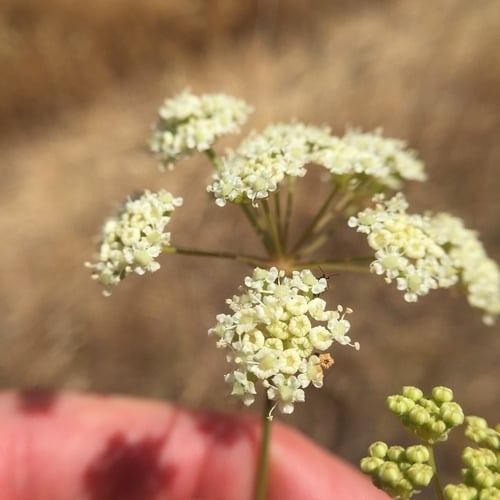
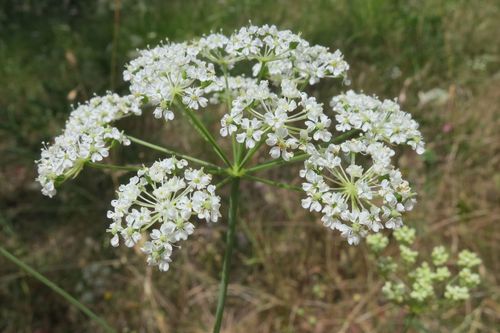
Apium graveolens var. secalinum
(Alef.) Mansf.
Chinese celery, Asian celery, Leaf celery
gbif· cc-by
Meer Planten
Summary
Source: WikipediaApium graveolens, known in English as celery, is an Old World species of flowering plant in the family Apiaceae. It was first described by Carl Linnaeus in 1753. The species is widely naturalised outside of its natural range and is used as a vegetable; modern cultivars have been selected for their leaf stalks (celery), a large bulb-like hypocotyl (celeriac), and their leaves (leaf celery).
Description
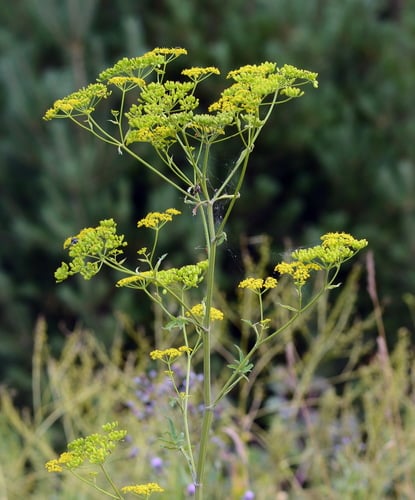
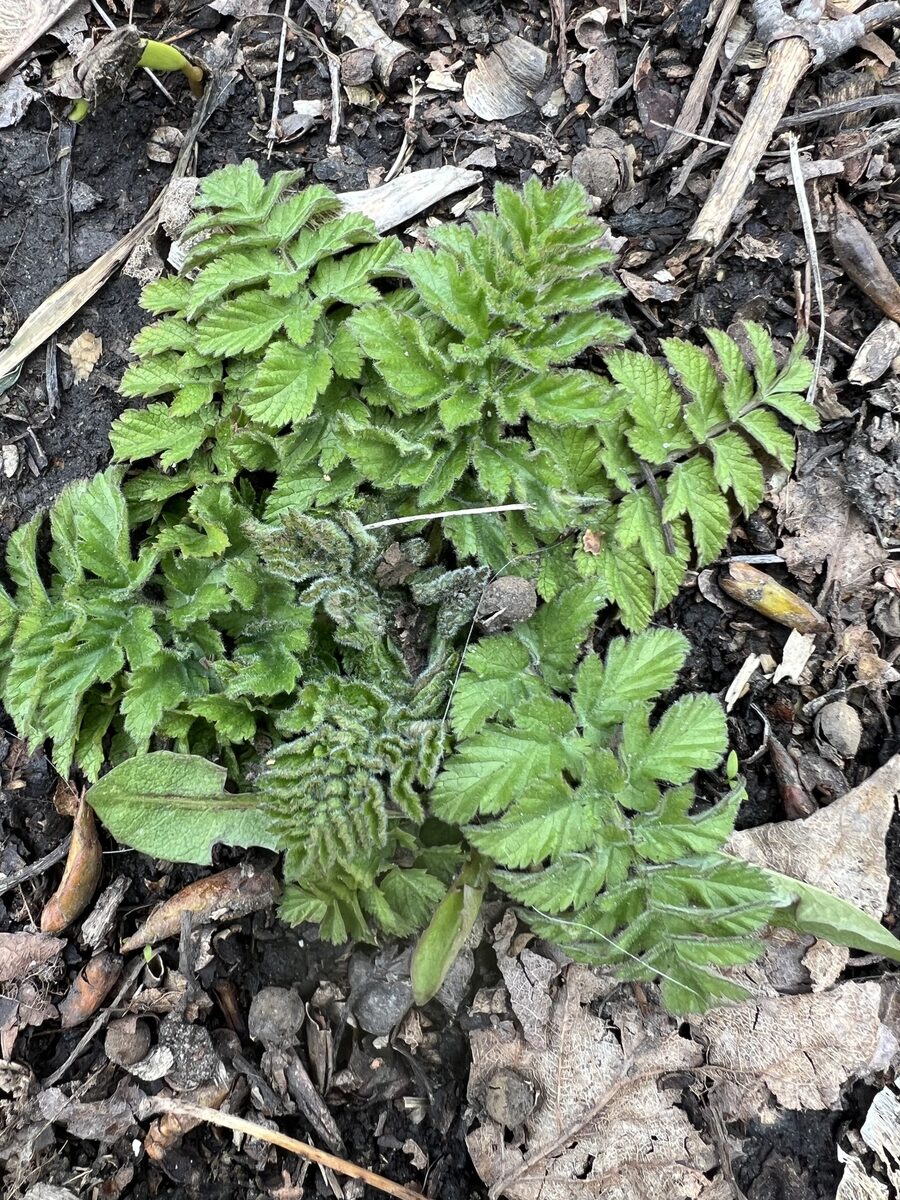
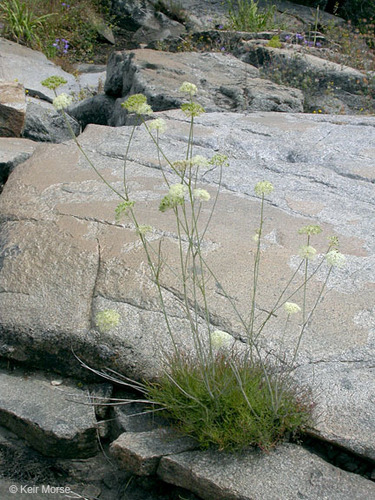
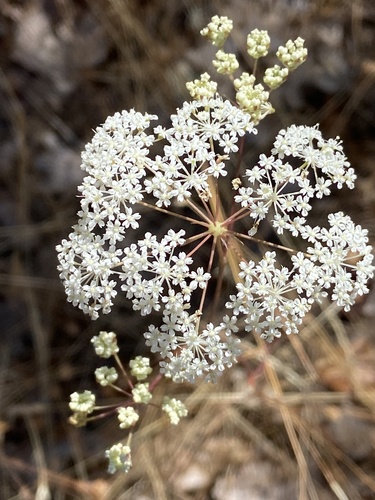
A straggling slender plant. It takes two years to grow then flower and form seeds. It grows to about 40 cm high. It has shorter, lower-growing stems which are less succulent than ordinary celery. The stems are furrowed and hollow. The leaves are bright green and dissected. The flowers are small and white. Leaf and stem colour can vary between varieties.
Edible Uses
Wild celery was used for its medical properties and as a condiment by the Ancient Egyptians, Greeks and Romans, and also in China. The species was later developed as a vegetable, particularly in Italy from the 16th century. Modern cultivars have been selected for different uses, falling into three groups according to the part that is mainly eaten: Celery (Apium graveolens Dulce Group; syn. Apium graveolens var. dulce), is used for its leaf stalks, which may be eaten raw or cooked. Celeriac (Apium graveolens Rapaceum Group; syn. Apium graveolens var. rapaceum), is used for its swollen bulb-like hypocotyl. Leaf celery or smallage (Apium graveolens Secalinum Group; syn. Apium graveolens var. secalinum), has larger leaves; both the leaves and stems are eaten.
Traditional Uses
The leaves are eaten. They are used in soups and salads. The stems can also be eaten. Celery seeds can be used as a spice.
This uses section is brief — help expand it
Distribution
A temperate plant. It needs a rich well-drained soil. It does best in full sunlight. In tropical and subtropical regions it grows best in the shade. It needs regularly watering during dry periods to avoid stems becoming tough. It suits hardiness zones 5-8.
Where It Grows
Africa, Asia, Australia, Balkans, Britain, Cambodia, China, Europe, Guyana, Indochina, Indonesia, Japan, Macedonia, New Zealand, Scandinavia, SE Asia, South America, Sweden, Thailand,
Cultivation
Seed are sown directly. If seed are sown too early in spring in cold places plants will bolt and go straight to seed. Germination takes about 20 days. Plants need to be 15 cm apart.
Production
Leaves and young stems are harvested regularly once the plant is established.
Notes
There are about 20 Apium species.
Nutrition
| Part | Moisture | kJ | kcal | Protein | Vit A | Vit C | Iron | Zinc |
|---|---|---|---|---|---|---|---|---|
| Leaves | 90 | 113 | 28 | 2.2 | 805 | 49 | 15.3 | — |
| Seeds | — | — | — | — | — | — | — | — |
| Stems | — | — | — | — | — | — | — | — |
Synonyms
Also Known As
Ajmod, Ajmud, K'an tsoi, Kin chai, Quing cai, Randhuni, Seri-na, Shalari
References (36)
- Ambasta S.P. (Ed.), 2000, The Useful Plants of India. CSIR India. p 47
- Bodkin, F., 1991, Encyclopedia Botanica. Cornstalk publishing, p 91
- Bremness, L., 1994, Herbs. Collins Eyewitness Handbooks. Harper Collins. p 231
- Ching, L. S. & Mohamed, S., 2001, Alpha-Tocopherol Content in 62 Edible Tropical Plants. J. Agric. Food Chem. 2001, 49, 3101−3105 (As local celery - Apium graveolens)
- Creasy, R., 2000, The Edible Asian Garden. Periplus p 34
Show all 36 references Hide references
- Cundall, P., (ed.), 2004, Gardening Australia: flora: the gardener's bible. ABC Books. p 164
- Die Kulturpflanze 319. 1959 "var. secalinum Alef."
- Facciola, S., 1998, Cornucopia 2: a Source Book of Edible Plants. Kampong Publications, p 16
- Flora of Australia Volume 49, Oceanic Islands 1, Australian Government Publishing Service, Canberra. (1994) p 269
- Hedrick, U.P., 1919, (Ed.), Sturtevant's edible plants of the world. p 60
- Hemphill, I, 2002, Spice Notes. Macmillan. p 109
- Herklots, G. A. C., 1972, Vegetables in South-East Asia. Allen & Unwin. p 127
- Hussey, B.M.J., Keighery, G.J., Cousens, R.D., Dodd, J., Lloyd, S.G., 1997, Western Weeds. A guide to the weeds of Western Australia. Plant Protection Society of Western Australia. p 84
- Hutton, W., 1997, Tropical Herbs and Spices of Indonesia. Periplus. p 19
- Jardin, C., 1970, List of Foods Used In Africa, FAO Nutrition Information Document Series No 2.p 56
- Kiple, K.F. & Ornelas, K.C., (eds), 2000, The Cambridge World History of Food. CUP p 432
- Lazarides, M. & Hince, B., 1993, Handbook of Economic Plants of Australia, CSIRO. p 22
- Low, T., 1991, Wild Herbs of Australia and New Zealand. Angus & Robertson. p 62
- Mabey, R., 1973, Food for Free. A Guide to the edible wild plants of Britain, Collins. p 125
- Martin, F.W. & Ruberte, R.M., 1979, Edible Leaves of the Tropics. Antillian College Press, Mayaguez, Puerto Rico. p 77, 222
- Omawale, 1973, Guyana's edible plants. Guyana University, Georgetown p 63
- Oomen, H.A.P.C., & Grubben, G.J.H., 1978, Tropical Leaf Vegetables in Human Nutrition, Communication 69, Department of Agricultural research, RTI Amsterdam, p 93
- Plants for a Future database, The Field, Penpol, Lostwithiel, Cornwall, PL22 0NG, UK. http://www.scs.leeds.ac.uk/pfaf/
- PROSEA handbook Volume 13 Spices. p 274
- Schneider, E., 2001, Vegetables from Amaranth to Zucchini: The essential reference. HarperCollins. p 201
- Seidemann J., 2005, World Spice Plants. Economic Usage, Botany, Taxonomy. Springer. p 47
- Siemonsma, J. S. and Piluek, K. (Eds), 1994, Plant Resources of South-East Asia No. 8 Vegetables. Prosea Foundation, Bogor, Indonesia, p 86
- Skinner, G. & Brown, 1981, C., Simply Living. A gatherer's guide to New Zealand's fields, forests and shores. Reed. p 26
- Smith, P.M., 1979, Celery, in Simmonds, N.W., (ed), Crop Plant Evolution. Longmans. London. p 322
- Stern, G., 1986, Australian Weeds. A Source of Food and Medicine. Harper & Row. p 222
- Terra, G.J.A., 1973, Tropical Vegetables. Communication 54e Royal Tropical Institute, Amsterdam, p 25
- Tindall, H.D., & Williams, J.T., 1977, Tropical Vegetables and their Genetic Resources, International Board for Plant Genetic Resources, Rome, p 108
- USDA, ARS, National Genetic Resources Program. Germplasm Resources Information Network - (GRIN). [Online Database] National Germplasm Resources Laboratory, Beltsville, Maryland. Available: www.ars-grin.gov/cgi-bin/npgs/html/econ.pl (10 April 2000)
- van Wyk, B., 2005, Food Plants of the World. An illustrated guide. Timber press. p 64
- Wiersema, J. H. & Leon, B., 2013, World Economic Plants. A Standard Reference CRC Press. 2nd Ed. p 60
- Woodward, P., 2000, Asian Herbs and Vegetables. Hyland House. p 23