Rhoicissus revoilii
Planch.
Bushveld grape, Warty grape
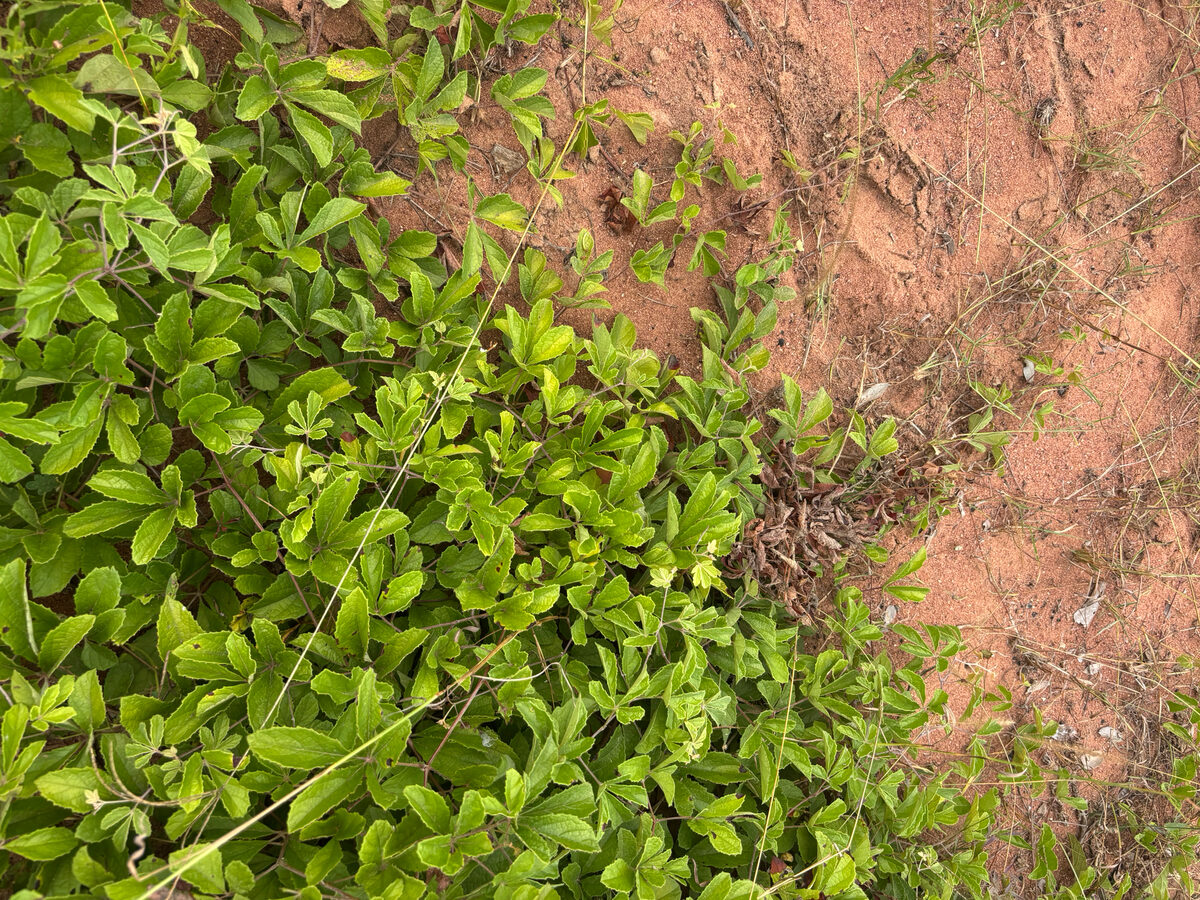
iNaturalist· cc-by
(c) Wynand Uys, some rights reserved (CC BY), uploaded by Wynand Uys
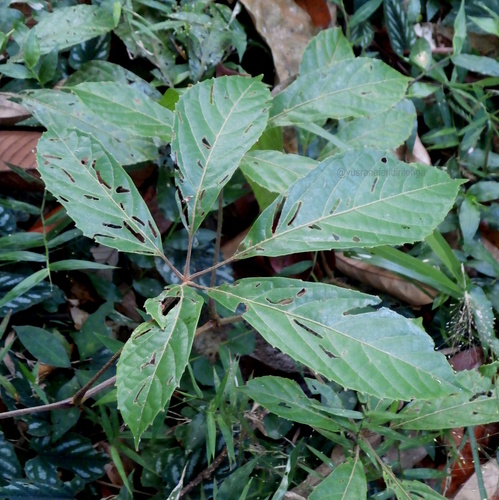
iNaturalist· cc-by
(c) Wynand Uys, some rights reserved (CC BY), uploaded by Wynand Uys
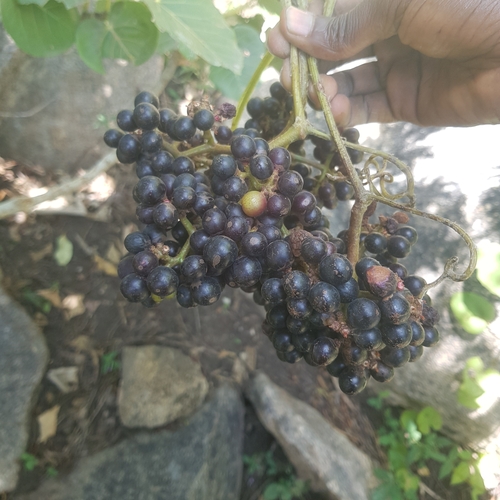
iNaturalist· cc-by-nc
(c) Hubert Szczygieł, some rights reserved (CC BY-NC), uploaded by Hubert Szczygieł
Description
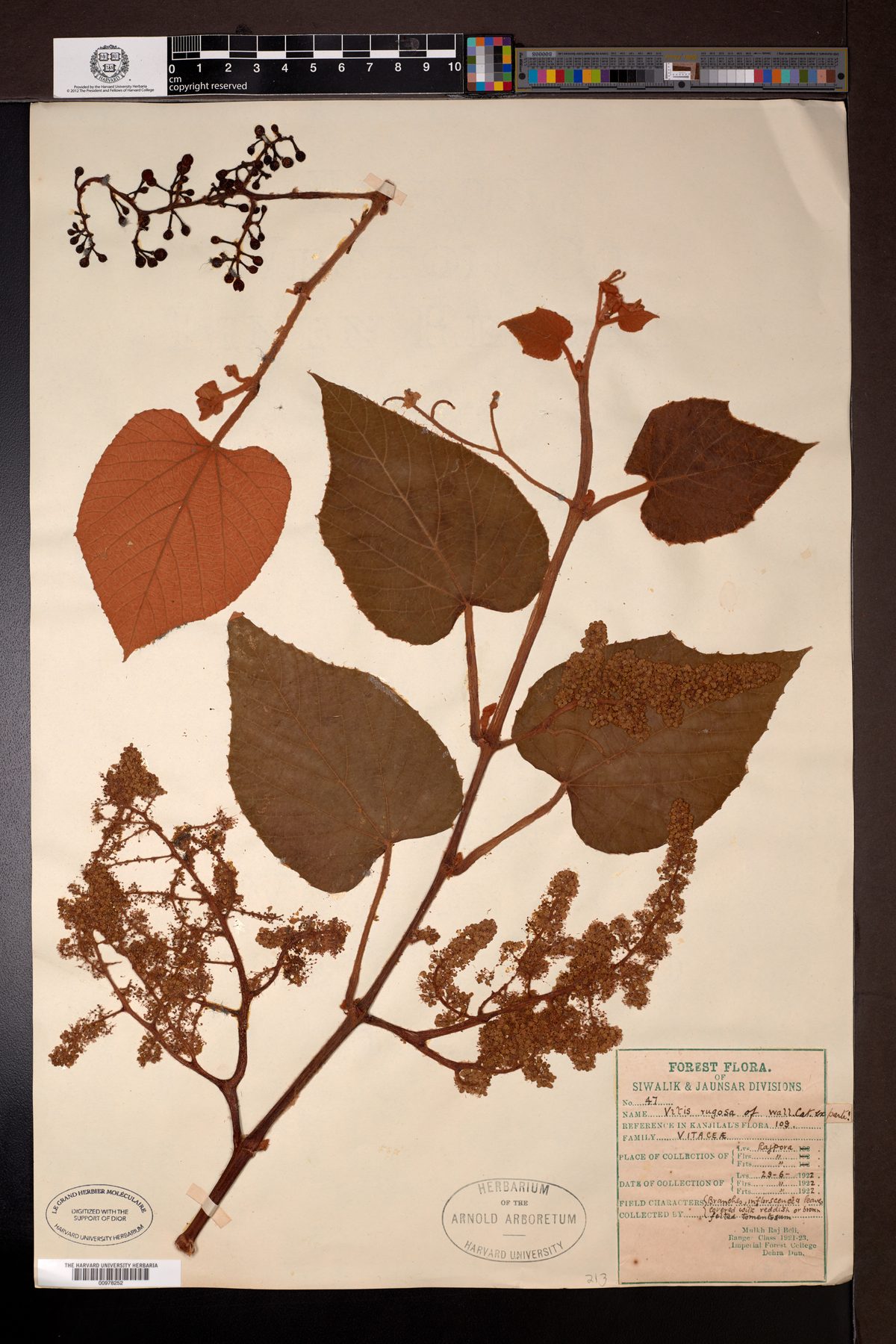
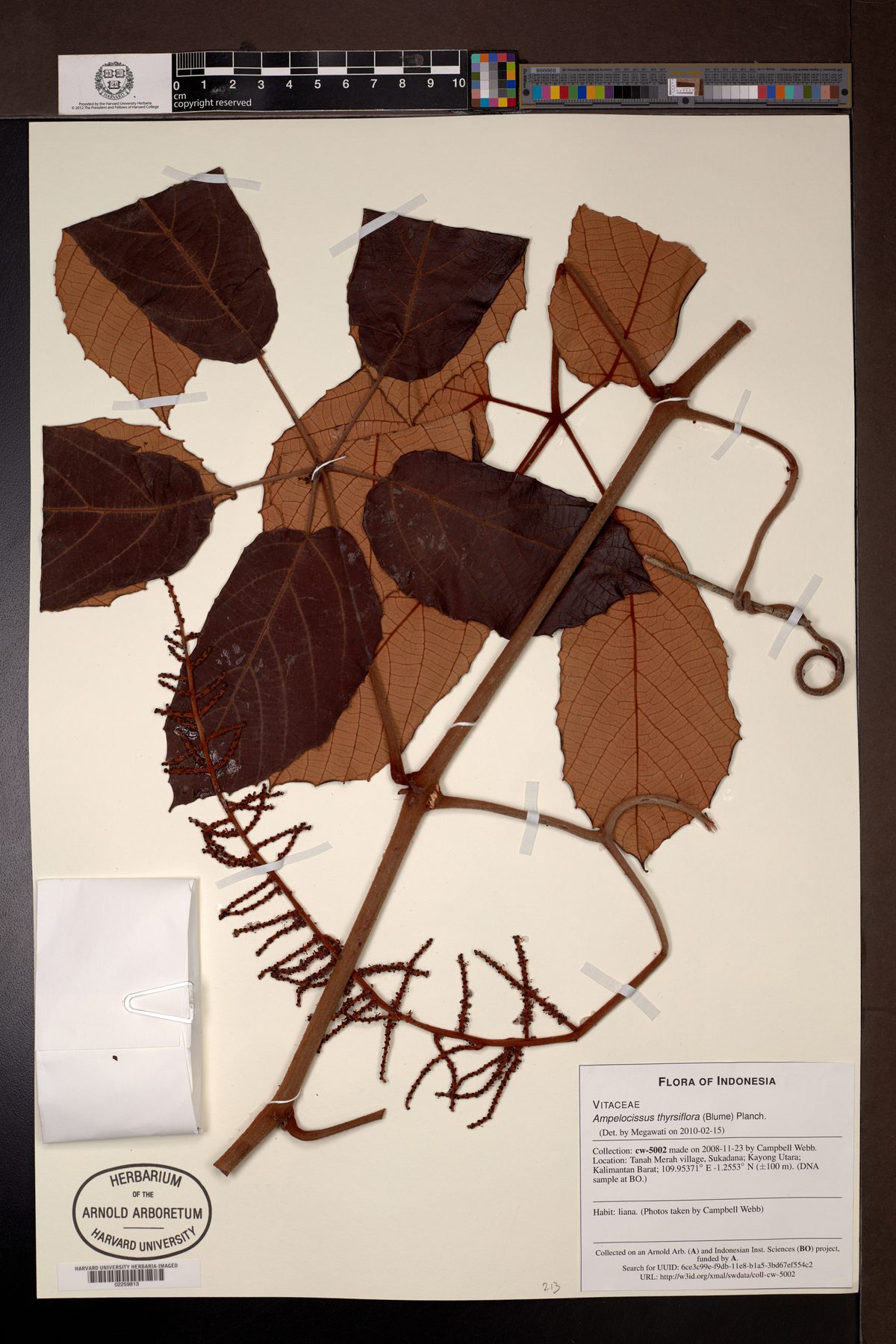
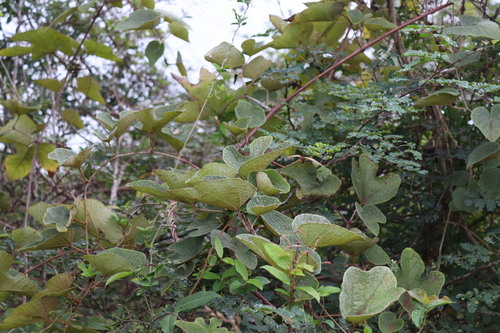
A shrub which often scrambles. It can be a small tree. It can grow up to 7 m tall. The bark is grey and scaly. The young parts have woolly hairs. The leaves have 3 leaflets. The leaflets vary in size and shape. They can be narrow to oval to almost square. The upper surface is glossy dark green. The underneath has rusty hairs. The flowers are yellowish-green. The flower stalks have rusty hairs. The flowers are in small dense heads in the axils of leaves. The fruit have 2 lobes. They are 1-1.5 cm across and fleshy. They are black when mature.
Edible Uses
The fruit is eaten. The stem contains a thin, rather acidic juice that has traditionally been added to drinking water or palm wine during droughts.
Traditional Uses
The stem contains a thin rather acid juice which in times of drought has been added to drinking water or to palm wine. The fruit are edible.
This uses section is brief — help expand it
Distribution
A tropical plant. It grows in mixed woodland and on rocky hills. It can grow from sea level to 2000 m altitude in South Africa. In West Africa it grows in dry forest. It can grow in arid places.
Where It Grows
Africa, Arabia, Botswana, Central Africa, Comoros, Congo, East Africa, Eswatini, Ethiopia, Ghana, Kenya, Malawi, Middle East, Mozambique, Rwanda, Saudi Arabia, Somalia, South Africa, Southern Africa, Sudan, Swaziland, Tanzania, Uganda, West Africa, Yemen, Zambia, Zimbabwe,
Synonyms
Also Known As
Boyiti, Chizimbui, Daga-cebsa, Hida refa, Mudzambiringa, Mufukamhunze, Mufukazviyo, Mugodzonga, Mukwidzi, Munhame, Musikavakadzi, Taru, Uemba, Umbovu
References (20)
- Abbiw, D.K., 1990, Useful Plants of Ghana. West African uses of wild and cultivated plants. Intermediate Technology Publications and the Royal Botanic Gardens, Kew. p 48
- Asfaw, Z. and Tadesse, M., 2001, Prospects for Sustainable Use and Development of Wild Food Plants in Ethiopia. Economic Botany, Vol. 55, No. 1, pp. 47-62
- Bekele-Tesemma A., Birnie, A., & Tengnas, B., 1993, Useful Trees and Shrubs for Ethiopia. Regional Soil Conservation Unit. Technical Handbook No 5. p 384
- Burkill, H. M., 1985, The useful plants of west tropical Africa, Vol. 5. Kew.
- Fowler, D. G., 2007, Zambian Plants: Their Vernacular Names and Uses. Kew. p 63
Show all 20 references Hide references
- Glover, et al, 1966b,
- Grivetti, L. E., 1980, Agricultural development: present and potential role of edible wild plants. Part 2: Sub-Saharan Africa, Report to the Department of State Agency for International Development. p 46
- Jardin, C., 1970, List of Foods Used In Africa, FAO Nutrition Information Document Series No 2. p 158
- Long, C., 2005, Swaziland's Flora - siSwati names and Uses http://www.sntc.org.sz/flora/
- Lulekal, E., et al, 2011, Wild edible plants in Ethiopia: a review on their potential to combat food insecurity. Afrika Focus - Vol. 24, No 2. pp 71-121
- Palgrave, K.C., 1996, Trees of Southern Africa. Struik Publishers. p 561
- Palmer & Pitman, 1972,
- Peters, C. R., O'Brien, E. M., and Drummond, R.B., 1992, Edible Wild plants of Sub-saharan Africa. Kew. p 203
- Royal Botanic Gardens, Kew (1999). Survey of Economic Plants for Arid and Semi-Arid Lands (SEPASAL) database. Published on the Internet; http://www.rbgkew.org.uk/ceb/sepasal/internet [Accessed 13th June 2011]
- Senbeta, F., et al, 2013, Diversity of Useful Plants in the Coffee Forests of Ethiopia. Ethnobotany Research & Applications 11:049-069
- Swaziland's Flora Database http://www.sntc.org.sz/flora
- Tredgold, M.H., 1986, Food Plants of Zimbabwe. Mambo Press. p 13
- Wild, 1975,
- World Checklist of Useful Plant Species 2020. Royal Botanic Gardens, Kew
- www.zimbabweflora.co.zw 2011