Rheum x hybridum
Murray
Rhubarb
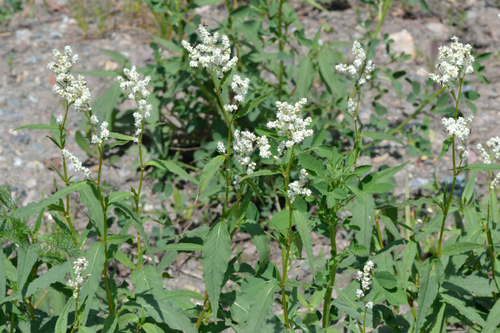
iNaturalist· cc-by-nc
(c) reinderw, some rights reserved (CC BY-NC)
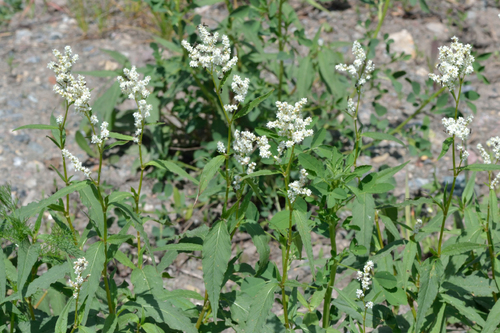
iNaturalist· cc-by-nc
(c) reinderw, some rights reserved (CC BY-NC)
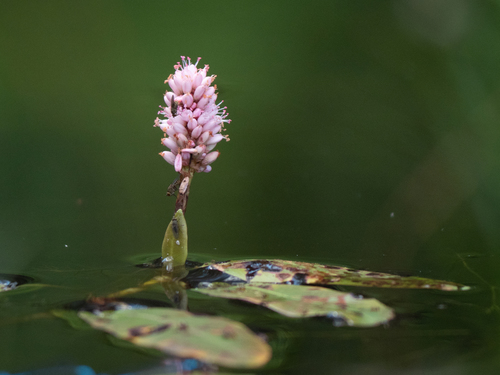
iNaturalist· cc-by-nc
(c) reinderw, some rights reserved (CC BY-NC)
Description
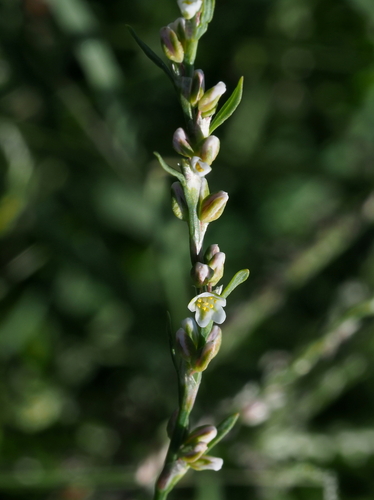
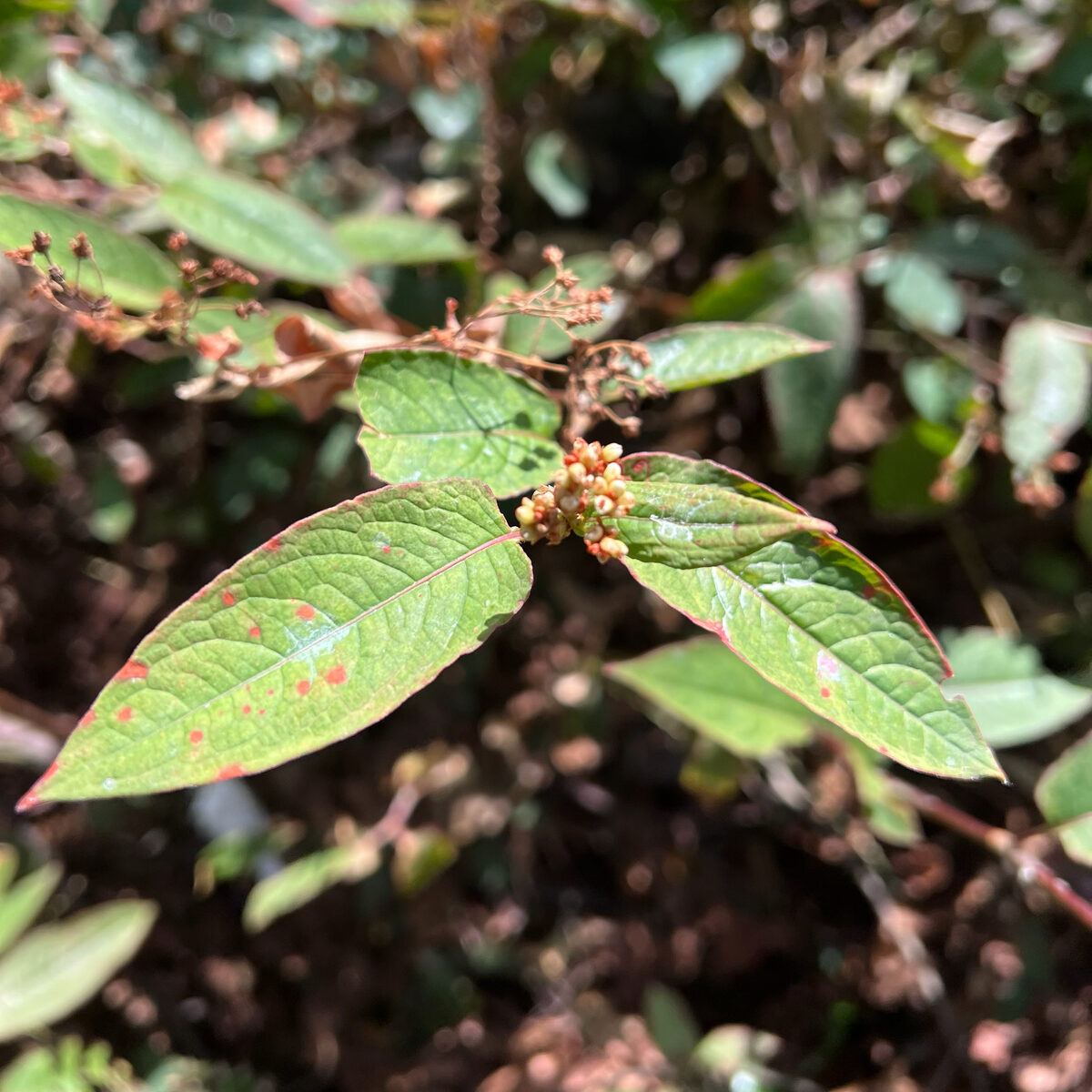
A clumpy plant with broad leaves. They grow to 1.2 m high. It has long leaf stalks which are mostly red in colour. The leaf stalks have a channel on the upper surface. The leaves are large and heart shaped at the base. They have a wavy edge. The roots are thick and clustered. They are woody and underground forming a crown. The stems arise individually from this. The flowers grow in tall dense leafy panicles which branch close to the stem. They can be cream, white or yellow. They can be 3 m high.
Edible Uses
The sour leaf stalks are eaten after cooking with sugar, and are used in sauces and pies.
Traditional Uses
The sour leaf stalks are eaten after cooking with sugar. They are also used in sauces and pies. CAUTION The leaves are poisonous due to oxalates.
This uses section is brief — help expand it
Known Hazards
The leaves are poisonous due to oxalates and must not be eaten.
Distribution
It is a temperate plant. It grows between 750 and 2600 m altitude in the tropics. It needs a fertile soil. It needs a sunny location. It suits hardiness zones 6-10.
Where It Grows
Africa, Asia, Australia, Balkans, Bulgaria, Canada, Europe, Falklands, Himalayas, India, Indochina, Indonesia, Italy, Mediterranean, North America, Pacific, Papua New Guinea, PNG, North America, Philippines, SE Asia, Serbia, Siberia, South Africa, Southern Africa, Tasmania, USA, Vietnam, Zimbabwe,
Cultivation
Plants are grown by division of the rootstock. Plants can be grown from seed. Seedlings are not easy to transplant. So seed should be sown shallowly and plants thinned to 15-100 cm apart. Flowers should be removed to encourage leaf stalk growth. Leaf stalks can be forced by covering the plant with a container and keeping it warm and dark. Stalks grow more rapidly but the plant is weakened quickly.
Production
Once crowns are well established, leaf stalks are produced very regularly. The leaf stalks are removed regularly. They should be pulled off the crown, not broken or cut off.
Other Information
Stalks are sold in a few highland markets in Papua New Guinea.
Notes
There are about 50 Rheum species.
Synonyms
Also Known As
Pie-plant, Rhapontic rhubarb
References (27)
- Ambasta S.P. (Ed.), 2000, The Useful Plants of India. CSIR India. p 520
- Arora, R. K., 2014, Diversity in Underutilized Plant Species - An Asia-Pacific Perspective. Bioversity International. p 108
- Bianchini, F., Corbetta, F., and Pistoia, M., 1975, Fruits of the Earth. Cassell. p 212
- Bourke, R. M., Altitudinal limits of 230 economic crop species in Papua New Guinea. Terra australis 32.
- Bremness, L., 1994, Herbs. Collins Eyewitness Handbooks. Harper Collins. p 210 (As Rheum x cultorum)
Show all 27 references Hide references
- Cheifetz, A., (ed), 1999, 500 popular vegetables, herbs, fruits and nuts for Australian Gardeners. Random House p 95
- Cundall, P., (ed.), 2004, Gardening Australia: flora: the gardener's bible. ABC Books. p 1141 (As Rheum x hybridum)
- Esperanca, M. J., 1988. Surviving in the wild. A glance at the wild plants and their uses. Vol. 1. p 371 (As Rheum rhaponticum)
- Flowerdew, B., 2000, Complete Fruit Book. Kyle Cathie Ltd., London. p 58
- French, B.R., 1986, Food Plants of Papua New Guinea, A Compendium. Asia Pacific Science Foundation p 283
- Grubben, G. J. H. and Denton, O. A. (eds), 2004, Plant Resources of Tropical Africa 2. Vegetables. PROTA, Wageningen, Netherlands. p 446
- Hadfield, J., 2001, The A-Z of Vegetable Gardening in South Africa. Struik p 121
- Hedrick, U.P., 1919, (Ed.), Sturtevant's edible plants of the world. p 556 (As Rheum hybridum)
- Henty, E.E., 1980, Harmful Plants in Papua New Guinea. Botany Bulletin No 12. Division Botany, Lae, Papua New Guinea. p 116,
- Hibbert, M., 2002, The Aussie Plant Finder 2002, Florilegium. p 246
- John, L., & Stevenson, V., 1979, The Complete Book of Fruit. Angus & Robertson p 253
- Macmillan, H.F. (Revised Barlow, H.S., et al), 1991, Tropical Planting and Gardening. Sixth edition. Malayan Nature Society. Kuala Lumpur. p 369
- Marinelli, J. (Ed), 2004, Plant. DK. p 193
- Novi Comment. Soc. Regiae Sci. Gott. 2(5):50, t. 11. 1775
- Ochse, J. J. et al, 1931, Vegetables of the Dutch East Indies. Asher reprint. p 591
- Pham-Hoang Ho, 1999, An Illustrated Flora of Vietnam. Nha Xuat Ban Tre. p 743
- Purseglove, J.W., 1968, Tropical Crops Dicotyledons, Longmans. p 641
- Smith, P.M., 1979, Rhubarb, in Simmonds, N.W., (ed), Crop Plant Evolution. Longmans. London. p 319
- Terra, G.J.A., 1973, Tropical Vegetables. Communication 54e Royal Tropical Institute, Amsterdam, p 70
- Tindall, H.D., 1983, Vegetables in the Tropics, Macmillan p 338
- Upson, R., & Lewis R., 2014, Updated Vascular Plant Checklist and Atlas for the Falkland Islands. Falklands Conservation and Kew.
- USDA, ARS, National Genetic Resources Program. Germplasm Resources Information Network - (GRIN). [Online Database] National Germplasm Resources Laboratory, Beltsville, Maryland. Available: www.ars-grin.gov/cgi-bin/npgs/html/econ.pl (10 April 2000) (As Rheum x hybridum)