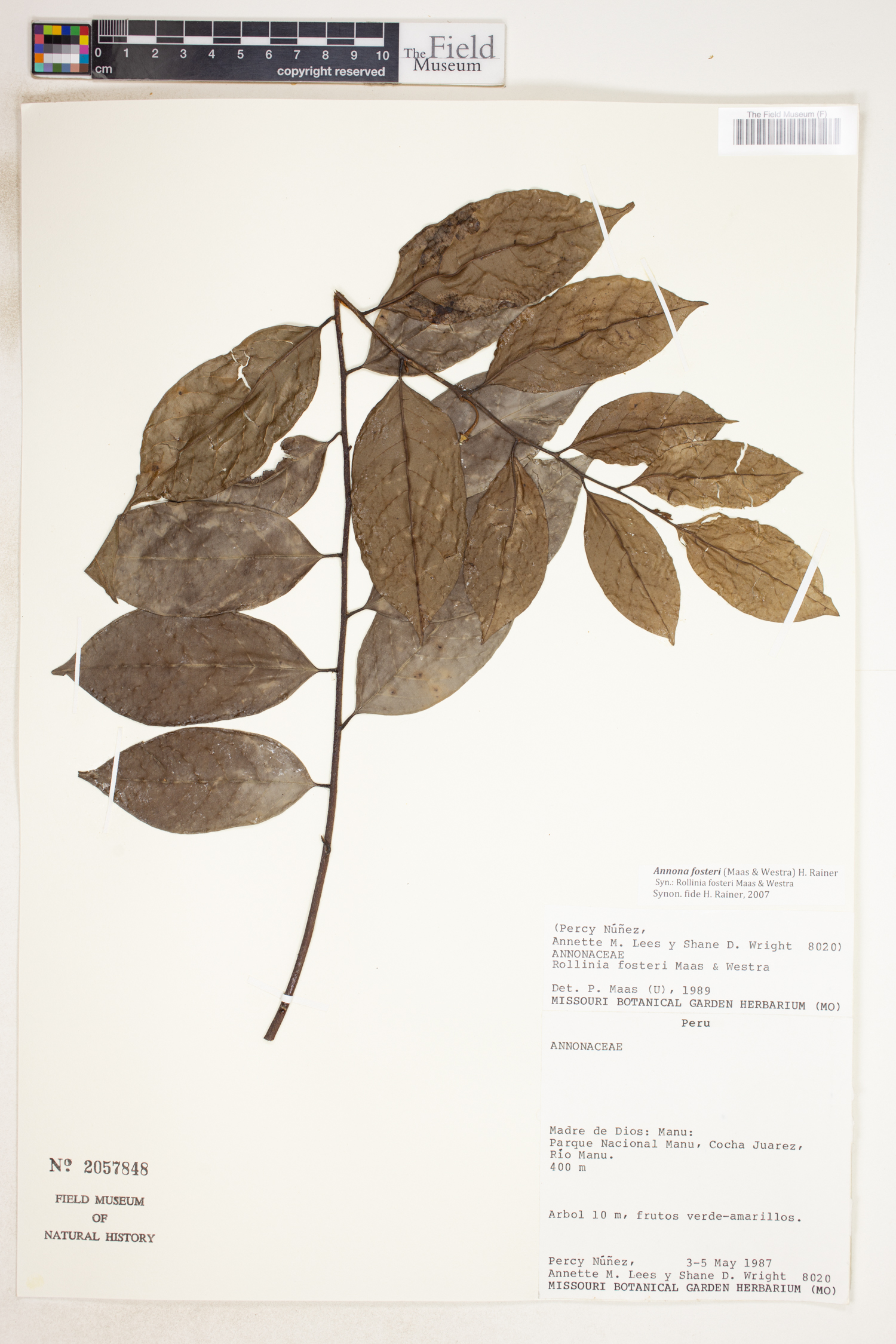
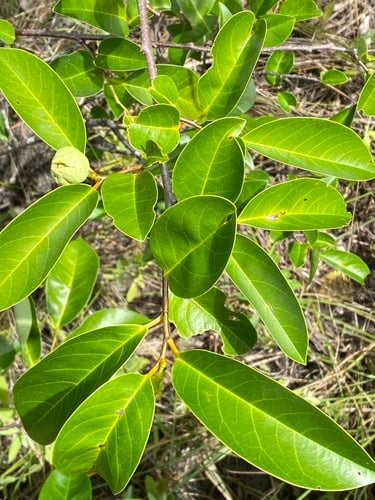
Hexalobus monopetalus
(A. Rich.) Engl. et Diels
Shakama plum
iNaturalist· cc-by-nc
(c) Nick Helme, some rights reserved (CC BY-NC), uploaded by Nick Helme
iNaturalist· cc-by-nc
(c) frasergear, some rights reserved (CC BY-NC), uploaded by frasergear
iNaturalist· cc-by-nc-sa
(c) Marco Schmidt, some rights reserved (CC BY-NC-SA)
Summary
Source: WikipediaHexalobus monopetalus is a species of plant in the family Annonaceae with the common name baboon's breakfast. It is native to Angola, Benin, Botswana, Burkina Faso, Cameroon, Central African Republic, Chad, Gambia, Ghana, Guinea, Guinea-Bissau, Ivory Coast, Liberia, Malawi, Mali, Mozambique, Namibia, Niger, Nigeria, Senegal, South Africa, Sudan, Tanzania, Togo, Uganda, Zambia, Zaire and Zimbabwe. Achille Richard, the French botanist who first formally described the species, using the basionym Uvaria monopetala, named it after its petals which are fused at their base.
Description
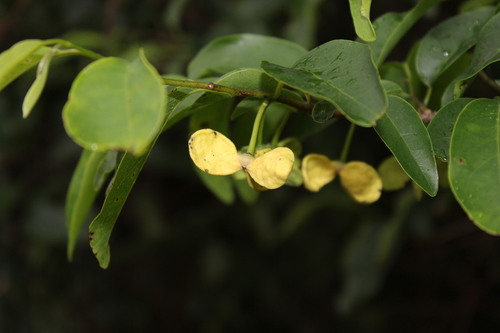
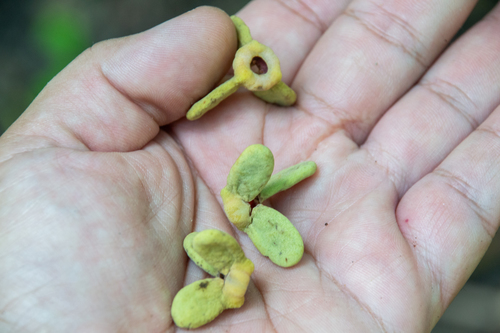
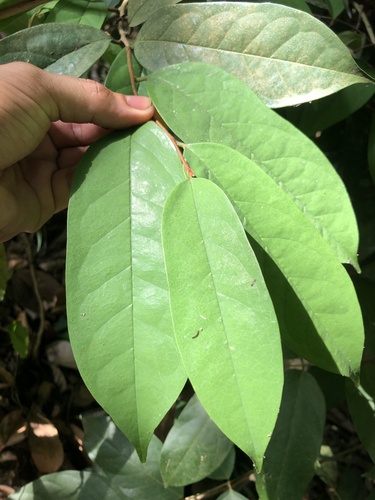
A shrub or tree which loses its leaves during the year. In tropical regions it grows 12 m tall. It is shorter in cooler regions. The young branches are covered with brown hairs. The leaves are oval and 4-10 cm long. They are carried one after the other on opposite sides of the stalk and have short stalks. The flower buds grow in the axils of leaves. These buds are fat, golden brown and velvety and remain after the leaves fall. These develop into pale yellow almost stalkless flowers. The flower petals are narrow and very crinkled. The fruit are 5 cm long and 2.5 cm wide. They are oblong with irregular bulges. They are scarlet with a netted appearance and have green veins. The flesh is dark red when ripe. They are juicy and edible.
Edible Uses
The juicy, pleasant-tasting fruits are eaten raw, dried, or made into jam. The edible portions include the fruit, nuts, seeds, and leaves, with fruits particularly available during drier seasons.
Traditional Uses
The fruit are eaten raw. The have a pleasant flavour. They can be dried. They are also used for jam.
This uses section is brief — help expand it
Medicinal Uses
Bioactive molecules extracted from its fruit have been reported to have antifungal activity in test with Candida albicans.
Distribution
It grows in tropical and warm places. It grows in the lowlands. It grows in low altitude bush and scrub. It is often on rocky hillsides. It grows in savannah places. It can grow in arid places. In Zimbabwe it grows between 870-1,360 m above sea level. In Tanzania it grows between 900-1,500 m above sea level and in areas with a rainfall between 750-1,300 mm. It can grow in a range of soils.
Where It Grows
Africa, Angola, Benin, Botswana, Burkina Faso, Cameroon, Central Africa, Congo, Côte d'Ivoire, East Africa, Gambia, Ghana, Guinea, Guinée, Guinea-Bissau, Ivory Coast, Mali, Mozambique, Namibia, Nigeria, Senegal, South Africa, Southern Africa, South Sudan, Sudan, Tanzania, Togo, Uganda, West Africa, Zambia, Zimbabwe,
Cultivation
It can be grown from fresh seed.
Other Uses
The bark yields a fibre which is commonly used for cordage. The reddish wood is strong, tough and very durable332]. It is valued in many areas for poles in hut-building, and the wood for chair-legs, tool-handles, bows, spoons, gunstocks and carvings. The wood is used for fuel.
Production
In Tanzania fruit are collected between January and April.
Other Information
Fruit are eaten especially by children. It is fairly commonly used in West Africa. Fruit tend to be available in the drier more hungry season.
Synonyms
Also Known As
Baboon’s breakfast, Bacure, Bohili, Boile, Boili, Canje, Kikundukundu, Kungumali, Mambumba, Mfiwi, Mfyuwi, Mkungu mwali, Mkungumwale, Mkuwa, Moheteka, Mosedika, Mowedika, Muhodzongwa, Mukorongwa, Mukundukundu, Mukwingiziri, Munyani, Mupodzongo, Muhuhuma, Musakama, Mushakame, Mwezi, Nshakama, Nxakama, Shakamapruim Tapirco, Tubulubum, Vougagne, Winsouin
References (43)
- Abbiw, D.K., 1990, Useful Plants of Ghana. West African uses of wild and cultivated plants. Intermediate Technology Publications and the Royal Botanic Gardens, Kew. p 47
- Achigan-Dako, E, et al (Eds), 2009, Catalogue of Traditional Vegetables in Benin. International Foundation for Science.
- Ambe, G., 2001, Les fruits sauvages comestibles des savanes guinéennes de Côte-d’Ivoire : état de la connaissance par une population locale, les Malinké. Biotechnol. Agron. Soc. Environ. 5(1), 43-48
- Atato, A., et al, 2010, Diversity of Edible Wild Fruit Tree Species of Togo. Global Science Books.
- Atato, A.,et al, 2011, Edible Wild Fruit Highly Consumed during Food Shortage Period in Togo: State of Knowledge and Conservation Status. Journal of Life Sciences 5 (2011) 1046-1057
Show all 43 references Hide references
- Bojang, L., 1999, Non-wood Forest Products in The Gambia. EC-FAO Partnership Programme.
- Bonou, A., et al, 2013, Valeur economique des Produits Forestiers Non Ligneux (PFNL) au Benin. Editions Universitaires Europeennes p 96
- Boutique, R., 1951, Flore du Congo Belge et du Ruanda-Urundi: Annonaceae. vol. 2, p. 370
- Burkill, H. M., 1985, The useful plants of west tropical Africa, Vol. 4. Kew.
- Campbell, B. M., 1987, The Use of Wild Fruits in Zimbabwe. Economic Botany 41(3): 375-385
- Codjia, J. T. C., et al, 2003, Diversity and local valorisation of vegetal edible products in Benin. Cahiers Agricultures 12:1-12
- Dalziel, J. M., 1937, The Useful plants of west tropical Africa. Crown Agents for the Colonies London.
- Dansi, A., et al, 2008, Traditional leafy vegetables and their use in the Benin Republic. Genet Resour Crop Evol (2008) 55:1239–1256
- Diarra, N. et al, 2016, Etude ethnobotanique des plantes alimentaires utilisées en période de soudure dans les régions Sud du Mali. Int. J. Biol. Chem. Sci. 10(1): 184-197
- Drummond, R. B., 1981, Common Trees of the Central Watershed Woodlands of Zimbabwe, National Herbarium Salisbury. p 32
- FAO. 1983, Food and fruit-bearing forest species 1: Examples from Eastern Africa. FAO Food and Forestry Paper 44/1 p 55
- Fowler, D. G., 2007, Zambian Plants: Their Vernacular Names and Uses. Kew. p 8
- Fox, F. W. & Young, M. E. N., 1982, Food from the Veld. Delta Books. p 82
- Gallagher, D. E., 2010, Farming beyond the escarpment: Society, Environment, and Mobility in Precolonial Southeastern Burkina Faso. PhD University of Michigan.
- Gilbert, T., et al, 2017, Diversity and local transformation of indigenous edible fruits in sahelian domain of Cameroon. Journal of Animal & Plant Sciences Vol. 26 (2): 5289-5300
- Gueye, M., et al, 2014, Wild Fruits Traditionally Gathered by the Malinke Ethnic Group in the Edge of Niokolo Koba Park (Senegal). American Journal of Plant Sciences 5, 1306-1317
- Jardin, C., 1970, List of Foods Used In Africa, FAO Nutrition Information Document Series No 2. p 34, 142
- Keay, R.W.J., 1989, Trees of Nigeria. Clarendon Press, Oxford. p 26
- Magwede, K., van Wyk, B.-E., & van Wyk, A. E., 2019, An inventory of Vhavenḓa useful plants. South African Journal of Botany 122 (2019) 57–89
- Malaisse, F., 1997, Se nourrir en floret claire africaine. Approche ecologique et nutritionnelle. CTA., p 63
- Mannheimer, C. A. & Curtis. B.A. (eds), 2009, Le Roux and Muller's Field Guide to the Trees and Shrubs of Namibia. Windhoek: Macmillan Education Namibia. p 50
- Moksia, F., et al, 2019, Diversity and Socio-Economic Value of Wild Edible Plants in the Mounts Mandara Region, Cameroon. International Journal of Sciences. Vol. 8:10
- Palgrave, K.C., 1996, Trees of Southern Africa. Struik Publishers. p 168
- Palmer, E and Pitman, N., 1972, Trees of Southern Africa. Vol. 1. A.A. Balkema, Cape Town p 579
- Peters, C. R., O'Brien, E. M., and Drummond, R.B., 1992, Edible Wild plants of Sub-saharan Africa. Kew. p 55
- Ruiters-Welcome, A. K., 2019, Food plants of southern Africa. Ph.D. thesis. Univ. of Johannesburg p 18
- Tredgold, M.H., 1986, Food Plants of Zimbabwe. Mambo Press. p 106
- Van Wyck, B., & Van Wyck, P, 1997, Field Guide to Trees of Southern Africa. Struik. p 158
- van Wyk, Be., & Gericke, N., 2007, People's plants. A Guide to Useful Plants of Southern Africa. Briza. p 44
- Vivien, J., & Faure, J.J., 1996, Fruitiers Sauvages d'Afrique. Especes du Cameroun. CTA p 43
- Royal Botanic Gardens, Kew (1999). Survey of Economic Plants for Arid and Semi-Arid Lands (SEPASAL) database. Published on the Internet; http://www.rbgkew.org.uk/ceb/sepasal/internet [Accessed 28th March 2011]
- Ruffo, C. K., Birnie, A. & Tengnas, B., 2002, Edible Wild Plants of Tanzania. RELMA p 370
- Schmidt, E., Lotter, M., & McCleland, W., 2007, Trees and shrubs of Mpumalanga and Kruger National Park. Jacana Media p 108
- The Digital Flora of Central Africa, 2013, (Democratic Republic of Congo, Rwanda & Burundi) Botanical Garden Meise
- van Wyk, B-E., 2011, The potential of South African plants in the development of new food and beverage products. South African Journal of Botany 77 (2011) 857–868
- Welcome, A. K. & Van Wyk, B.-E., 2019, An inventory and analysis of the food plants of southern Africa. South African Journal of Botany 122 (2019) 136–179
- World Checklist of Useful Plant Species 2020. Royal Botanic Gardens, Kew
- www.zimbabweflora.co.zw 2011