Ranunculus aquatilis
L.
Water crowsfoot, Water buttercup, White water buttercup
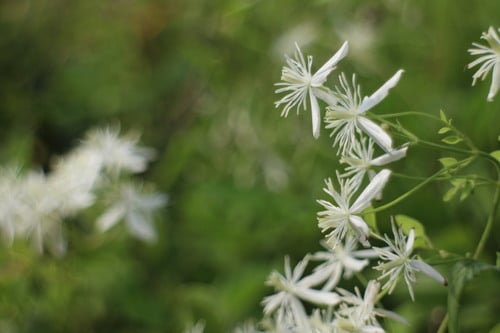
iNaturalist· cc-by-nc
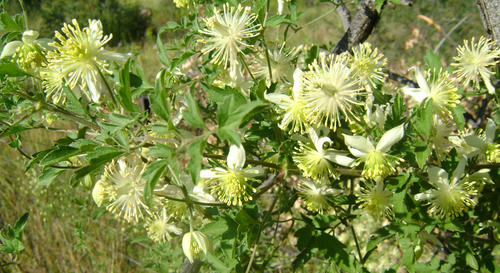
(c) Radd Icenoggle, some rights reserved (CC BY-NC), uploaded by Radd Icenoggle
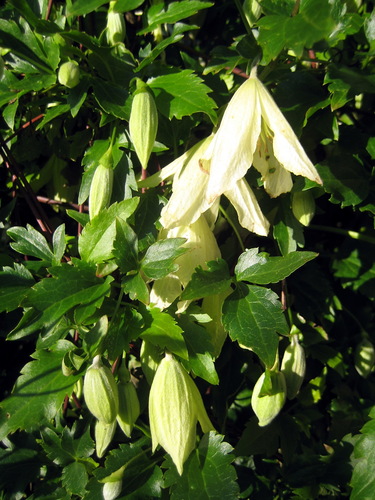
iNaturalist· cc-by-nc-sa
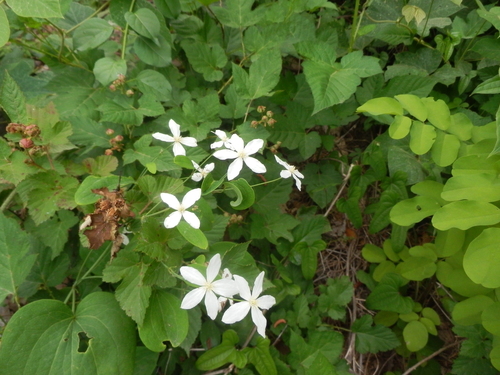
(c) Bogdan V. Kryzhatyuk, some rights reserved (CC BY-NC-SA)
Summary
Source: WikipediaRanunculus aquatilis, the common water-crowfoot or white water-crowfoot, is a plant species of the genus Ranunculus, native throughout most of Europe and western North America, and also northwest Africa. This is an aquatic plant, growing in mats on the surface of water. It has branching thread-like underwater leaves and toothed floater leaves. In fast flowing water the floaters may not be grown. The flowers are white petaled with yellow centres and are held a centimetre or two above the water. The floater leaves are used as props for the flowers and are grown at the same time.
Description
A herb plant which forms dense clumps. These can be 1 m across. It can be 60 cm high. The lower leaves can be under water and divided into fine segments. The high leaves have 3 lobes and are almost kidney shaped and float. The flowers are white with yellow throats.
Edible Uses
The entire plant has been boiled and eaten. Some caution is advised regarding toxicity.
Traditional Uses
The plant is boiled and eaten.
This uses section is brief — help expand it
Medicinal Uses
The subspecies R. aquatilis capillaceus is used in India to treat intermittent fevers, rheumatism, and asthma.
Known Hazards
All parts of the plant are poisonous when fresh, the toxins are destroyed by heat or by drying. The plant also has a strongly acrid juice that can cause blistering to the skin.
Distribution
It is a temperate plant. It grows under water. It can grow in still freshwater lakes and in streams. It can grow in water 60 cm deep. It can grow to 900 m altitude. It suits hardiness zones 5-9.
Where It Grows
Asia, Australia, Britain, Europe, Greece, Luxembourg, Mediterranean, Mongolia, North America, Slovenia, Turkey, Türkiye, USA,
Cultivation
A plant of boggy soils and shallow water, it prefers a loamy soil and a sunny position. A greedy plant, inhibiting the growth of nearby plants, especially legumes.
Propagation
Sow seed in spring in a tray of water in a cold frame. Prick seedlings into individual pots when large enough to handle and plant out in summer. Division in spring is very easy; larger divisions can be planted directly into their permanent positions. Smaller divisions are better potted up and grown on in light shade in a cold frame until well established before planting out in late spring or early summer.
Other Uses
None known
Notes
There are about 400 Ranunculus species.
Synonyms
Also Known As
Cilo duguncicegi, Vodna zlatica
References (8)
- Cundall, P., (ed.), 2004, Gardening Australia: flora: the gardener's bible. ABC Books. p 1130
- Ertug, F, Yenen Bitkiler. Resimli Türkiye Florası -I- Flora of Turkey - Ethnobotany supplement (As Ranunculus diversifolius)
- http://www.botanic-gardens-ljubljana.com/en/plants
- Moerman, D. F., 2010, Native American Ethnobotany. Timber Press. p 468
- Plants for a Future database, The Field, Penpol, Lostwithiel, Cornwall, PL22 0NG, UK. http://www.scs.leeds.ac.uk/pfaf/
Show all 8 references Hide references
- Slocum, P.D. & Robinson, P., 1999, Water Gardening. Water Lilies and Lotuses. Timber Press. p 86
- Sp. pl. 1:556. 1753
- Urgamal, M., Oyuntsetseg, B., Nyambayar, D. & Dulamsuren, Ch. 2014. Conspectus of the vascular plants of Mongolia. (Editors: Sanchir, Ch. & Jamsran, Ts.). Ulaanbaatar, Mongolia. “Admon“ Press. 334pp. (p. 79-90).