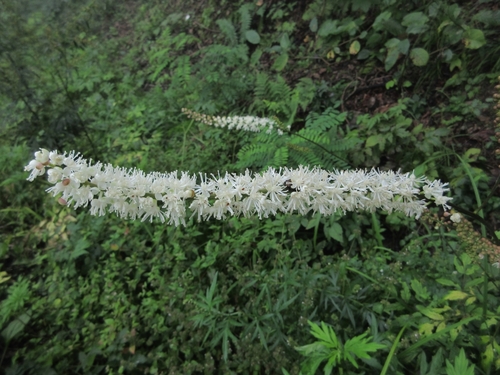
Ranunculus acris
L.
Meadow buttercup, Tall buttercup
iNaturalist· cc-by-nc
(c) rasanaturalist, some rights reserved (CC BY-NC), uploaded by rasanaturalist
iNaturalist· cc-by-nc-sa
(c) Ramunė Vakarė, some rights reserved (CC BY-NC-SA)
Summary
Source: WikipediaRanunculus acris is a species of flowering plant in the family Ranunculaceae, and is one of the more common buttercups across Europe and temperate Eurasia. Common names include meadow buttercup, tall buttercup, common buttercup and giant buttercup.
Description
A plant which keeps growing from year to year. It grows 60-100 cm high and spreads 60-120 cm wide. The leaves have teeth and 3-7 lobes. The flowers are yellow and in small clusters. They are 25 mm wide.
Edible Uses
Leaves can be eaten cooked as greens. Some caution is advised regarding toxicity.
Traditional Uses
The leaves are cooked and eaten as greens.
This uses section is brief — help expand it
Medicinal Uses
The whole plant is acrid, anodyne, antispasmodic, diaphoretic, and rubefacient. It has been crushed and applied as a poultice to the chest to relieve colds and chest pains. The fresh leaves have been used as a rubefacient in treating rheumatism. The flowers and leaves have been crushed and sniffed to treat headaches. An infusion of the roots has been used for diarrhoea, and the poulticed root, also rubefacient, has been applied to boils and abscesses. The plant sap has been used to remove warts and also as a sedative. In Tibetan medicine, the flowers are considered to have an acrid taste and a heating potency; they are said to promote heat, dissolve tumours, and draw out serous fluids, and are used to treat disorders arising from rotting sores or wounds. The whole plant is extremely acrid and can cause intense pain and burning of the mouth and mucous membranes, so should be used with caution.
Known Hazards
Oils in the plant, probably present in the leaves and stems, contain the glycoside ranunculin, which when ingested can cause abdominal pains and intestinal disorders. When eaten by animals, the buttercups have caused blistering of the tongue and lips, diarrhea and blindness. Other symptoms of poisoning include ventricular fibrillation and respiratory failure.
Distribution
It is a temperate plant. It suits hardiness zones 5-10. Tasmania Herbarium.
Where It Grows
Asia, Australia, Britain, Canada, China, Europe, France, Luxembourg, North America, Norway, Scandinavia, Slovenia, Switzerland, Tasmania, Turkey, Türkiye, USA,
Cultivation
Prefers a moist loamy soil. Grows well in marshy soils. Plants are hardy to at least -20°c. A good plant for the summer meadow. It spreads rapidly by means of runners and is often a weed in lawns or gardens. A polymorphic species, there is at least one named variety. 'Flore Pleno' is a double-flowered form that does not spread by runners and so is unlikely to become a nuisance in the garden. A greedy plant, inhibiting the growth of nearby plants, especially legumes.
Propagation
Sow seed in spring in situ. Division in spring is very easy, though likely unnecessary; larger divisions can be planted directly into their permanent positions.
Other Uses
None known
Notes
There are about 600 Ranunculus species.
Synonyms
Also Known As
Engsoleie, Ripeča zlatica
References (9)
- Cormack, R. G. H., 1967, Wild Flowers of Alberta. Commercial Printers Edmonton, Canada. p 110
- Cundall, P., (ed.), 2004, Gardening Australia: flora: the gardener's bible. ABC Books. p 1130
- Girard, N. J., 2020, Sustainable Foraging of Wild Edible Plants in Norway. A Biocultural Approach. M. Sc. thesis Norwegian University. p 134
- Hibbert, M., 2002, The Aussie Plant Finder 2002, Florilegium. p 245
- http://www.botanic-gardens-ljubljana.com/en/plants
Show all 9 references Hide references
- Moerman, D. F., 2010, Native American Ethnobotany. Timber Press. p 467
- Plants for a Future database, The Field, Penpol, Lostwithiel, Cornwall, PL22 0NG, UK. http://www.scs.leeds.ac.uk/pfaf/
- Sp. pl. 1:554. 1753
- Tasmanian Herbarium Vascular Plants list p 46