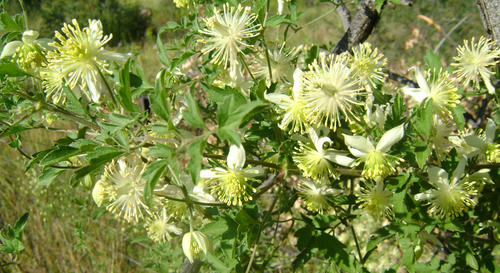
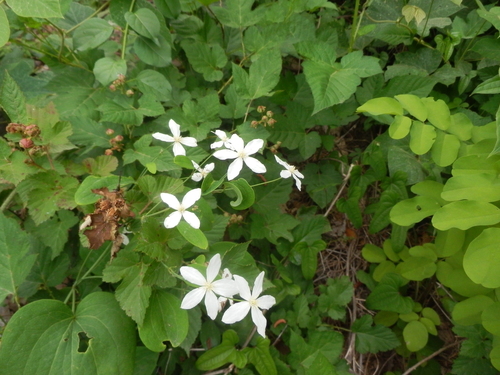
Ranunculus ficaria
L.
Lesser celadine
iNaturalist· cc-by-nc
(c) gg_copen, some rights reserved (CC BY-NC)
iNaturalist· cc-by-nc
(c) gg_copen, some rights reserved (CC BY-NC)
iNaturalist· cc-by-nc
(c) bloomers765, some rights reserved (CC BY-NC)
Summary
Source: WikipediaA perennial buttercup reaching 20cm tall and wide, growing at a fast rate and hardy to frost. Foliage emerges in January and persists until June, with flowers blooming March through May. The plant is hermaphroditic and attracts bees, flies, and beetles for pollination. It tolerates light sandy, medium loamy, and heavy clay soils across mildly acidic to basic pH ranges, thriving in semi-shaded woodland conditions or full sun. It prefers consistently moist soil.
Description
A perennial buttercup reaching 20cm tall and wide, growing at a fast rate and hardy to frost. Foliage emerges in January and persists until June, with flowers blooming March through May. The plant is hermaphroditic and attracts bees, flies, and beetles for pollination. It tolerates light sandy, medium loamy, and heavy clay soils across mildly acidic to basic pH ranges, thriving in semi-shaded woodland conditions or full sun. It prefers consistently moist soil.
Edible Uses
The first young leaves of spring make an excellent raw salad, and the leaves, stalks, and buds can all be used like spinach. Blanched stems are also eaten. The leaves turn poisonous as the fruit matures, so caution is advised regarding timing and the plant's general toxicity. Bulbils — formed at the leaf axils and at the roots — can be cooked and used as a vegetable, again with caution. The flower buds make a good substitute for capers.
Traditional Uses
The young leaves are eaten raw and also used as a potherb.
This uses section is brief — help expand it
Medicinal Uses
Lesser celandine has a long history of use treating haemorrhoids and ulcers, though it is not recommended for internal use due to several toxic components. The whole plant including the roots is astringent. It is harvested when flowering in March and April and dried for later use. It is widely regarded as a remedy for piles, and an infusion can be taken internally or made into an ointment for external use. It is also applied externally to perineal damage after childbirth. It can cause irritation to sensitive skins, so some caution is advised.
Known Hazards
All plants of the buttercup family (Ranunculaceae) contain a compound known as protoanemonin. When the plant is wounded, the unstable glucoside ranunculin turns into the toxin protoanemonin. Contact with damaged or crushed Ficaria leaves can cause itching, rashes or blistering on the skin or mucosa. Ingesting the toxin can cause nausea, vomiting, dizziness, spasms, or paralysis. In one case, a patient experienced acute hepatitis and jaundice when taking untreated lesser celandine extracts internally as an herbal remedy for hemorrhoids.
Distribution
It is a temperate plant.
Where It Grows
Africa, Crete, Europe, Greece, Libya, Luxembourg, Mediterranean, North Africa, Romania, Slovakia, Turkey, Türkiye, Ukraine,
Cultivation
Prefers a moist loamy neutral to alkaline soil in full sun or shade. A very common and invasive weed, especially when growing in the shade because this encourages formation of bulbils at the leaf bases. You would regret introducing it into your garden, though it might have a place in the wild garden. This is, however, a polymorphic species and there are a number of named forms selected for their ornamental value. These are normally less invasive than the type species. The plant flowers early in the year when there are few pollinating insects and so seed is not freely produced. The plant, however, produced tubercles (small tubers) along the stems and each of these can grow into a new plant. Grows well along woodland edges, and in the deeper shade of the woodland where it often forms dense carpets. The flowers do not open in dull weather and even on sunny days do not open before about 9 o'clock in the morning and are closed by 5 o'clock in the evening. A greedy plant, inhibiting the growth of nearby plants, especially legumes.
Propagation
Sow seed in spring in a cold frame. This species establishes readily without much encouragement. Division in spring is also suitable.
Other Uses
The flower petals are effective as a tooth cleaner. The plant often forms dense carpets in shade and can be used as ground cover, though it dies down in early summer. This should be done with caution as it can easily become an unwanted and aggressive weed in the garden.
Synonyms
Also Known As
Arpaciksalebi, Fasoulida, Untisor
References (5)
- Ertug, F, Yenen Bitkiler. Resimli Türkiye Florası -I- Flora of Turkey - Ethnobotany supplement
- Mahklouf, M. H., 2019, Ethnobotanical Study of Edible Wild Plants in Libya. European Journal of Ecology. 5(2): 30-40
- Stavridakis K., 2006, Wild edible plants of Crete, Rethymno.
- Turner, N. J. et al, 2011, Edible and Tended Wild Plants, Traditional Ecological Knowledge and Agroecology. Critical Reviews in Plant Sciences, 30:198-225
- Vari, A., et al, 2020, Berries, greens, and medicinal herbs—mapping and assessing wild plants as an ecosystem service in Transylvania (Romania). Journal of Ethnobiology and Ethnomedicine (2020) 16:13