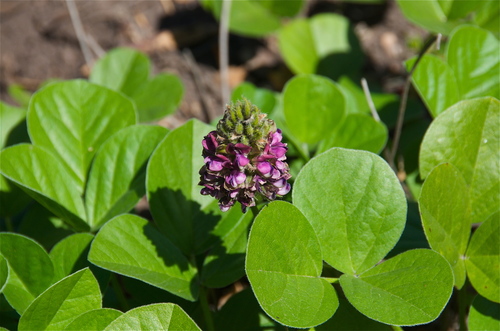
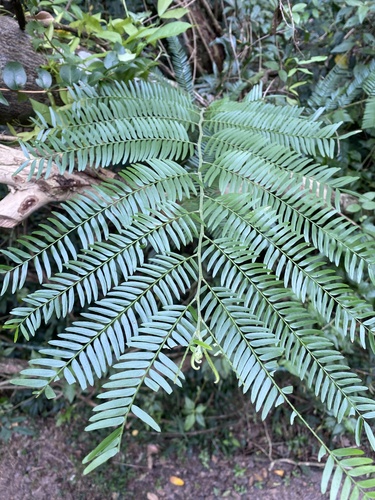
Acacia leptocarpa
A. Cunn. ex Benth.
North Coast Wattle
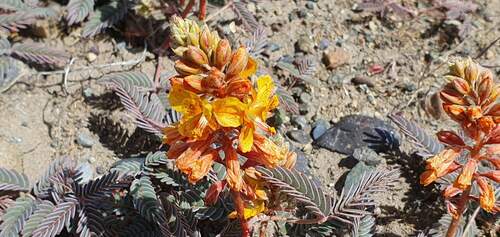
iNaturalist· cc-by-nc
(c) Russell Cumming, some rights reserved (CC BY-NC), uploaded by Russell Cumming
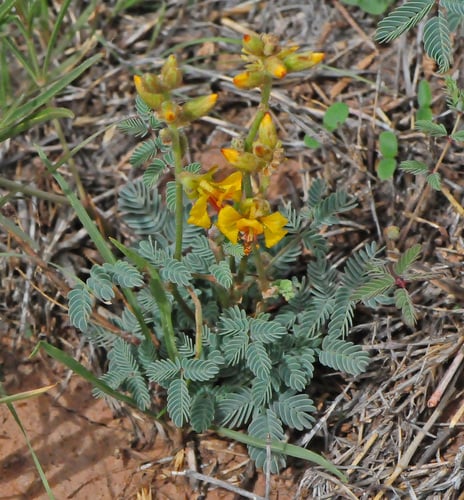
iNaturalist· cc-by-nc
(c) Darren Fielder, some rights reserved (CC BY-NC), uploaded by Darren Fielder
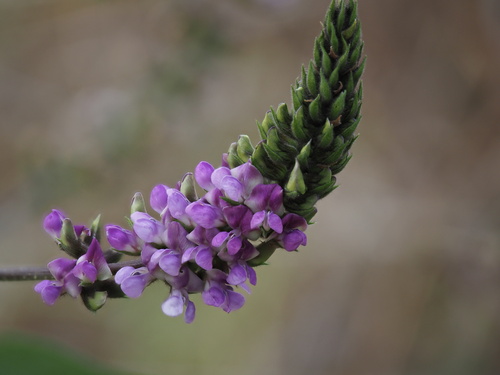
iNaturalist· cc-by-nc
(c) Russell Cumming, some rights reserved (CC BY-NC), uploaded by Russell Cumming
Summary
Source: WikipediaAcacia leptocarpa, commonly known as north coast wattle, is a shrub or small tree native to New Guinea and coastal regions of northern Australia.
Description
A shrub or small tree. It grows 5 m tall. There are prickles along the stem. The leaves are twice divided and there are 8-18 pairs of pinnae. There are up to 50 pairs of pinnules on each pinnae. The flowers are yellow. They are in large clusters at the ends of branches. The pods are flattened.
Edible Uses
The gum is eaten and used as food in Australia.
Traditional Uses
The gum is eaten.
This uses section is brief — help expand it
Medicinal Uses
The bark of all Acacia species contains greater or lesser quantities of tannins and are astringent. Astringents are often used medicinally - taken internally, for example. they are used in the treatment of diarrhoea and dysentery, and can also be helpful in cases of internal bleeding. Applied externally, often as a wash, they are used to treat wounds and other skin problems, haemorrhoids, perspiring feet, some eye problems, as a mouth wash etc. Many Acacia trees also yield greater or lesser quantities of a gum from the trunk and stems. This is sometimes taken internally in the treatment of diarrhoea and haemorrhoids.
Known Hazards
Especially in times of drought, many Acacia species can concentrate high levels of the toxin Hydrogen cyanide in their foliage, making them dangerous for herbivores to eat.
Distribution
It is a tropical plant. A native plant of Australia and Papua New Guinea. It will grow on most soils. It prefers a sunny position. It is damaged by drought and frost. It is often near coasts or streams. It can be on seasonally flooded plains. In Papua New Guinea it occurs up to 30 m altitude.
Where It Grows
Australia*, Indonesia, Pacific, Papua New Guinea, PNG, SE Asia,
Cultivation
It is grown from seed. Seed needs treatment to break the hard seed coat. Normally this is by putting the seeds in very hot water and letting the water cool down overnight then planting the seeds immediately. Flowering is in June to September and pods form from August to October. It benefits from watering in the dry season.
Propagation
The seed of most, if not all, members of this genus has a hard seedcoat and may benefit from scarification before sowing to speed up germination. This can usually be done by pouring a small amount of nearly boiling water on the seeds (being careful not to cook them!) and then soaking them for 12 - 24 hours in warm water. By this time they should have imbibed moisture and swollen - if they have not, then carefully make a nick in the seedcoat (being careful not to damage the embryo) and soak for a further 12 hours before sowing. Acacia seeds that have matured fully on the bush and have been properly dried have a hard seed coat and can be stored in closed containers without deterioration for 5 - 10 years or more in dry conditions at ambient temperatures. It is best to remove the aril, which attracts weevils and can lead to moulds forming. The arils are easilyremoved by placing the seeds in water and rubbing them between the hands, then drying the seeds and winnowing them.
Other Uses
The bark contains around 10% tannins. Bark harvested for its tannins should only be taken from mature stems, and only when the sap is rising at the beginning of the growing season - which is when the tannin content is highest and the bark is most easily removed from the wood. The heartwood is dark brown; it is clearly demarcated from the white sapwood, The decorative wood is close grained and hard. Not often available in larger sizes, it is useful in turnery and cabinet work and can provide small posts and poles for village use. The wood is suitable for fuel and for making charcoal. Wood from 4-year-old trees burnt fast and gave a charcoal of high heating efficiency. The tree can fix atmospheric nitrogen and so can grow well on infertile soil. The high biomass it produces indicates great potential for use in improved fallows and other agroforestry systems. It is used in mine-site rehabilitation projects in northern Australia. It casts a useful, moderate shade, and can be advantageously planted in association with other crops. The plant is a natural pioneer species and can be used in reforestation projects and also in establishing woodland gardens.
Other Information
The gum is used as food in Australia but it is not known if it is used for food in Papua New Guinea.
Notes
There are about 1,350 Acacia species. Over 1,000 occur in Australia. Also as Mimosaceae.
Also Known As
Mangaar Mangal
References (16)
- Barwick, M., 2004, Tropical and Subtropical Trees. A Worldwide Encyclopedic Guide. Thames and Hudson p 3
- Bodkin, F., 1991, Encyclopedia Botanica. Cornstalk publishing, p 23
- Brock, J., 1993, Native Plants of Northern Australia, Reed. p 65
- Cherikoff V. & Isaacs, J., The Bush Food Handbook. How to gather, grow, process and cook Australian Wild Foods. Ti Tree Press, Australia p 198
- Cooper, W. and Cooper, W., 2004, Fruits of the Australian Tropical Rainforest. Nokomis Editions, Victoria, Australia. p 303
Show all 16 references Hide references
- Doran, J.C., & Turnbull, J.W. (Eds), 1997, Australian Trees and Shrubs: species for land rehabilitation and farm plantings in the tropics. ACIAR Monograph No 24. p 169
- Dunlop, C.R., Leach, G.J. & Cowie, I.D., 1995, Flora of the Darwin Region. Vol 2. Northern Territory Botanical Bulletin No 20. p 13
- Elliot, W.R., & Jones, D.L., 1982, Encyclopedia of Australian Plants suitable for cultivation. Vol 2. Lothian. p 75
- Jackes, B.R., 2001, Plants of the Tropics. Rainforest to Heath. An Identification Guide. James Cook University. p 64
- Lazarides, M. & Hince, B., 1993, Handbook of Economic Plants of Australia, CSIRO. p 4
- Melzer, R. & Plumb, J., 2011, Plants of Capricornia. Belgamba, Rockhampton. p 194
- Paczkowska, G . & Chapman, A.R., 2000, The Western Australian Flora. A Descriptive Catalogue. Western Australian Herbarium. p 314
- Price, S.H. & J.L., Wild Food, Medicine and useful plants of the Wet tropics. Kwik Kopy, Cairns. p 2
- Scarth-Johnson, V., 2000, National Treasures. Flowering Plants of Cooktown and Northern Australia. Vera Scarth-Johnson Gallery Association. Cooktown, Australia. p 72
- Townsend, K., 1994, Across the Top. Gardening with Australian Plants in the tropics. Society for Growing Australian Plants, Townsville Branch Inc. p 59
- Verdcourt, B., 1979, Manual of New Guinea Legumes. Botany Bulletin No 11, Division of Botany, Lae, Papua New Guinea. p 169