Anogeissus leiocarpa
(DC.) Guill. et Perr.
Savannah tree
iNaturalist· cc-by-nc
(c) Aliou Balde, some rights reserved (CC BY-NC)
iNaturalist· cc-by-nc
(c) Aliou Balde, some rights reserved (CC BY-NC)
iNaturalist· cc-by-nc
(c) Aliou Balde, some rights reserved (CC BY-NC)
Summary
Source: WikipediaAnogeissus leiocarpa is a slow-growing evergreen tree reaching 15 m tall and 10 m wide, hardy to UK zone 10. It adapts to light sandy, medium loamy, and heavy clay soils with good drainage, tolerating mildly acid to basic pH and very acidic conditions. The tree grows in semi-shade or full sun, prefers moist soil, and handles drought well.
Description
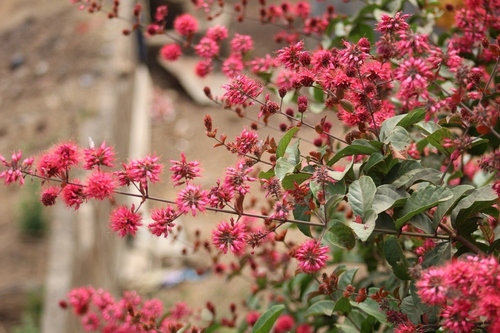
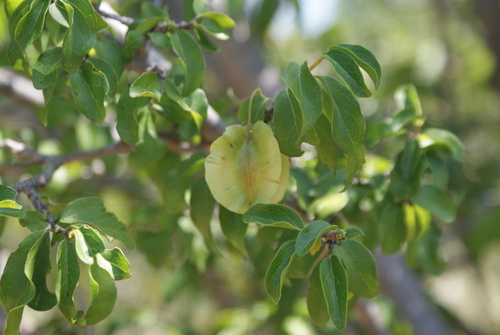
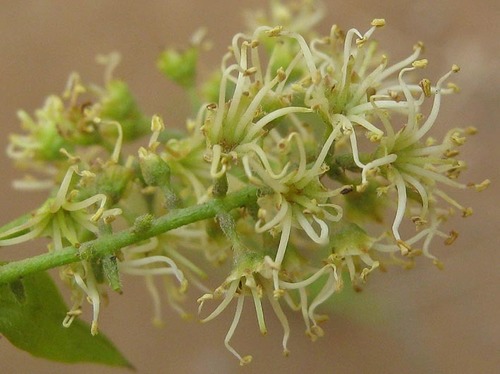
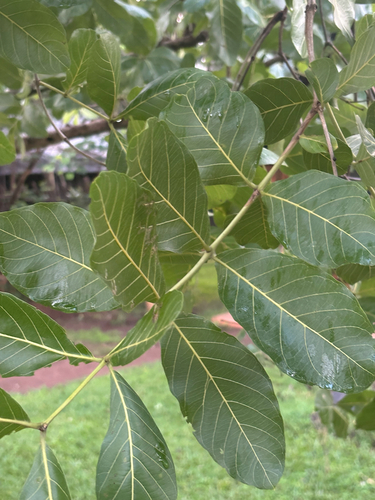
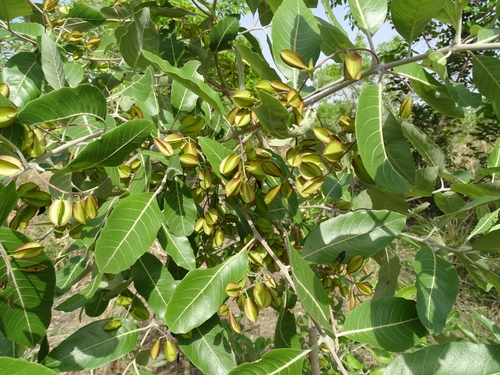
A tall tree. It grows 30 m tall. It has many branches. The bark is grey and scaly. The young branches are hairy. It loses its leaves during the year. The leaves are alternate and sword shaped. They are 4-7 cm long. They are light green. The flower heads are yellowish. The fruit are small and like cones.
Edible Uses
The edible gum from the bark is fairly water-soluble, chewed as a gum arabic substitute containing 22% uronic acid with good viscosity. A cold water infusion makes a palatable beverage, while a decoction is given to newborn babies. The fruit and calyx prepare sauces or tea. Tender young leaves are cooked as a vegetable.
Traditional Uses
The gum is mixed with or used as a substitute for gum arabic. The flowers are used in jams and jellies. The calyx and the fruit are used for the preparation of sauce or tea. They are also used for chutneys. The roots are made into chew stick. The young leaves are used as a vegetable.
Medicinal Uses
Bark, leaves, and roots are used traditionally as decoctions for anthelmintic and antimicrobial purposes. Extracts show antifungal activity against pathogenic fungi and moderate antibacterial activity. Leaf or twig decoctions treat yellow fever, jaundice, hepatitis, colds, and headaches. Applied externally, leaf decoctions address hemorrhoids and skin diseases. Root bark is considered aphrodisiac and stimulant. Bark decoctions serve as febrifuge, muscular tonic, and treat wounds, eczema, psoriasis, anthrax, carbuncles, boils, and ulcers. Bark and gum prevent dental caries and toothache. Gum acts as laxative and pharmacy emulsifier. Fleshy roots address labor pains; pulped roots promote wound healing. Seeds have bactericidal and fungicidal activity.
Known Hazards
The tree has very slow initial growth and extreme sensitivity to bush fires, limiting its usefulness in some regions.
Distribution
It is a tropical plant. It grows in the Sahel. It grows in areas with a rainfall between 200-1,200 mm per year. It can grow in arid places. Brisbane Botanical gardens.
Where It Grows
Africa, Australia, Benin, Burkina Faso, Cameroon, Central Africa, Congo, Côte d'Ivoire, East Africa, Ethiopia, Gambia, Ghana, Guinea, Guinée, Ivory Coast, Mali, Mauritania, Niger, Nigeria, Sahel, Senegal, South Africa, Southern Africa, Sudan, West Africa, West Indies,
Cultivation
Plants can be grown from fresh seeds. Only a low percentage of seeds grown.
Propagation
Seeds are very small, lose viability within 6 months, and have low germination capacity with only 10-15% proving viable. Germination is slow and seedlings difficult to obtain.
Other Uses
Leaves rich in tannins dye cloth yellow in traditional African 'basilan' dyeing of cotton textiles. Bark and roots provide additional tannins and dyes. Ash from leaves, bark, and wood serves as mordants in indigo dyeing to maintain alkaline pH and improve dye fastness. Wood ash functions as lye for washing and soap making. The exuding gum (22% uronic acid) substitutes for gum-arabic in beating cloth, inks, adhesives, food, and medicine. Roots are traded as chewing sticks with strong antibacterial activity against tooth-deteriorating bacteria. Dark brown, streaky heartwood becomes nearly ebony-black, finely textured with wavy or interlocked grain. Heavy, hard wood resists termites and insects but not marine borers, and is extremely preservative-resistant. Seasons rapidly with some distortion; moderately easy to saw but difficult to plane, mortise, and bore; finishes, polishes, and turns well; glues easily but nails poorly. Used for house piles and rafters, agricultural implements, tool handles, and carving. Excellent fuel yielding quality charcoal.
Production
Plant growth is slow.
Other Information
The gum is only occasionally used.
Synonyms
Also Known As
Agni, Atara, Caga, Gangamau, Marke, Orinodan
References (18)
- Achigan-Dako, E, et al (Eds), 2009, Catalogue of Traditional Vegetables in Benin. International Foundation for Science.
- Bircher, A. G. & Bircher, W. H., 2000, Encyclopedia of Fruit Trees and Edible Flowering Plants in Egypt and the Subtropics. AUC Press. p 33
- Bonou, A., et al, 2013, Valeur economique des Produits Forestiers Non Ligneux (PFNL) au Benin. Editions Universitaires Europeennes p 89
- Burkill, H. M., 1985, The useful plants of west tropical Africa, Vol. 1. Kew.
- Dalziel, J. M., 1937, The Useful plants of west tropical Africa. Crown Agents for the Colonies London.
Show all 18 references Hide references
- Dansi, A., et al, 2008, Traditional leafy vegetables and their use in the Benin Republic. Genet Resour Crop Evol (2008) 55:1239–1256
- Facciola, S., 1998, Cornucopia 2: a Source Book of Edible Plants. Kampong Publications, p 80
- Fl. Seneg. tent. 1:280, t. 65. 1832
- Grivetti, L. E., 1980, Agricultural development: present and potential role of edible wild plants. Part 2: Sub-Saharan Africa, Report to the Department of State Agency for International Development. p 24 (As Anogeissus schimperi)
- Le Houerou, H. N., (Ed.), 1980, Browse in Africa. The current state of knowledge. International Livestock Centre for Africa, Ethiopia. p 162
- Maydell, H. von, 1990, Trees and shrubs of the Sahel: their characteristics and uses. Margraf. p 169
- Peters, C. R., O'Brien, E. M., and Drummond, R.B., 1992, Edible Wild plants of Sub-saharan Africa. Kew. p 85
- Royal Botanic Gardens, Kew (1999). Survey of Economic Plants for Arid and Semi-Arid Lands (SEPASAL) database. Published on the Internet; http://www.rbgkew.org.uk/ceb/sepasal/internet [Accessed 10th April 2011]
- Segnon, A. C. and Achigan-Dako, E. G., 2014, Comparative analysis of diversity and utilization of edible plants in arid and semi-arid areas in Benin. Journal of Ethnobiology and Ethnomedicine. 10:80
- Tebkew, M., et al, 2014, Underutilized wild edible plants in the Chilga District, northwestern Ethiopia: focus on wild woody plants. Agriculture & Food Security 2014, 3:12
- Uphof,
- World Checklist of Useful Plant Species 2020. Royal Botanic Gardens, Kew (As Terminalia leiocarpa)
- Zika, A., et al, 2015, Traditional plant use in Burkina Faso (West Africa): a national-scale analysis with focus on traditional medicine. Journal of Ethnobiology and Ethnomedicine 2015, 11:9