Terminalia carpentariae
C. White
Wild peach, Billy Goat Plum
iNaturalist· cc-by-nc
(c) Robert Archer, some rights reserved (CC BY-NC), uploaded by Robert Archer
gbif· cc-by-nc
Roy Erkens
iNaturalist· cc-by-nc
(c) Colin Ralston, some rights reserved (CC BY-NC), uploaded by Colin Ralston
iNaturalist· cc-by-nc
(c) Ryne Rutherford, some rights reserved (CC BY-NC), uploaded by Ryne Rutherford
iNaturalist· cc-by-nc
(c) Chris Chadwick, some rights reserved (CC BY-NC)
Description
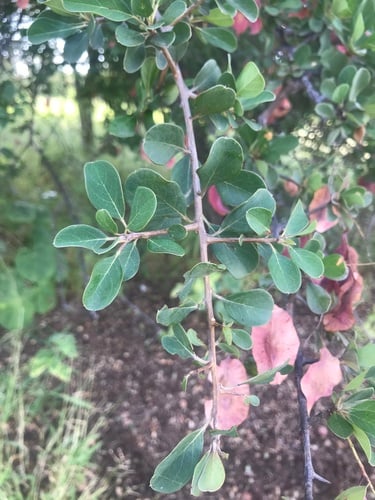
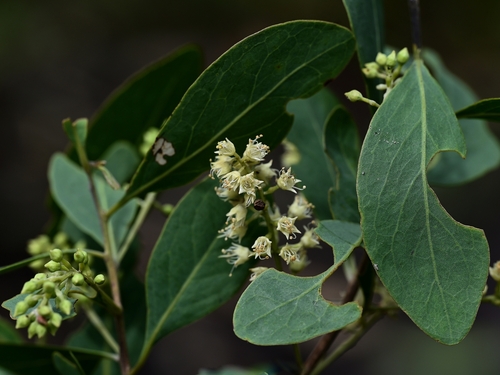
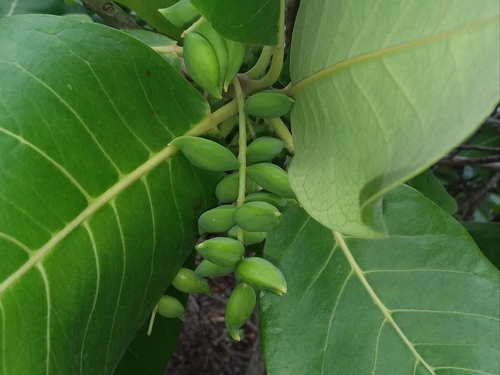
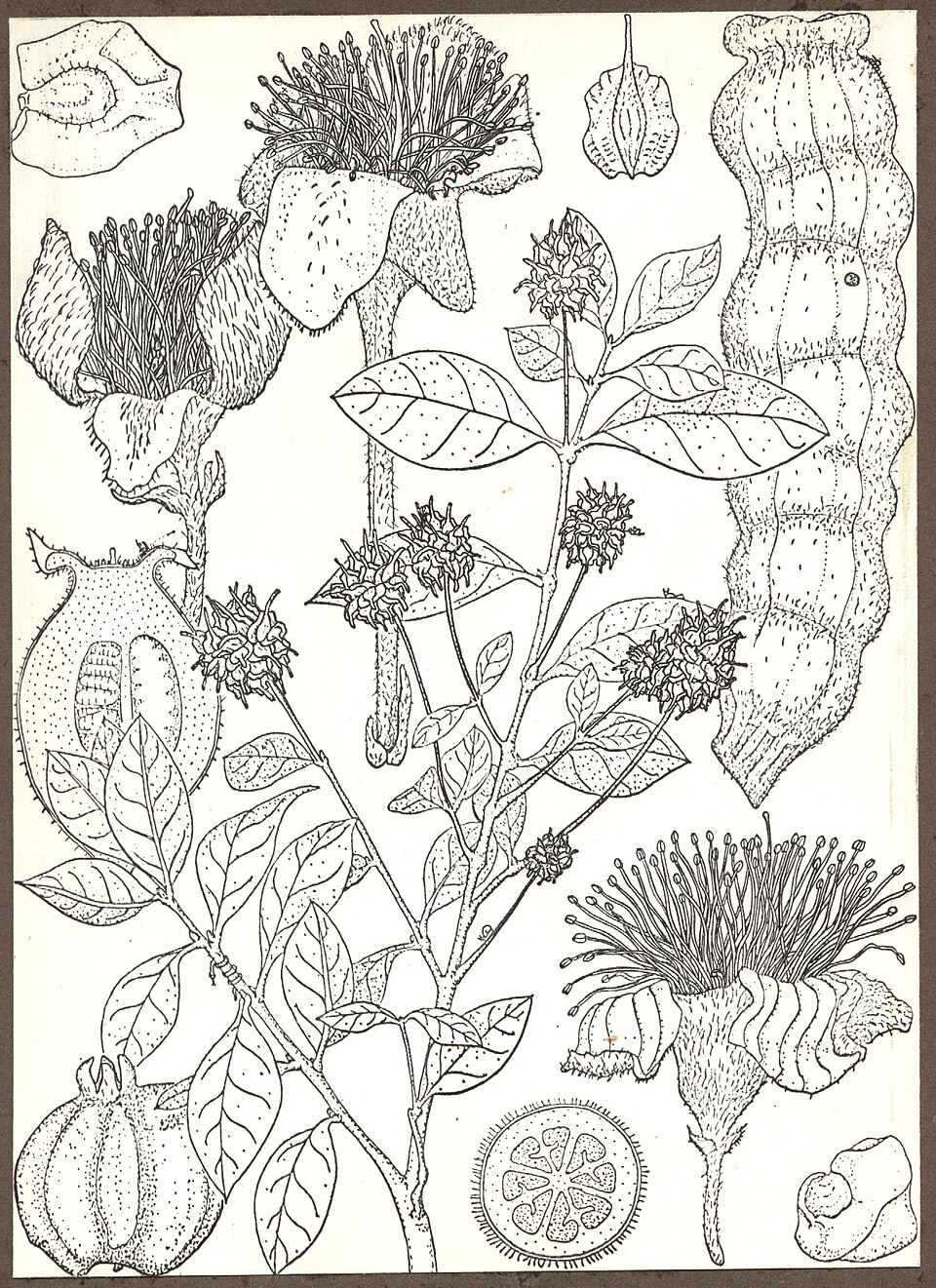
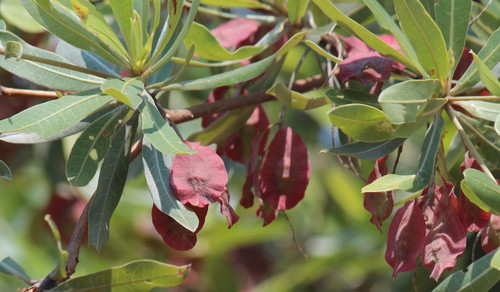
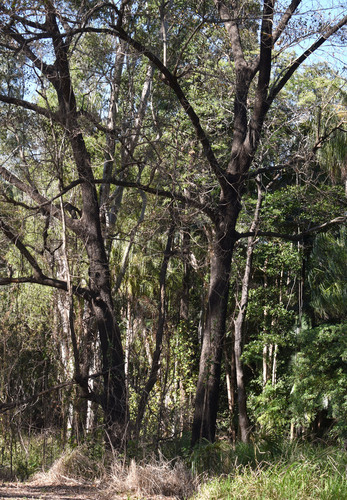
A small to medium sized spreading tree. It loses its leaves during the year. It grows to 5-15 m tall. It has a rounded crown. The small branches are densely hairy. They bark can be smooth or rough and has fine splits along it. The leaves are arranged in spirals. They are crowded towards the ends of small branches. The leaves have many hairs on both sides. They are almost round and 5-12 cm long by 3.5-10 cm wide. They are a dull grey green. The veins are easy to see. The leaf stalk is hairy and 2-4.5 cm long. The leaves turn reddish brown before falling. The flowers are small and green. They occur on densely hairy spikes which are 4-10 cm long. They occur in the axils of leaves towards the end of small branches. The fruit is oval and 1.5-3.5 cm long by 1.2-1.7 cm wide. They are densely hairy. They have a thin fleshy layer around a large seed. This thin fleshy layer is sour and edible. The fruit are yellow-green when ripe. The single seed is inside a woody shell.
Edible Uses
The thin fleshy layer of the fruit is eaten raw or made into jam, and is notably high in vitamin C. The gum is also eaten, and can be soaked if dry.
Traditional Uses
The fruit is eaten raw. The fruit have been used for jam. The gum is eaten. It is soaked if dry.
This uses section is brief — help expand it
Known Hazards
None mentioned
Distribution
A tropical plant. They grow in sandstone country in northern Australia. They grow on poor stony soils in dry regions.
Where It Grows
Australia*,
Cultivation
Plants can be grown from fresh seed.
Production
Plants flower October to December and fruit August to October in Australia. The fruit usually ripen while the leaves are off the tree. This is during the dry season. The fruit are normally collected off the ground. The gum can be collected by cutting the bark with a pointed stick.
Notes
The fruit is very high in Vitamin C. There are about 200-250 Terminalia species. They are tropical.
Nutrition
| Part | Moisture | kJ | kcal | Protein | Vit A | Vit C | Iron | Zinc |
|---|---|---|---|---|---|---|---|---|
| Fruit | 80.6 | 290 | 69 | 0.8 | — | 1141 | 4.4 | — |
Also Known As
Anmobban, Morlag
References (15)
- Brock, J., 1993, Native Plants of Northern Australia, Reed. p 313
- Cherikoff V. & Isaacs, J., The Bush Food Handbook. How to gather, grow, process and cook Australian Wild Foods. Ti Tree Press, Australia p 201
- Dunlop, C.R., Leach, G.J. & Cowie, I.D., 1995, Flora of the Darwin Region. Vol 2. Northern Territory Botanical Bulletin No 20. p 145
- Garde, M., et al, 2003, A Preliminary List of Kundedjnjenghmi Plant Names. Northern Land Council. (Arnhem Land, Australia)
- Hardwick, G., 2001, Economically Useful Plants for Northern Australia: Master Species List. Crusader eBooks.
Show all 15 references Hide references
- Hiddins, L., 1999, Explore Wild Australia with the Bush Tucker Man. Penguin Books/ABC Books. p 145
- Isaacs, J., 1987, Bush Food, Aboriginal Food and Herbal Medicine. Weldons. p 60, 63
- Lazarides, M. & Hince, B., 1993, Handbook of Economic Plants of Australia, CSIRO. p 234
- Levitt, D., 1981, Plants and people. Aboriginal uses of plants on Groote Eylandt. Australian Institute of Aboriginal Studies, Canberra. p 89
- Petheram, R.J. and Kok, B., 2003, Plants of the Kimberley Region of Western Australia. UWA Press p 529
- Smith, K & I., 1999, Grow your own bushfoods. New Holland. Australia. p 45
- Townsend, K., 1994, Across the Top. Gardening with Australian Plants in the tropics. Society for Growing Australian Plants, Townsville Branch Inc. p 353
- Vigilante, T., et al, 2013, Island country: Aboriginal connections, values and knowledge of the Western Kimberley islands in the context of an island biological survey. Records of the Western Australian Museum Supplement 81: 145-182
- Wightman, Glenn et al. 1992, Mangarrayi Ethnobotany: Aboriginal Plant Use from the Elsey Area Northern Australia. Northern Territory Botanical Bulletin No 15. Parks and Wildlife Commission of the Northern Territory. p 46, 45
- Yunupinu Banjgul, Laklak Yunupinu-Marika, et al. 1995, Rirratjinu Ethnobotany: Aboriginal Plant Use from Yirrkala, Arnhem Land, Australia. Northern Territory Botanical Bulletin No 21. Parks and Wildlife Commission of the Northern Territory. p 73