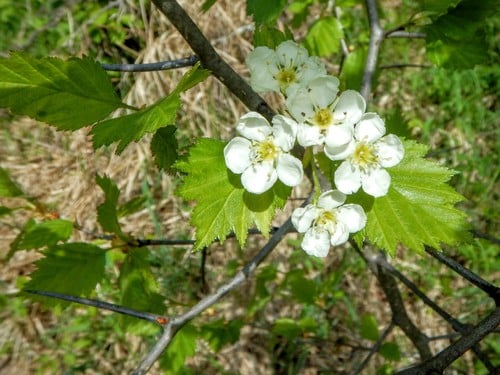
Fragaria vesca var. semperflora
(Duchesne) Pers.
Alpine strawberry
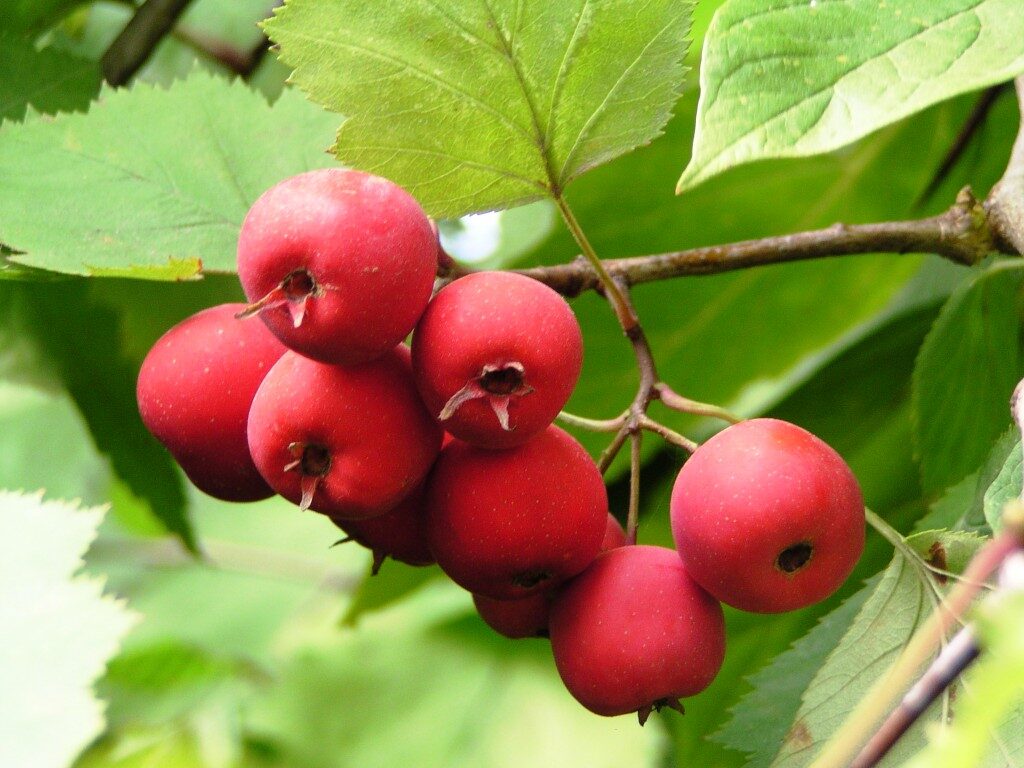
iNaturalist· cc-by-nc
(c) Алексей Афонин, some rights reserved (CC BY-NC), uploaded by Алексей Афонин
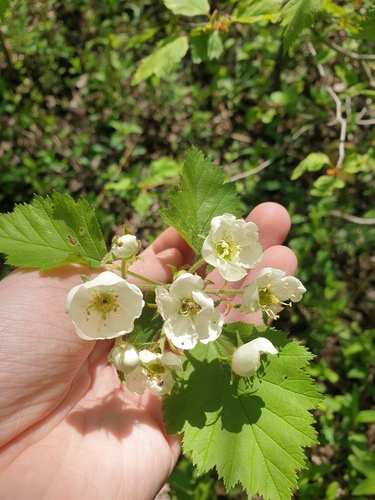
iNaturalist· cc-by-nc
(c) Lola Smirnova, some rights reserved (CC BY-NC)
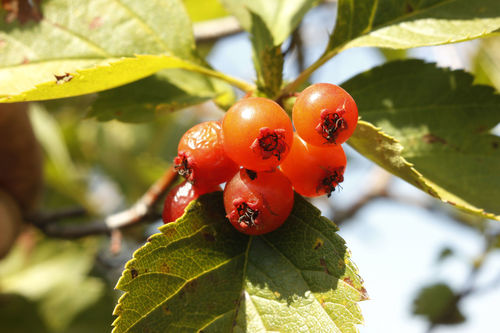
iNaturalist· cc-by-nc
(c) Lola Smirnova, some rights reserved (CC BY-NC)
Summary
Source: WikipediaFragaria vesca, commonly called the wild strawberry, woodland strawberry, Alpine strawberry, Carpathian strawberry or European strawberry, is a perennial herbaceous plant in the rose family that grows naturally throughout much of the Northern Hemisphere, and that produces edible fruits. The Latin specific epithet vesca literally means "thin" or "feeble", but likely carries the sense "edible" in this context (compare vescor, "to eat").
Description
A herbaceous strawberry plant in the Rosaceae family found in temperate regions, distinguished by its yellow fruit.
This description is brief — help expand it
Edible Uses
The fruit are eaten, and both fresh and dried leaves are used as tea or eaten as greens.
Distribution
It is a temperate plant.
Where It Grows
Britain, Europe,
Cultivation
Plants can be grown by dividing mature plants.
Production
Fruit are produced in the first year. Fruit are produced most of the year.
Synonyms
References (9)
- Brouk, B., 1975, Plants Consumed by Man. Academic Press, London. p 202
- Facciola, S., 1998, Cornucopia 2: a Source Book of Edible Plants. Kampong Publications, p 199
- Flowerdew, B., 2000, Complete Fruit Book. Kyle Cathie Ltd., London. p 64
- Gouldstone, S., 1983, Growing your own Food-bearing Plants in Australia. Macmillan p 194
- John, L., & Stevenson, V., 1979, The Complete Book of Fruit. Angus & Robertson p 268
Show all 9 references Hide references
- Kiple, K.F. & Ornelas, K.C., (eds), 2000, The Cambridge World History of Food. CUP p 1881
- Plants for a Future database, The Field, Penpol, Lostwithiel, Cornwall, PL22 0NG, UK. http://www.scs.leeds.ac.uk/pfaf/
- Syn. pl. 2:53. 1807 (As semperflorens)
- Wiersema, J. H. & Leon, B., 2013, World Economic Plants. A Standard Reference CRC Press. 2nd Ed. p 310