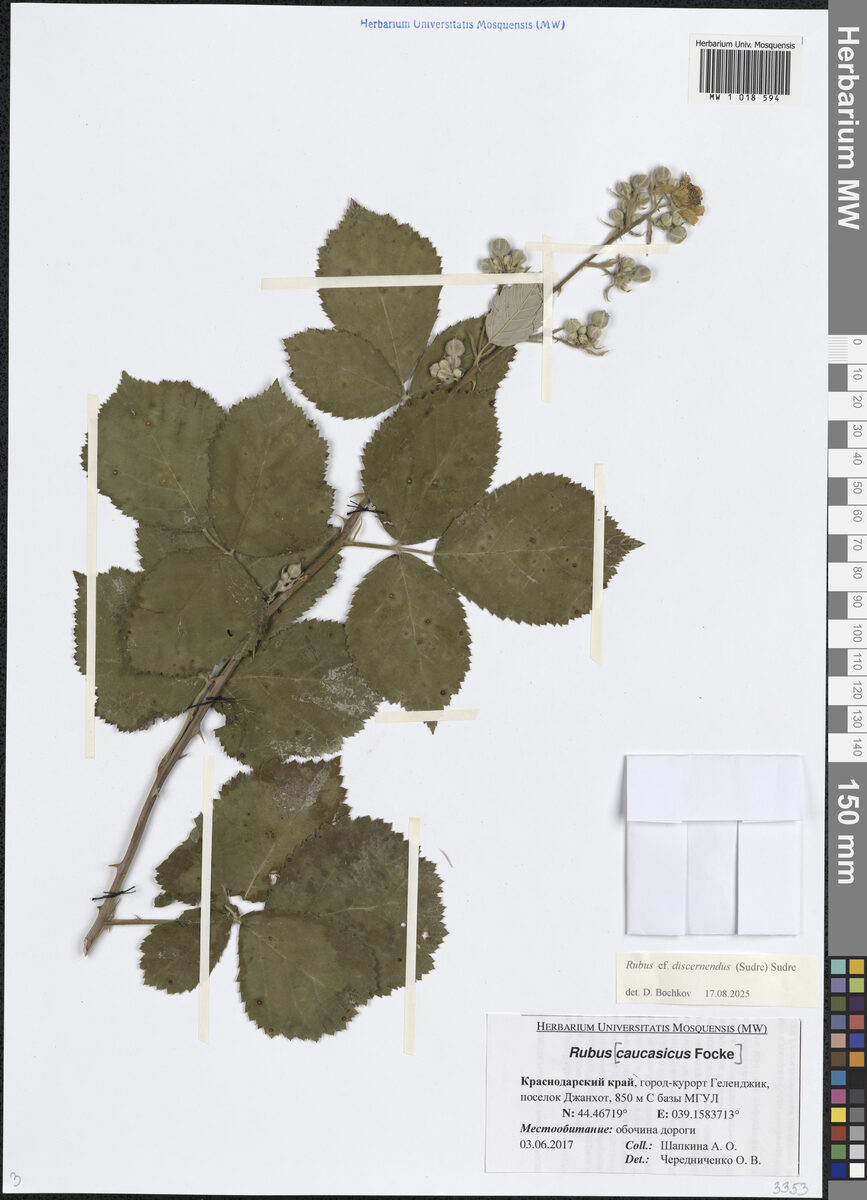
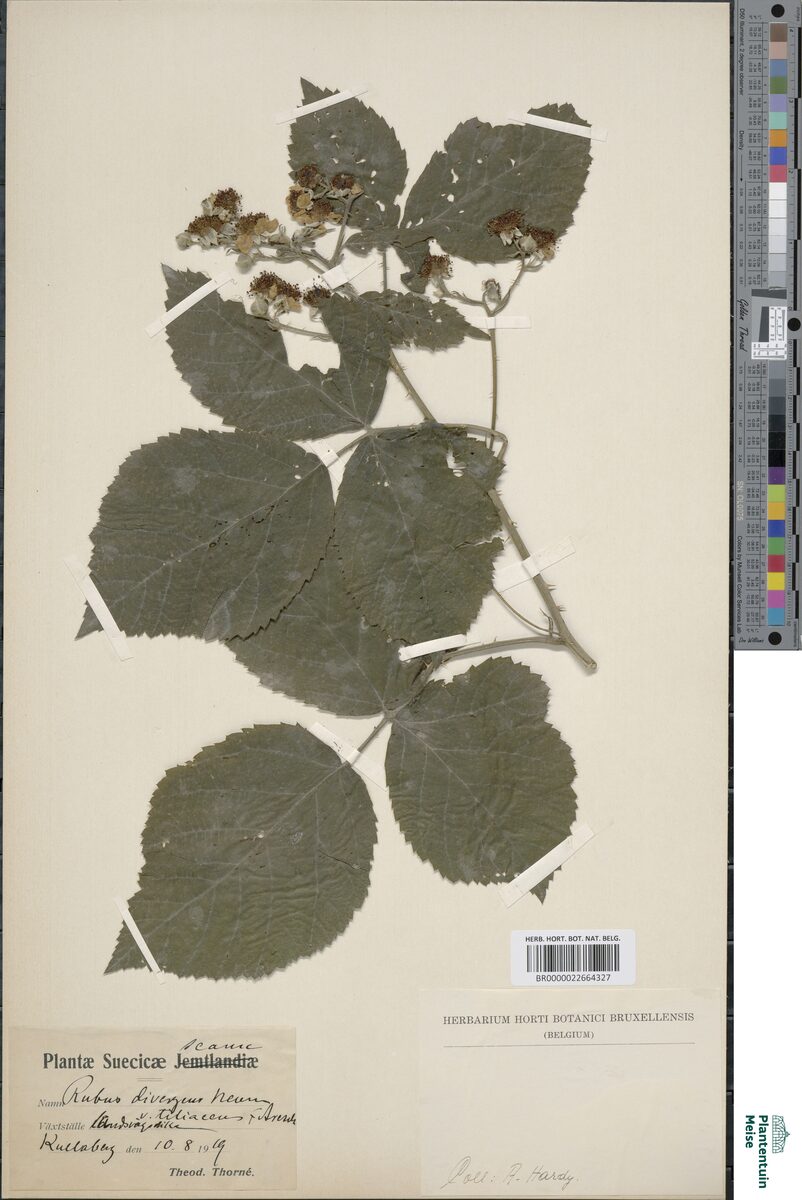
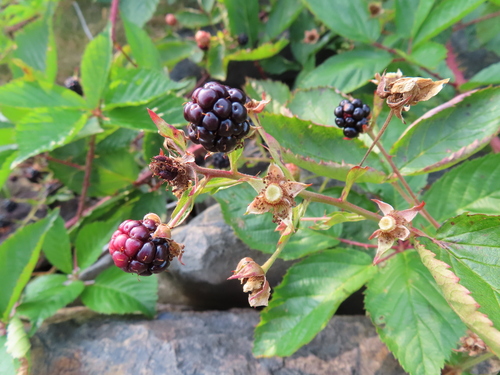
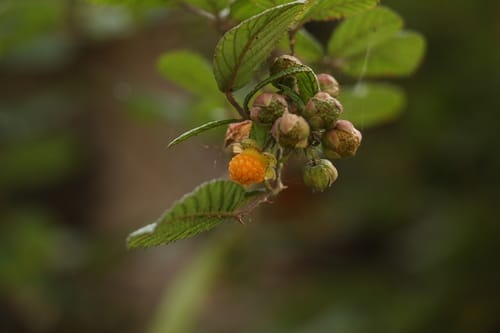
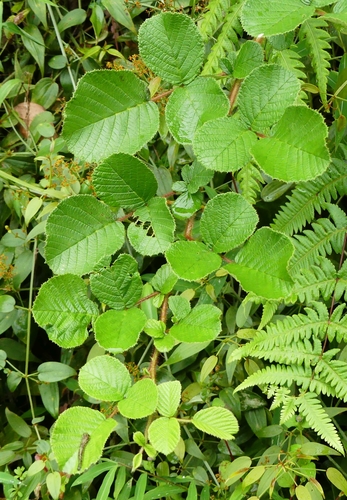
Pyrus calleryana
Decaisne
Callery pear
iNaturalist· cc-by-sa
(c) Philmarin, some rights reserved (CC BY-SA)
iNaturalist· cc-by
(c) Benjamin Smith, some rights reserved (CC BY)
iNaturalist· cc-by-sa
(c) Philmarin, some rights reserved (CC BY-SA)
Summary
Source: WikipediaPyrus calleryana, also known as the Callery pear, is a species of pear tree native to East Asia in the family Rosaceae. Its cultivar Bradford pear, known for its offensive odor, is widely planted throughout the United States and increasingly regarded as an invasive species.
Description
A deciduous tree. It grows 15 m high. It is a broad cone shape. The bark is dark grey and cracks into ridges. The bark is red-brown when it is freshly exposed. The leaves are narrowly oval and 7.5 cm long by 5 cm wide. The leaves are glossy and smooth. There are fine teeth along the edge. The leaves turn red-purple in autumn. The flowers are 1 cm across and on long stalks. They are white. The fruit are rounded or pear shaped and fleshy. They are 2 cm across. They are a rough brown and spotted with white.
Edible Uses
The fruit, around 25mm in diameter, can be eaten raw or cooked. It is best used after exposure to frost, which softens and sweetens the flesh.
Traditional Uses
The fruit are eaten after being exposed to frost. The flowers are soaked in water to remove the bitterness then stir fried, made into soup or used in salads.
Medicinal Uses
None known
Known Hazards
None known
Distribution
It is a temperate plant. It is native to C. and S. China. It grows in thickets and by streams in mountains. It suits hardiness zones 5-10. Arboretum Tasmania. National Arboretum Canberra.
Where It Grows
Asia, Australia, China, Indochina, Japan, Korea, SE Asia, Taiwan, Tasmania, Vietnam,
Cultivation
Prefers a good well-drained loam in full sun. Grows well in heavy clay soils. Tolerates light shade but does not fruit so well in such a position. Tolerates atmospheric pollution, excessive moisture and a range of soil types if they are moderately fertile. Established plants are drought tolerant. Grows well on acid soils. Plants are hardy to about -40°c when they are fully dormant. There are many named forms selected for their ornamental value. The cultivar 'Bradford' is resistant to fireblight. Resists fireblight, collar rot, root aphis, pear psylla and root lesion nematodes. Trees have a short dormancy period and lose their leaves late in the season.
Propagation
Seed is best sown in a cold frame as soon as it is ripe in autumn, when it will typically germinate in mid to late winter. Stored seed requires 8–10 weeks of cold stratification at 1°c and should be sown as early in the year as possible. Temperatures above 15–20°c can induce secondary dormancy. Prick out seedlings into individual pots once large enough to handle, and grow on in light shade in a cold frame or greenhouse for their first year. Plant out in late spring or early summer the following year.
Other Uses
This species is widely used as a rootstock, particularly for cultivars of Pyrus pyrifolia, and is said to induce earlier bearing. The wood is hard and close-grained, and is sometimes used for making furniture and stools.
Production
In Yunnan fruit are eaten in August to October.
Synonyms
Also Known As
Mame-nashi, Moc-cap, Si peng a si, Xialie
References (18)
- Altschul, S.V.R., 1973, Drugs and Foods from Little-known Plants. Notes in Harvard University Herbaria. Harvard Univ. Press. Massachusetts. no. 1399
- Bodkin, F., 1991, Encyclopedia Botanica. Cornstalk publishing, p 858
- Brickell, C. (Ed.), 1999, The Royal Horticultural Society A-Z Encyclopedia of Garden Plants. Convent Garden Books. p 852
- Coombes, A.J., 2000, Trees. Dorling Kindersley Handbooks. p 273
- Cundall, P., (ed.), 2004, Gardening Australia: flora: the gardener's bible. ABC Books. p 1117
Show all 18 references Hide references
- Facciola, S., 1998, Cornucopia 2: a Source Book of Edible Plants. Kampong Publications, p 205
- Glowinski, L., 1999, The Complete Book of Fruit Growing in Australia. Lothian. p 29
- Hibbert, M., 2002, The Aussie Plant Finder 2002, Florilegium. p 244
- Jard. fruit. 1:329, sub t. 8. 1872
- John, L., & Stevenson, V., 1979, The Complete Book of Fruit. Angus & Robertson p 223
- Kermath, B. M., et al, 2014, Food Plants in the Americas: A survey of the domesticated, cultivated and wild plants used for Human food in North, Central and South America and the Caribbean. On line draft. p 731
- Luo, B., et al, 2019, Wild edible plants collected by Hani from terraced rice paddy agroecosystem in Honghe Prefecture, Yunnan, China. Journal of Ethnobiology and Ethnomedicine 15:56
- Pham-Hoang Ho, 1999, An Illustrated Flora of Vietnam. Nha Xuat Ban Tre. p 781
- Plants for a Future database, The Field, Penpol, Lostwithiel, Cornwall, PL22 0NG, UK. http://www.scs.leeds.ac.uk/pfaf/
- Ryan, S., 2008, Dicksonia. Rare Plants Manual. Hyland House. p 49
- Tanaka,
- www.efloras.org Flora of China Volume 9
- Zeven, A. C. & de West, J. M. J., 1982, Dictionary of cultivated plants and their regions of diversity. Wageningen. p 41