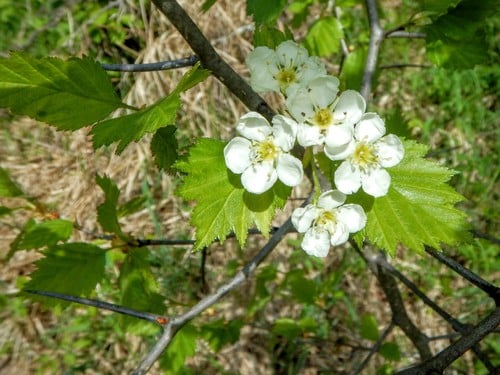
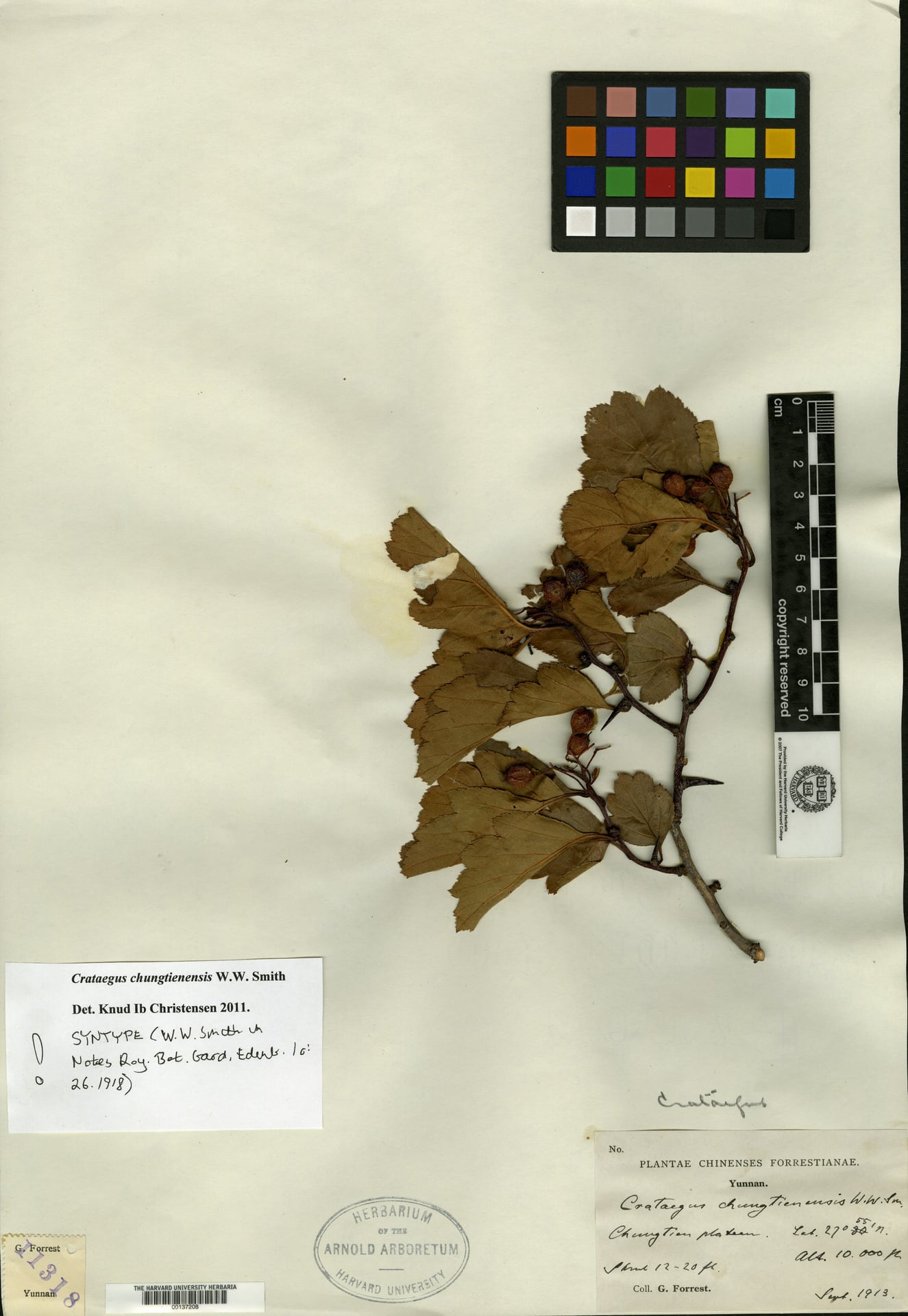
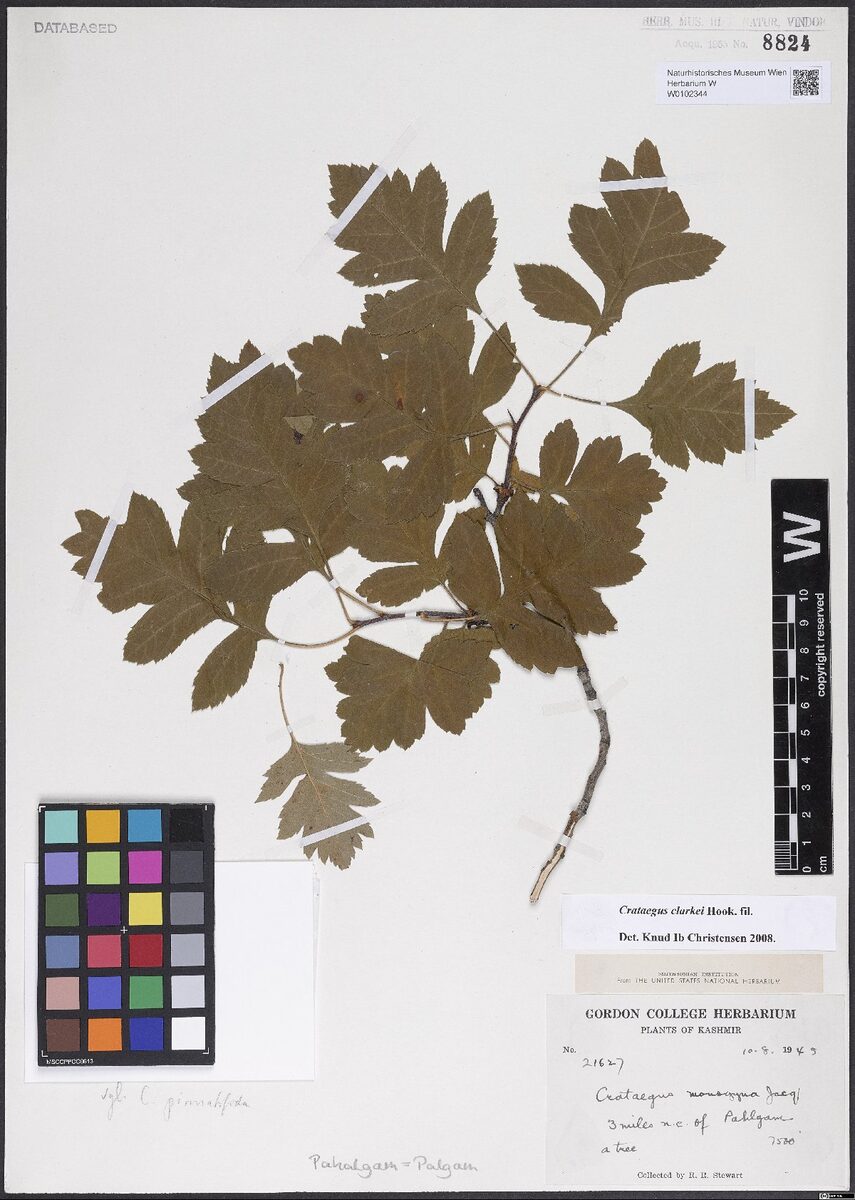
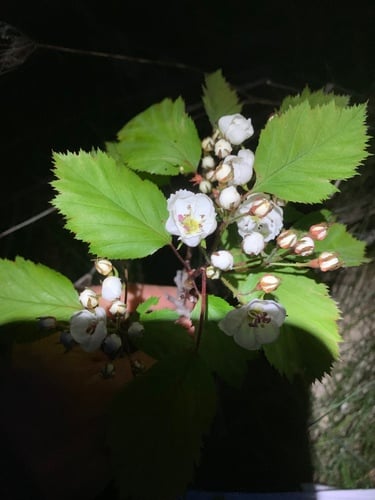
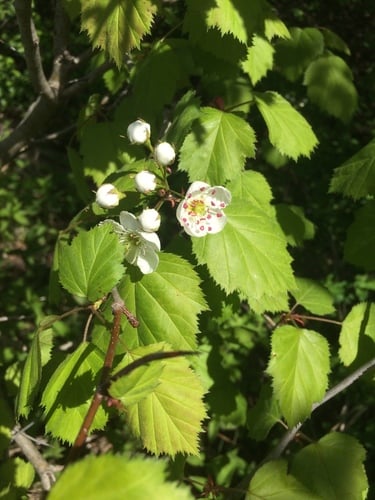
Pyrus bretschneideri
Rehder
Chinese white pear, Chinese wild pear, Crisp Chinese pear
iNaturalist· cc-by-sa
(c) Fanghong, some rights reserved (CC BY-SA)
iNaturalist· cc-by-nc
(c) Jane Charlen, some rights reserved (CC BY-NC), uploaded by Jane Charlen
iNaturalist· pd
Goele, no known copyright restrictions (public domain)
Summary
A deciduous tree growing to 6 meters, hardy to UK zone 5. Flowers in May with seeds ripening September to October. Hermaphroditic and insect-pollinated. Tolerates light sandy, medium loamy, and heavy clay soils with preference for good drainage. Grows in mildly acid, neutral, or basic soils. Adapts to semi-shade or full sun, prefers moist soil but tolerates drought and atmospheric pollution.
Description
A small tree. It grows 5-8 m high. The young branches are stout and hairy. The leaves are narrowly oval and 5-11 cm long by 4-6 cm wide. They taper to the tip and are rounded at the base. There are sharp teeth. The leaf stalks are 3 cm long. The flowers are white. The fruit are round and 3 cm long. They are yellow. The flesh is crisp. There are some local cultivars. Probably a hybrid.
Edible Uses
The fruit, which grows up to 3cm in diameter, can be eaten raw or cooked.
Medicinal Uses
None known
Known Hazards
None known
Distribution
It is a temperate plant. It is native to northern and north western China. It grows in dry cold regions between 100-2,000 m above sea level. It suits hardiness zones 4-9. Arboretum Tasmania.
Where It Grows
Asia, Australia, China*, Tasmania, USA,
Cultivation
Prefers a good well-drained loam in full sun. Grows well in heavy clay soils. Tolerates light shade but does not fruit so well in such a position. Tolerates atmospheric pollution, excessive moisture and a range of soil types if they are moderately fertile. Established plants are drought tolerant. Plants are hardy to at least -15°c. This species is closely related to P. ussuriensis ovoidea. This species is commonly cultivated in northern China, preferring sunny, dry, loamy soils. It includes many important forms with excellent fruit.
Propagation
Seed is best sown in a cold frame as soon as it is ripe in autumn, when it will typically germinate in mid to late winter. Stored seed requires 8–10 weeks of cold stratification at 1°c and should be sown as early in the year as possible. Temperatures above 15–20°c can induce secondary dormancy. Prick out seedlings into individual pots once large enough to handle, and grow on in light shade in a cold frame or greenhouse for their first year. Plant out in late spring or early summer the following year.
Other Uses
None known
Other Information
It is a cultivated food plant.
Synonyms
References (10)
- Glowinski, L., 1999, The Complete Book of Fruit Growing in Australia. Lothian. p 29
- Hu, Shiu-ying, 2005, Food Plants of China. The Chinese University Press. p 449
- INFOODS:FAO/INFOODS Databases
- Jackes, D. A., 2007, Edible Forest Gardens
- Plants for a Future database, The Field, Penpol, Lostwithiel, Cornwall, PL22 0NG, UK. http://www.scs.leeds.ac.uk/pfaf/
Show all 10 references Hide references
- USDA, ARS, National Genetic Resources Program. Germplasm Resources Information Network - (GRIN). [Online Database] National Germplasm Resources Laboratory, Beltsville, Maryland. Available: www.ars-grin.gov/cgi-bin/npgs/html/econ.pl (10 April 2000)
- Wiersema, J. H. & Leon, B., 2013, World Economic Plants. A Standard Reference CRC Press. 2nd Ed. p 574
- World Checklist of Useful Plant Species 2020. Royal Botanic Gardens, Kew
- www.efloras.org Flora of China Volume 9
- Zeven, A. C. & de West, J. M. J., 1982, Dictionary of cultivated plants and their regions of diversity. Wageningen. p 41