Psychotria loniceroides
Sieber ex DC.
Hairy psychotria, Rough leaf psychotria
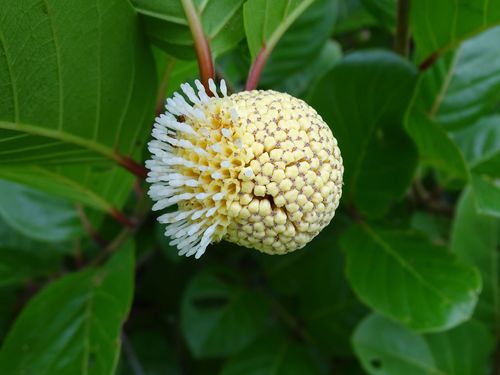
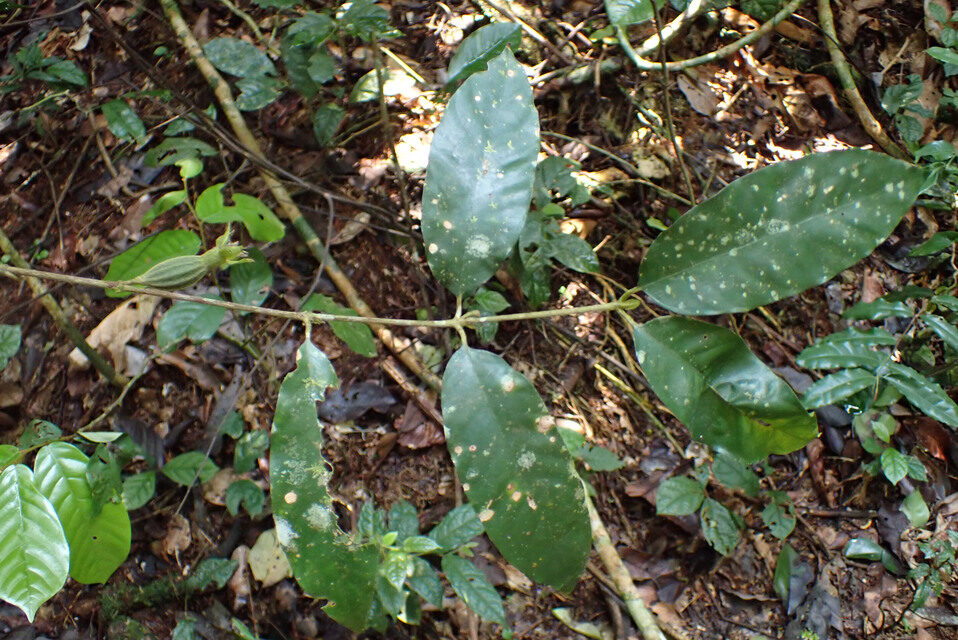
iNaturalist· cc-by-nc
(c) Michael Goode, some rights reserved (CC BY-NC), uploaded by Michael Goode
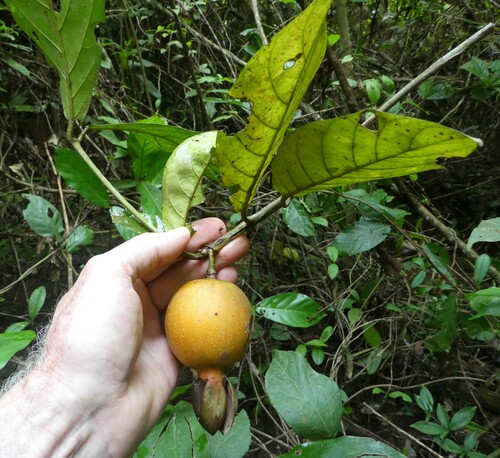
iNaturalist· cc-by-nc-sa
(c) Nick Lambert, some rights reserved (CC BY-NC-SA), uploaded by Nick Lambert
iNaturalist· cc-by-nc
(c) polyscias099, some rights reserved (CC BY-NC)
Summary
Source: WikipediaPsychotria loniceroides, commonly known as hairy psychotria or Mapoon bush, is a species of plant in the coffee family Rubiaceae native to northern and eastern Australia. It is a shrub of drier rainforests and wet sclerophyll forests, and the fruit are eaten by birds. It was first described in 1830.
Description
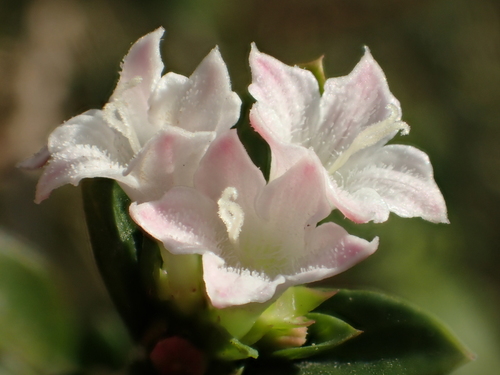
An untidy shrub. It grows 5 m tall. The new twigs are very hairy. The leaves are simple and 3-14 cm long by 1-5 cm wide. Both sides have velvety hairs. The flowers are in groups in the axils of leaves or at the ends of branches. The flowers are 4-7 mm across. They have 5 white petals. The fruit are fleshy and can be cream, green, yellow or grey-brown. They are 3 mm long. They are carried in bunches.
Edible Uses
None known
Traditional Uses
The fruit is edible but it can irritate the throat.
This uses section is brief — help expand it
Medicinal Uses
None known
Distribution
A tropical plant. In tropical Queensland it grows from sea level to 1080 m altitude. It grows in open forest and is best in moist, sheltered hollows and gullies. Melbourne Botanical gardens.
Where It Grows
Australia*,
Cultivation
Plants can be grown from fresh seed. They are slow to germinate. It can also be grown from cuttings but these are slow to strike.
Other Uses
None known
Notes
There are about 1500 Psychotria species.
Synonyms
Also Known As
Mapoon bush
References (17)
- Anon., 2003, Native Plants for the Fitzroy basin. Society for Growing Australian Plants Inc. (Rockhampton Branch) p 73
- Bodkin, F., 1991, Encyclopedia Botanica. Cornstalk publishing, p 846
- Caton, J.M. & Hardwick, R. J., 2016, Field Guide to Useful Native Plants from Temperate Australia. Harbour Publishing House. p 204
- Cherikoff V. & Isaacs, J., The Bush Food Handbook. How to gather, grow, process and cook Australian Wild Foods. Ti Tree Press, Australia p 201
- Cooper, W. and Cooper, W., 2004, Fruits of the Australian Tropical Rainforest. Nokomis Editions, Victoria, Australia. p 449
Show all 17 references Hide references
- Cribb, A.B. & J.W., 1976, Wild Food in Australia, Fontana. p 52
- Hardwick, R.J., 2000, Nature's Larder. A Field Guide to the Native Food Plants of the NSW South Coast. Homosapien Books. p 70
- Hibbert, M., 2002, The Aussie Plant Finder 2002, Florilegium. p 242
- Jackes, B.R., 2001, Plants of the Tropics. Rainforest to Heath. An Identification Guide. James Cook University. p 78
- Jones D, L, 1986, Ornamental Rainforest Plants in Australia, Reed Books, p 92, 340
- Low, T., 1991, Wild Food Plants of Australia. Australian Nature FieldGuide, Angus & Robertson. p 72
- Low, T., 1992, Bush Tucker. Australia’s Wild Food Harvest. Angus & Robertson. p 61
- Melzer, R. & Plumb, J., 2011, Plants of Capricornia. Belgamba, Rockhampton. p 299
- Pearson, S. & A., 1992, Rainforest Plants of Eastern Australia. Kangaroo Press p 173
- Stanley, T. D. & Ross, E. M., 1986, Flora of south-eastern Queensland Volume 2. Queensland Government p 338
- Townsend, K., 1994, Across the Top. Gardening with Australian Plants in the tropics. Society for Growing Australian Plants, Townsville Branch Inc. p 324
- Williams, J.B., Harden, G.J., and McDonald, W.J.F., 1984, Trees and shrubs in rainforests of New South Wales and Southern Queensland. Univ. of New England, Armidale. p 116