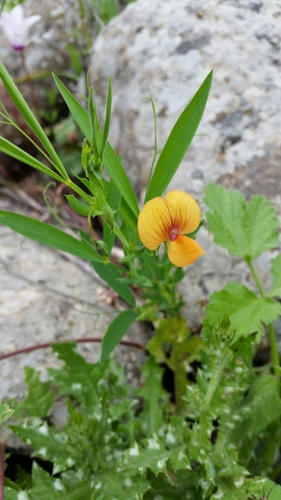
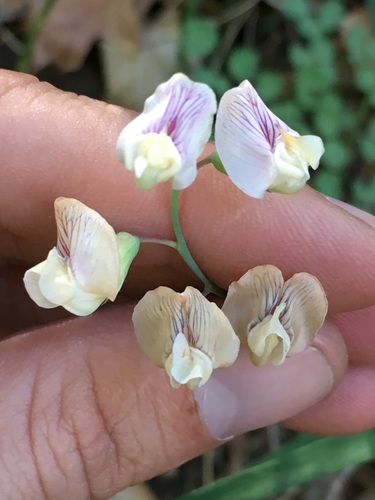
Psoralea argophylla
Pursh
Silverleaf scurf pea, Silver leaf
iNaturalist· cc-by-nc
(c) Friends of the Saskatoon Afforestation Areas, some rights reserved (CC BY-NC)
iNaturalist· cc-by-nc
(c) Friends of the Saskatoon Afforestation Areas, some rights reserved (CC BY-NC)
iNaturalist· cc-by-nc
(c) Friends of the Saskatoon Afforestation Areas, some rights reserved (CC BY-NC)
Summary
Source: WikipediaA perennial herbaceous plant reaching 0.6m tall, hardy to UK zone 5. Hermaphrodite flowers pollinated by insects. Nitrogen-fixing legume. Adapts to sandy, loamy, and clay soils preferring good drainage. Tolerates mildly acid, neutral, and basic soils. Requires full sun; tolerates dry or moist conditions.
Description
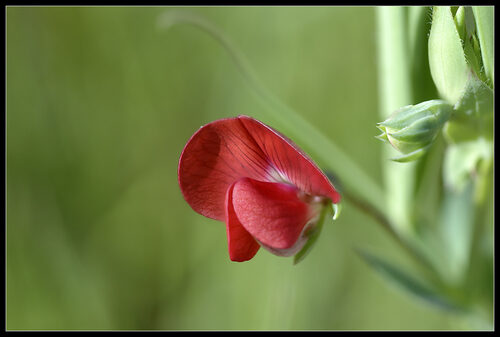
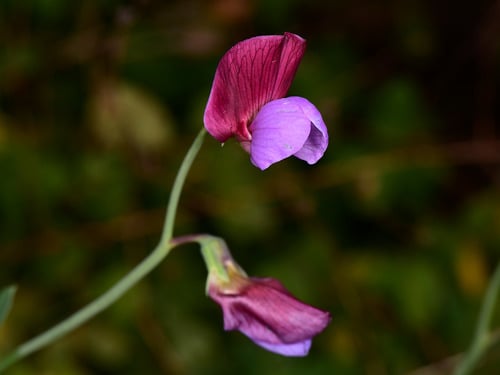
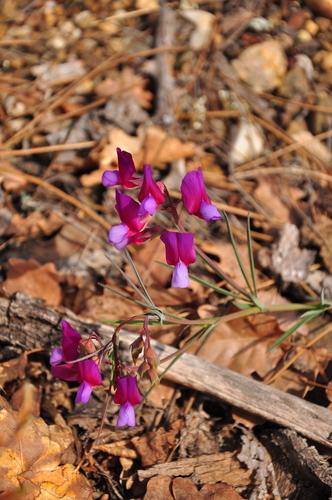
A small low bean family plant. The flowers are blue or purple. The whole plant is covered with silver hairs.
This description is brief — help expand it
Edible Uses
Only the roots of silverleaf breadroot and related species are edible — all other parts of the plant are inedible. The root can be eaten raw or cooked, and can also be dried and ground into a powder for use in soups or combined with cereals for making bread. The roots are rich in carbohydrates and generally off-white with brown skins. The skins are bitter and should be peeled before eating. Boiling improves flavour by drawing out bitterness and softening the texture, giving a pleasant starchy result. Roots can also be baked, added to soups, or dried and ground into flour; dried shavings reconstitute well in water and can be fried as a nutritious snack. Quality and yield vary between plants — some produce substantial roots worth harvesting while others offer little. Vigorous above-ground growth is often a sign of more substantial roots below. Breadroots were historically important food plants, particularly Indian breadroot (P. esculentum) of the Great Plains, though that species is largely absent from the Southwest. Southwestern species including silverleaf breadroot were used less frequently due to their scarcity.
Traditional Uses
The root is edible raw or cooked in stews. It can be ground into flour to thicken soups or making bread.
This uses section is brief — help expand it
Medicinal Uses
A tea made from finely ground leaves and stems is used as a febrifuge. A decoction of the plant can be used as a wash for wounds. A root infusion is used to treat chronic constipation.
Known Hazards
Although no specific mention of toxicity for this species has been found, at least some members of this genus contain furanocoumarins, these substances can cause photosensitivity in some people.
Distribution
It is a temperate plant.
Where It Grows
Australia, Canada, North America, USA,
Cultivation
Pediomelum argophyllum is native to the central belt of N. America, from southern Canada to Texas, and, as such, will be subject to a continental climate in much of its range with very hot summers and very cold winters. Species in this genus generally require well-drained soil in a sunny position, succeeding in most soils. Plants are very intolerant of root disturbance; they are best planted out into their permanent positions whilst still small. This species has a symbiotic relationship with certain soil bacteria; these bacteria form nodules on the roots and fix atmospheric nitrogen. The growing plant utilizes some of this nitrogen, but some can also be used by other plants growing nearby. Habitat & Range: Silverleaf breadroot occurs mainly on the Great Plains and extends into parts of the Southwest, though it is too uncommon to be considered a staple food. Plants grow in open, dry habitats, where their storage roots help them survive harsh conditions. USDA Hardiness Zone: 4–8. Weed Potential: Low – silverleaf breadroot is native, non-invasive, and not considered a weedy threat.
Propagation
Pre-soak seed for 24 hours in warm water, then sow in early to mid spring in a greenhouse. Sow into individual pots or pot up seedlings as soon as possible to avoid root disturbance, and grow on in pots until planting out in their final positions. Transplanting this species without fatal damage to the root is virtually impossible. Division can be attempted in spring with great care, as the plant strongly resents root disturbance and successful division is extremely difficult.
Other Uses
Valuable as a soil stabiliser under natural conditions. The tough green stems can be woven into baskets.
Notes
There are 20 Psoralea species. They grow in South Africa. Several Psoralea have now been put in other genera. Also as family Papilionaceae.
Synonyms
Also Known As
Silverleaf Indian breadroot. Silverleaf Breadroot (Pediomelum argophyllum (Pursh) J. W. Grimes = Psoralea argophylla Pursh)
References (7)
- Beckstrom-Sternberg, Stephen M., and James A. Duke. "The Foodplant Database." http://probe.nalusda.gov:8300/cgi-bin/browse/foodplantdb.(ACEDB version 4.0 - data version July 1994)
- Cormack, R. G. H., 1967, Wild Flowers of Alberta. Commercial Printers Edmonton, Canada. p 187
- Cundall, P., (ed.), 2004, Gardening Australia: flora: the gardener's bible. ABC Books. p 1104
- Etkin, N.L. (Ed.), 1994, Eating on the Wild Side, Univ. of Arizona. p 72
- Fl. Amer. sept. 2:475. 1813-1814
Show all 7 references Hide references
- Lim, T. K., 2015, Edible Medicinal and Non Medicinal Plants. Volume 9, Modified Stems, Roots, Bulbs. Springer p 69
- Plants for a Future database, The Field, Penpol, Lostwithiel, Cornwall, PL22 0NG, UK. http://www.scs.leeds.ac.uk/pfaf/