Wisteria floribunda
(Willd.) DC.
Japanese wisteria, Many-flowered Wisteria
iNaturalist· cc-by-nc
(c) 104623964081378888743, some rights reserved (CC BY-NC), uploaded by 104623964081378888743
iNaturalist· cc-by-nc
(c) Sara Rall, some rights reserved (CC BY-NC), uploaded by Sara Rall
Summary
Source: WikipediaWisteria floribunda, common name Japanese wisteria (藤, fuji), is a species of flowering plant in the family Fabaceae, native to Japan. (Wisteriopsis japonica, synonym Wisteria japonica, is a different species.) Growing to 9 m (30 ft), Wisteria floribunda is a woody, deciduous twining climber. It was first brought from Japan to the United States in the 1830s. It is a common subject for bonsai, along with Wisteria sinensis (Chinese wisteria). Japanese wisteria sports the longest flower racemes of any wisteria; Some of those cultivars can reach 2 m (7 ft) in length. These racemes burst into clustered white, pink, violet, or blue flowers in early- to mid-spring. The flowers carry a fragrance similar to that of grapes. The early flowering time of Japanese wisteria can cause problems in temperate climates, where early frosts can destroy the coming years' flowers. It will also flower only after passing from juvenile to adult stage, a transition that may take many years just like its cousin Chinese wisteria. Japanese wisteria can grow over 30 metres (98 ft) long over many supports via powerful clockwise-twining stems. The foliage consists of shiny, dark-green, pinnately compound leaves 10–30 centimetres (3.9–11.8 in) in length. The leaves bear about 15-19 oblong leaflets that are each 2–6 centimetres (0.79–2.36 in) long. It also bears poisonous, brown, velvety, bean-like seed pods 5–10 centimetres (2.0–3.9 in) long that mature in summer and persist until winter. Japanese wisteria prefers moist soils and full sun in USDA plant hardiness zones 5–9. The plant often lives over 50 years.
Description
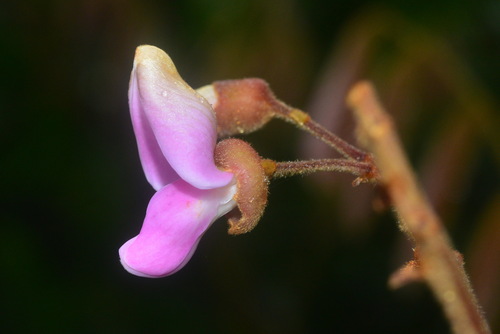
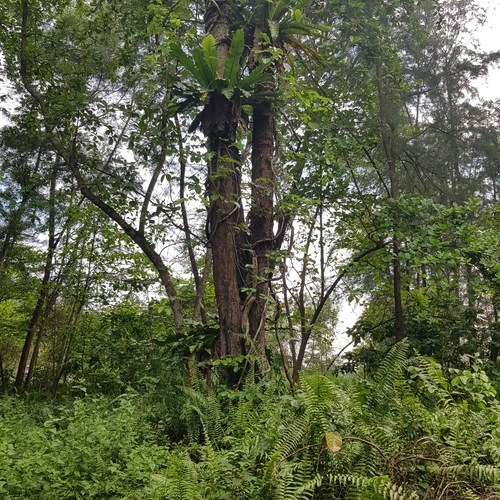
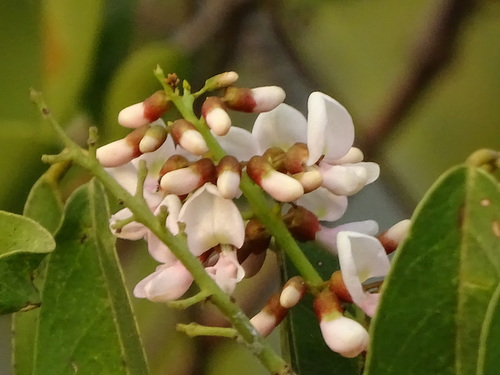
A climber which can grow 6-9 m long. It can climb over trees 20 m high. The leaves are light to mid green and composed of up to 19 leaflets. The flowers are violet-blue. The flowers are fragrant. The flowers are in drooping racemes 30 cm long. They taper along the length. There are several named varieties.
Edible Uses
The seeds can be cooked; when baked in a fire they have a flavour much like chestnuts. Some caution is advised — see the notes on toxicity. Tender young leaves can be cooked and are also used as a tea substitute. The flowers are cooked and used as a food in parts of China.
Traditional Uses
CAUTION The seeds are poisonous to many animals. The young leaves and flowers are boiled and eaten. The flowers are thoroughly boiled, washed and eaten with oil and salt.
Medicinal Uses
None known
Distribution
It is a temperate plant. It suits hardiness zones 5-10.
Where It Grows
Asia, Australia, Canada, Central Asia, China, India, Japan*, Korea, North America, Tajikistan, USA,
Cultivation
It has creeping underground stems which can develop roots. It can also be grown from seed.
Propagation
Seed has no dormancy requirements and can be sown as soon as it is ripe in a cold frame, germinating in spring. Stored seed should be pre-soaked for 24 hours in warm water before sowing in a greenhouse in early spring. Seed can also be sown in an outdoor seedbed in late spring; germination usually occurs in the first spring but may be delayed a further 12 months. Prick seedlings into individual pots when large enough to handle and grow on in a cold frame for the first winter, then plant out in late spring or early summer. Plants grown from seed are very slow and can take up to 20 years to flower. Basal cuttings of side-shoots can be taken in early to mid summer once new growth has hardened sufficiently, each with 2–3 leaves. Removing a shallow slice of bark from the bottom 15mm of the cutting exposes extra cambium and encourages better callusing and rooting. In a mist frame with bottom heat of 27–30°C, cuttings will root within 4 weeks and produce well-established plants by autumn. Layering in spring is also effective: lay a long shoot along the ground, cover with a shallow layer of soil, and it will produce roots at intervals along the stem. Once roots are well formed, the shoot can be divided into several plants, potted up, and kept in a lightly shaded greenhouse until established before planting out.
Other Uses
The bark is used for making ropes and sandals. The branches can be used as cables and for constructing bridges, for which the material is said to be very durable.
Production
It is fast growing.
Notes
There are 10 Wisteria species. It can be invasive.
Synonyms
Also Known As
Duohua Ziteng, Fuji
References (17)
- Ambasta, S.P. (Ed.), 2000, The Useful Plants of India. CSIR India. p 689
- Blamey, M and Grey-Wilson, C., 2005, Wild flowers of the Mediterranean. A & C Black London. p 110
- Chen, B. & Qiu, Z., Consumer's Attitudes towards Edible Wild Plants, Ishikawa Prefecture, Japan. p 26 www.hindawi.com/journals/ijfr/aip/872413.pdf
- Cundall, P., (ed.), 2004, Gardening Australia: flora: the gardener's bible. ABC Books. p 1487
- H. G. A. Engler & K. A. E. Prantl, Nat. Pflanzenfam. 3(3):271. 1894 (As Kraunhia floribunda)
Show all 17 references Hide references
- Facciola, S., 1998, Cornucopia 2: a Source Book of Edible Plants. Kampong Publications, p 114
- Hibbert, M., 2002, The Aussie Plant Finder 2002, Florilegium. p 309
- Jackes, D. A., 2007, Edible Forest Gardens
- Joyce, D., 1998, The Garden Plant Selector. Ryland, Peters and Small. p 188
- Lord, E.E., & Willis, J.H., 1999, Shrubs and Trees for Australian gardens. Lothian. p 339
- Marinelli, J. (Ed), 2004, Plant. DK. p 471
- Plants for a Future database, The Field, Penpol, Lostwithiel, Cornwall, PL22 0NG, UK. http://www.scs.leeds.ac.uk/pfaf/
- Prodr. 2:390. 1825
- READ, (As Kraunhia floribunda)
- Recher, P, 2001, Fruit Spirit Botanical Gardens Plant Index. www.nrg.com.au/~recher/ seedlist.html p 7
- Ryan, S., 2008, Dicksonia. Rare Plants Manual. Hyland House. p 80
- Valder, P., 1999, The Garden Plants of China. Florilegium. p 200