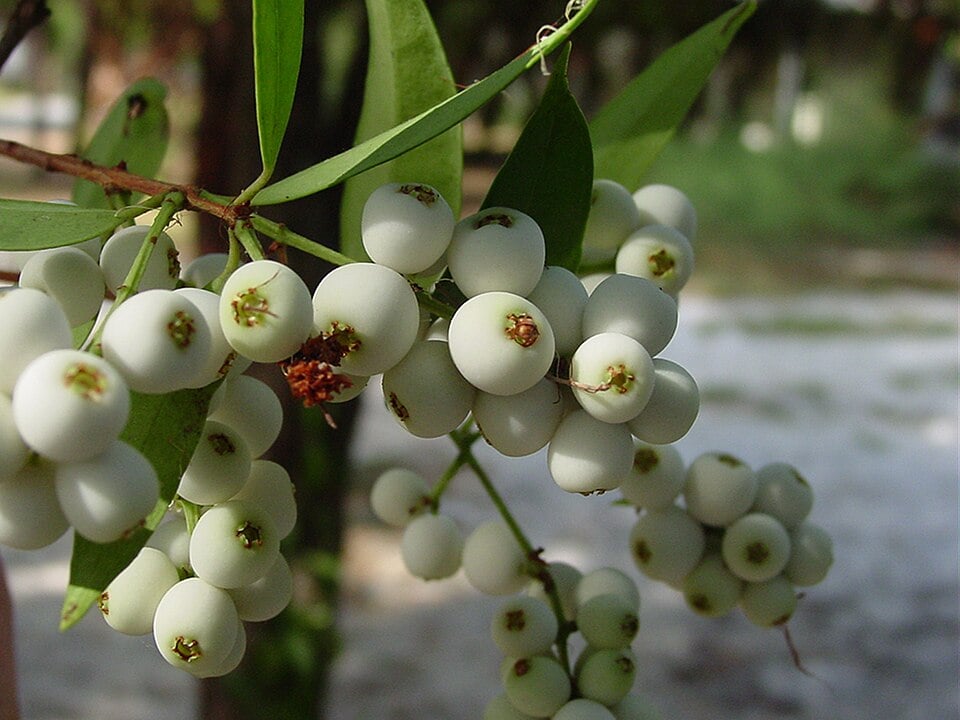
Psidium guineense
Swartz
Brazilian guava
iNaturalist· cc-by-nc
(c) Andrianiaina Angelo, some rights reserved (CC BY-NC), uploaded by Andrianiaina Angelo
iNaturalist· cc0
no rights reserved, uploaded by Luis Capeletti
iNaturalist· cc-by
(c) Alex Popovkin, Bahia, Brazil, some rights reserved (CC BY)
Summary
Source: WikipediaPsidium guineense is a species of guava. Common names include Brazilian guava, Castilian guava, sour guava, Guinea guava (English language), Goyavier du Brésil (French language), brasiliaanse koejawel (Afrikaans), Stachelbeerguave (German language), chobo, diondan (Bolivia), guayabillo de tierra fria (El Salvador), araçá do campo, aracahy (Brazil), guayaba brava, sacha guayaba (Peru), allpa guayaba (Ecuador), guayaba agria (Colombia, Venezuela, Mexico), guayaba acida, chamach, pichippul (Guatemala), guísaro (Costa Rica), and guayabita de sabana (Panama).
Description
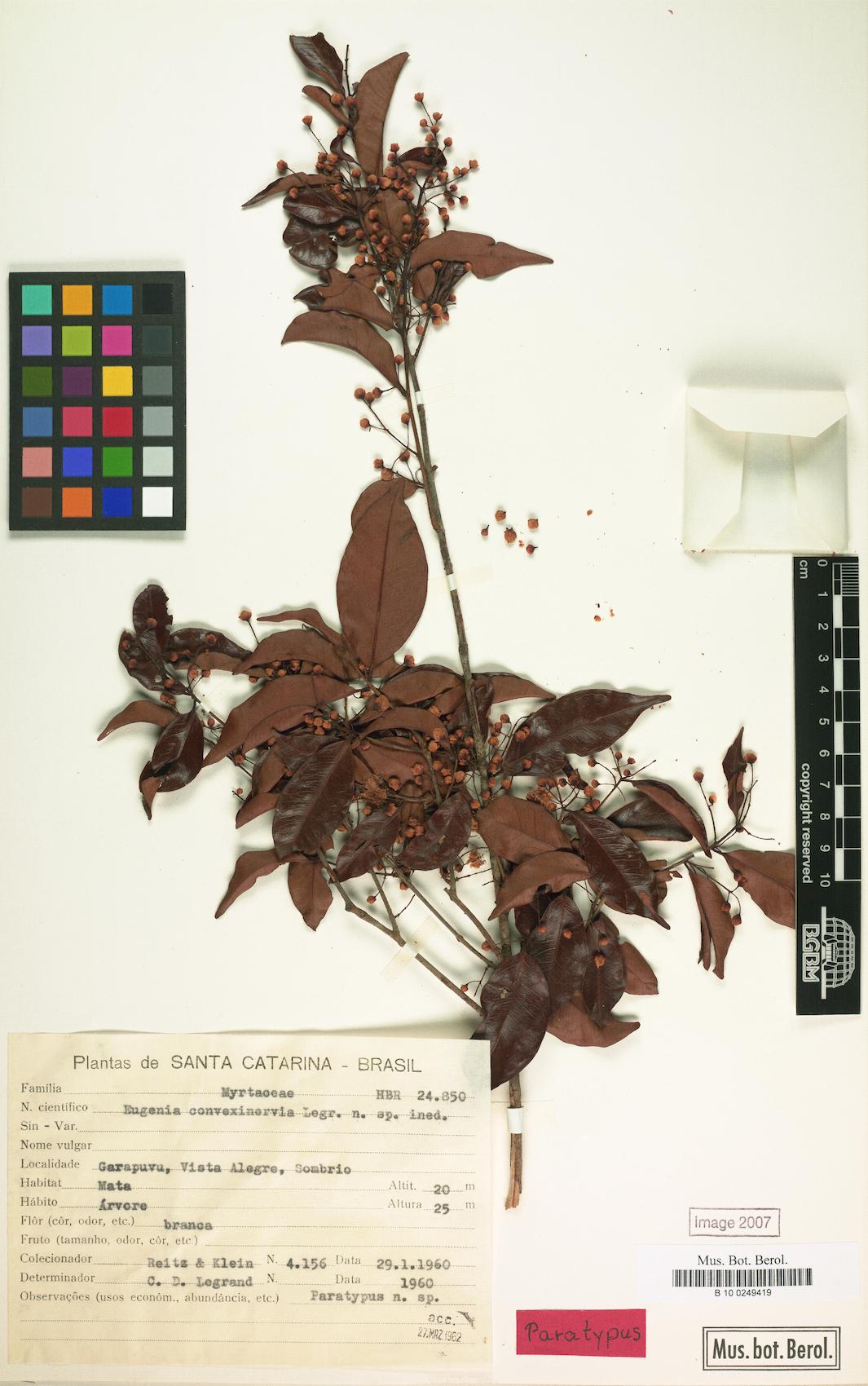
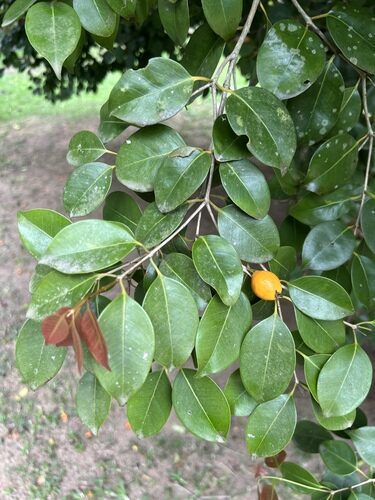
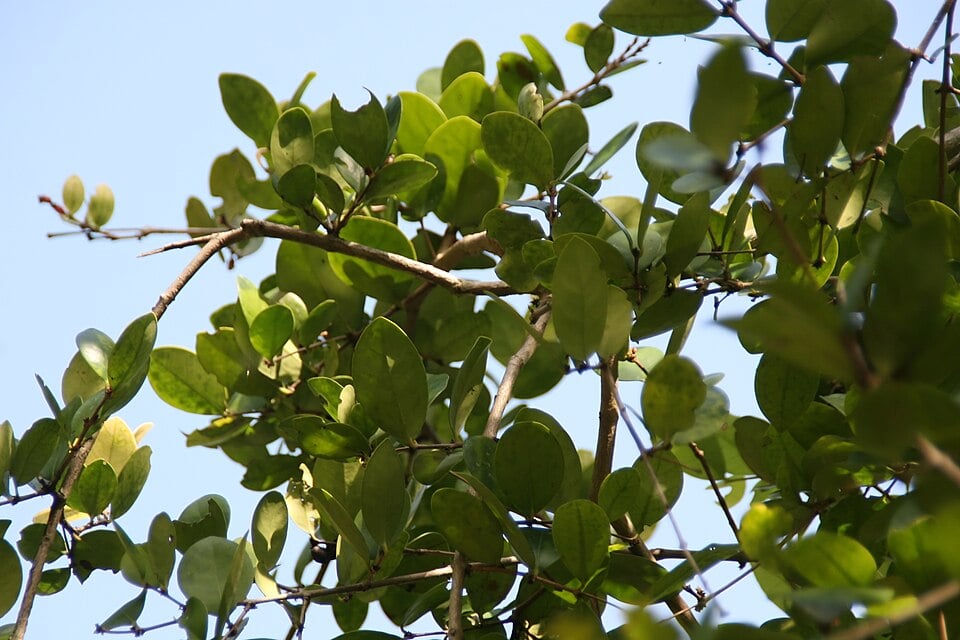
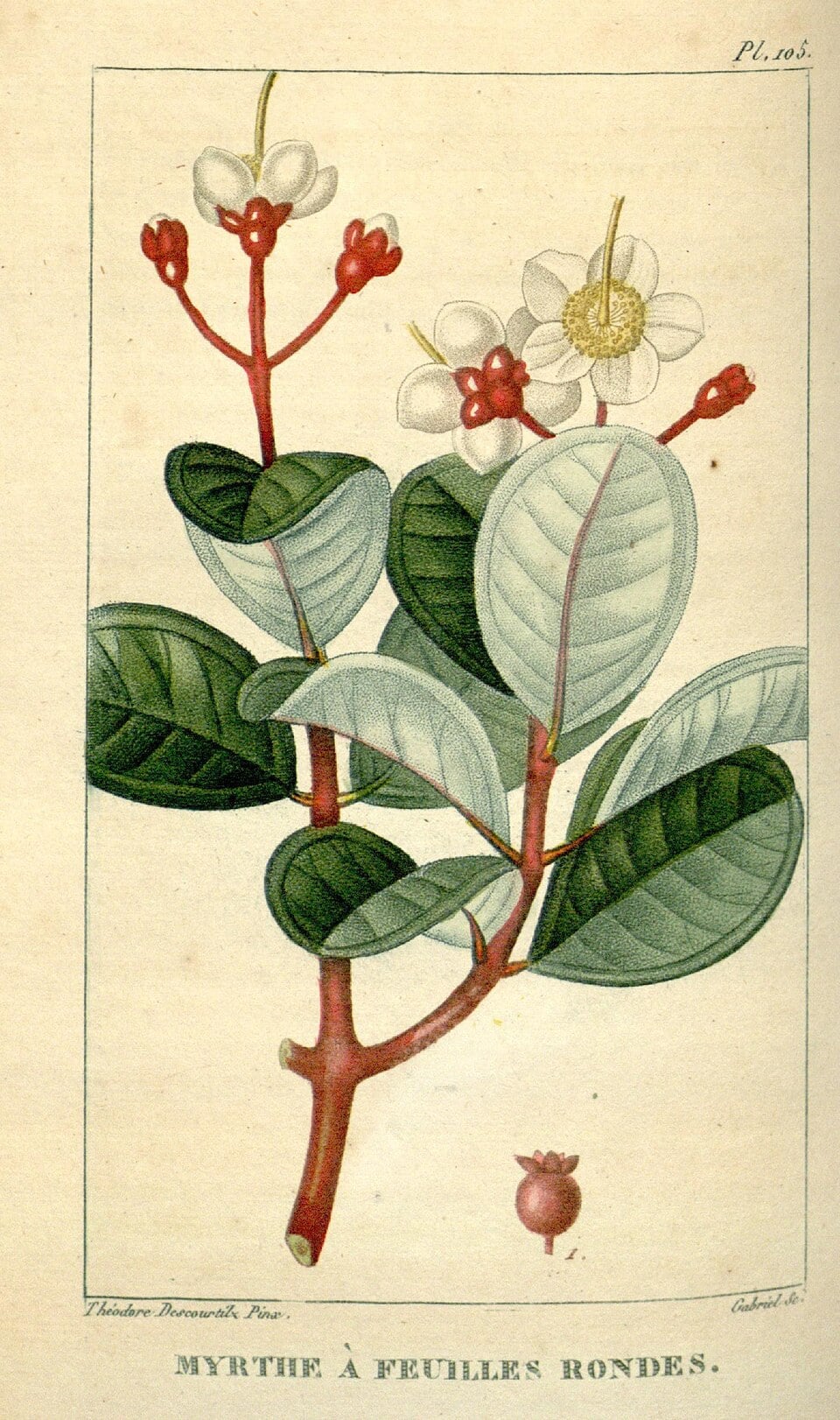
A small shrub or tree. It grows 1-8 m high. The trunk is 2-10 cm across. It has an appearance like a strawberry guava tree. The leaves are opposite and simple. They are 8-10 cm long by 4-6 cm wide. The flowering stalks have 1-3 flowers. The flower stalk is 1-1.5 cm long and large and hairy. The fruit are round or pear shaped but like common guava. They occur singly on new growth. They are 2-3 cm wide. The skin is yellow. The pulp is white and acidic. There are several seeds.
Edible Uses
Fruit - usually eaten raw, it can also be baked, stewed or made into a paste. The small, greenish-yellow fruits are subacid to acid, with a hint of strawberry in the flavour. They lack the strong musky aroma of the common guava (P. guajava). The ovoid fruit is a bit smaller than the common guava and too bitter or resinous to be palatable. The ellipsoid fruit is 2 - 3cm in diameter.
Traditional Uses
The fruit is eaten fresh but also used for jellies and preserves. They are also used baked or stewed.
This uses section is brief — help expand it
Medicinal Uses
A decoction of the bark, or of the roots, is employed to treat urinary diseases, diarrhoea and dysentery. It is said to reduce varicose veins and ulcers on the legs. A leaf decoction is taken to relieve colds, bronchitis and diarrhoea. The juice of the young fruit is squeezed and used as a treatment for dysentery and upset stomachs.
Distribution
A tropical plant. It can grow in subtropical regions. It can tolerate some drought. In Bolivia it grows between 200-2,500 m altitude. It can tolerate a variety of soil conditions. In Argentina it grows below 500 m above sea level.
Where It Grows
Africa, Amazon, Andes, Argentina, Asia, Australia, Bangladesh, Belize, Bolivia, Brazil, Central Africa, Central America, Colombia, Congo DR, Costa Rica, Cuba, Dominican Republic, Ecuador, El Salvador, French Guiana, Guadeloupe, Guatemala, Guianas, Guyana, Haiti, Honduras, India, Indonesia, Jamaica, Marquesas, Martinique, Mexico, Myanmar, Nicaragua, North America, Northeastern India, Pacific, Panama, Paraguay, Peru, Philippines, SE Asia, South America*, Sri Lanka, Suriname, Trinidad and Tobago, Venezuela, West Indies,
Cultivation
Plants can be grown from seed, cuttings or air-layering. It can also be grafted.
Propagation
Seed - Cuttings
Other Uses
The bark is rich in tannin. The wood is strong and used for tool handles, beams, planks and agricultural instruments.
Production
It is slow growing.
Other Information
It is cultivated.
Notes
There are about 150 Psidium species.
Nutrition
| Part | Moisture | kJ | kcal | Protein | Vit A | Vit C | Iron | Zinc |
|---|---|---|---|---|---|---|---|---|
| Fruit | 77.3 | 307 | 73 | 1 | — | 1.5 | 1.8 | 2.8 |
Synonyms
Also Known As
Araca de Brasil, Araca, Araca-goiaba, Araca morango, Bon peyara, Embul pera, Goiaba, Guabillo, Guavasteen, Guayaba Agria, Guayaba brava, Guayabillo, Guayabita, Guayabo, Guinea guava, Guisaro, Huayava, Libagoejuba, Lipela, Ocker-berry, Opela, Pohon jambu brazil, Sabanera
References (51)
- Altschul, S.V.R., 1973, Drugs and Foods from Little-known Plants. Notes in Harvard University Herbaria. Harvard Univ. Press. Massachusetts. no. 3048 (As Psidium chrysobalanoides)
- Ambasta S.P. (Ed.), 2000, The Useful Plants of India. CSIR India. p 499
- Ashton, M. S., et al 1997, A Field Guide to the Common Trees and Shrubs of Sri Lanka. WHT Publications Ltd. pdf p 294
- Bortolotto, I. M., et al, 2018, Lista preliminar das plantas alimenticias nativas de Mato Grosso do Sul, Brasil. Iheringia, Serie Botanica, Porto Alegre, 73 (supl.):101-116
- Brazil: Biodiversity for Food and Nutrition. http://www.b4fn.org/countries/brazil/
Show all 51 references Hide references
- Coronel, R.E., 1982, Fruit Collections in the Philippines. IBPGR Newsletter p 10 (As Psidium molle)
- Chizmar Fernandez, C., et al, 2009, Plantas comestibles de Centroamerica. Instituto de Biodiversidad, Costa Rica. p 249
- Flowerdew, B., 2000, Complete Fruit Book. Kyle Cathie Ltd., London. p 154 (As Psidium araca) and (As Psidium polycarpon)
- Fouqué, A., 1972, Espèces fruitières d'Amérique tropicale. Institut français de recherches fruitierès outre-mer (As Psidium albidum)
- Garner, R.J., and Chaudhri, S.A., (Ed.) 1976, The Propagation of Tropical fruit Trees. FAO/CAB. p 532 (As Psidium araca)
- Grandtner, M. M., 2008, World Dictionary of Trees. Wood and Forest Science Department. Laval University, Quebec, Qc Canada. (Internet database http://www.wdt.qc.ca)
- Grandtner, M. M. & Chevrette, J., 2013, Dictionary of Trees, Volume 2: South America: Nomenclature, Taxonomy and Ecology. Academic Press p 545
- Hedrick, U.P., 1919, (Ed.), Sturtevant's edible plants of the world. p 531 (As Psidium araca) and p 532 (As Psidium polycarpon)
- Hibbert, M., 2002, The Aussie Plant Finder 2002, Florilegium. p 242
- Hunter, D., et al, 2019, The potential of neglected and underutilized species for improving diets and nutrition. Planta (2019) 250:709-729
- Kermath, B. M., et al, 2014, Food Plants in the Americas: A survey of the domesticated, cultivated and wild plants used for Human food in North, Central and South America and the Caribbean. On line draft. p 721 (Also as Psidium albidum and Psidium multiflorum)
- Lazarides, M. & Hince, B., 1993, Handbook of Economic Plants of Australia, CSIRO. p 200
- Leticia, Z., et al, 2015, Do Socioeconomic characteristics explain the knowledge and use of native food plants in semiarid environments in Northeastern Brazil? Journal of Arid Environments 115:53-61
- Liengola, I. B., 2001, A contribution to the study of native edible plants by the Turumbu and Lokele of the Tshopo District, Province Orientale, D. R. Congo. Syst. Geogr. Pl. 71:687-698
- Lopez-Diago, D. & Garcia, N., 2021, Wild edible fruits of Colombia. Biota ColomBiana 22 (2) p 46
- Lorenzi, H., Bacher, L., Lacerda, M. & Sartori, S., 2006, Brazilian Fruits & Cultivated Exotics. Sao Paulo, Instituto Plantarum de Estuados da Flora Ltda. p 246
- Majumdar, K and Datta, N., 2009, Traditional wild edible fruits for the forest dwellers of Tripura, India. Pleione 3(2) 167-178
- Martin, F. W., et al, 1987, Perennial Edible Fruits of the Tropics. USDA Handbook 642 p 41 (As Psidium araca)
- Martin, F.W., C.W. Campbell and R.M. Ruberté, 1987, Perennial edible fruits of the tropics - An inventory. United States Department of Agriculture, Agricultural Research Service, Agriculture Handbook No. 642. Washington, D.C., USA (As Psidium albidum)
- Miguel, E., et al, 1989, A checklist of the cultivated plants of Cuba. Kulturpflanze 37. 1989, 211-357
- Morton, Julia F., 1987, Fruits of Warm Climates. Creative Resources Systems, Inc. . p. 365
- Mosango, M., Szafranski, F., 1985, Plantes sauvages à fruits comestibles dans les environs de Kisangani (Zaïre). In: Journal d'agriculture traditionnelle et de botanique appliquée, 32e année, pp. 177-190
- NYBG herbarium "edible"
- Pasha, M. K. & Uddin, S. B., 2019, Minor Edible Fruits of Bangladesh. Bangladesh J. Plant Taxon. 26(2): 299–313 (As Psidium araca)
- Paz, F. S., et al, 2021, Edible Fruit Plant Species in the Amazon Forest Rely Mostly on Bees and Beetles as Pollinators. Journal of Economic Entomology, XX(XX), 2021, 1–13
- Peres, M. K., 2011, Diasporos do Cerrado Atrativos para Fauna: Chave Interativa Caracterizacao Visual e Relacoes Ecologicas. Masters thesis. Universidade de Brasilia.
- Plants of Haiti Smithsonian Institute http://botany.si.edu/antilles/West Indies
- Popenoe,
- Prodr. 77. 1788
- PROSEA No. 2
- Purseglove, J.W., 1968, Tropical Crops Dicotyledons, Longmans. p 414
- Recher, P, 2001, Fruit Spirit Botanical Gardens Plant Index. www.nrg.com.au/~recher/ seedlist.html p 3
- Roa, J. A. G. & Boada, D. S. G., 2018, Fundación para el Fortalecimiento de la Fruticultura y Plantas Alimenticias no Convencionales en Colombia.
- Segura, S., et al, 2018, The edible fruit species in Mexico. Genet Resour Crop Evol (2018) 65:1767–1793
- Stanley, T. D. & Ross, E. M., 1986, Flora of south-eastern Queensland Volume 2. Queensland Government p 205
- Sukarya, D. G., (Ed.) 2013, 3,500 Plant Species of the Botanic Gardens of Indonesia. LIPI p 477
- Torre, de la, L., et al, 2008, Enciclopedia de las Plantas Útiles del Ecuador. Herbario QCA. Pontificia Universidad Católica del Ecuador. p 469
- Trans. Linn. Soc. London 11:213, t. 17. 1815 (As Psidium polycarpon)
- USDA, ARS, National Genetic Resources Program. Germplasm Resources Information Network - (GRIN). [Online Database] National Germplasm Resources Laboratory, Beltsville, Maryland. Available: www.ars-grin.gov/cgi-bin/npgs/html/econ.pl (10 April 2000)
- Van den Eynden, V., et al, 2003, Wild Foods from South Ecuador. Economic Botany 57(4): 576-603
- van Roosmalen, M.G.M., 1985, Fruits of the Guianan Flora. Utrecht Univ. & Wageningen Univ. p 332
- van Wyk, B., 2005, Food Plants of the World. An illustrated guide. Timber press. p 313
- Vasquez, Roberto Ch. & Coimbra, German S., 1996, Frutas Silvestres Comestibles de Santa Cruz. p 148
- Wiersema, J. H. & Leon, B., 2013, World Economic Plants. A Standard Reference CRC Press. 2nd Ed. p 568
- World Checklist of Useful Plant Species 2020. Royal Botanic Gardens, Kew
- www.colecionandofrutas.org