Rubus canadensis
L.
Low blackberry
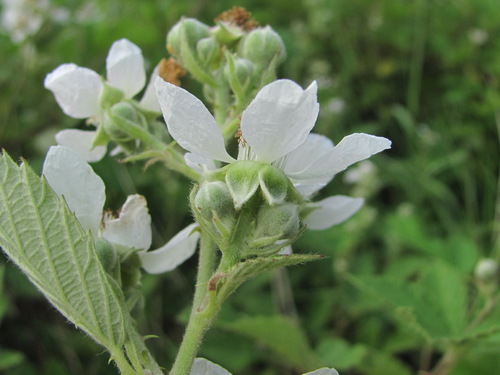
iNaturalist· cc-by-nc
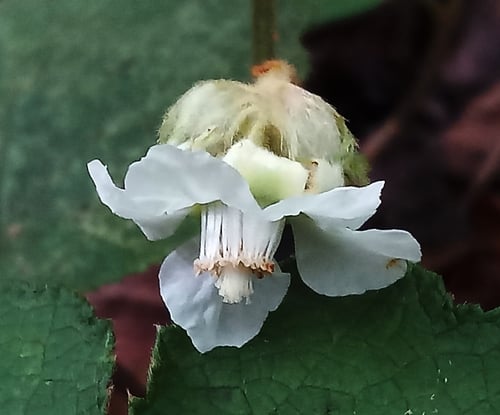
(c) Dawn Sherman, some rights reserved (CC BY-NC), uploaded by Dawn Sherman
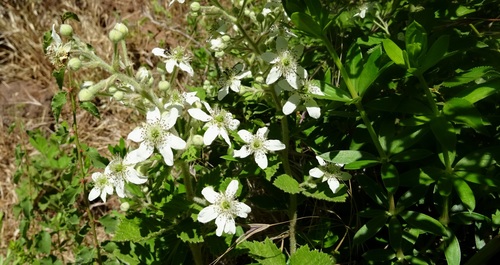
iNaturalist· cc-by-nc
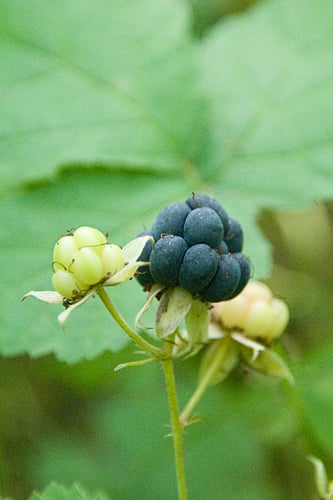
(c) cinna_latifolia, some rights reserved (CC BY-NC)
iNaturalist· cc-by-sa
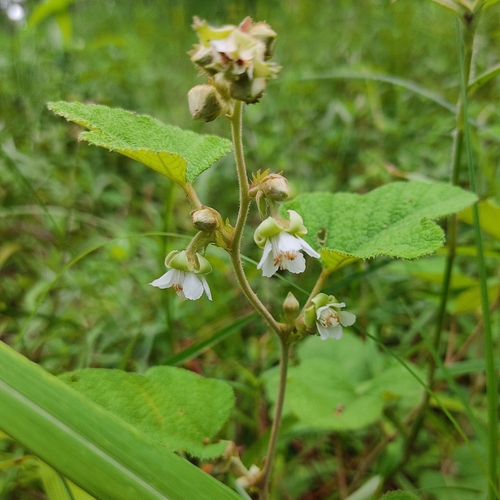
(c) Douglas Goldman, some rights reserved (CC BY-SA), uploaded by Douglas Goldman
Summary
Source: WikipediaRubus canadensis is a North American species of flowering plant in the rose family known by the common names smooth blackberry, Canadian blackberry, thornless blackberry and smooth highbush blackberry. It is native to central and eastern Canada (from Newfoundland to Ontario) and the eastern United States (New England, the Great Lakes region, and the Appalachian Mountains). It has also been sparingly recorded in Great Britain, in which it is often confused for the many other native blackberry species. This rhizomatous shrub forms thickets up to 2 to 3 meters (6.6 to 9.8 ft) tall. The leaves are deciduous and alternately arranged, each measuring 10 to 20 centimeters (3.9 to 7.9 inches) long. The inflorescence is a cluster of up to 25 flowers. The fruit is an aggregate of many small drupes, each of which contains a tiny nutlet. The plant reproduces by seed, by sprouting up from the rhizome, and by layering. The stems can grow one metre (39 inches) in height in under two months. Rubus canadensis grows in many types of forested habitat, as well as on disturbed sites. Associated plants may include mountain maple (Acer spicatum), serviceberry (Amelanchier spp.), hobblebush (Viburnum alnifolium), scarlet elder (Sambucus pubens), common blackberry (Rubus allegheniensis), beaked hazel (Corylus cornuta), southern mountain cranberry (Vaccinium erythrocarpum), minnie-bush (Menziesia pilosa), and rosebay (Rhododendron catawbiense). Many types of animals feed on the fruits and foliage of this shrub. The thickets provide cover and nesting sites. The fruits of this plant provided food for Native American groups, who also used parts of the plant medicinally at times.
Description
A deciduous shrub reaching 2.5 m tall, hardy to UK zone 3. Flowers appear in July. The plant is hermaphroditic and reproduces via apomixis. It tolerates light sandy, medium loamy, and heavy clay soils with good drainage. Grows in mildly acid, neutral, or mildly alkaline soil. Adapts to semi-shade or full sun and prefers consistently moist conditions.
Edible Uses
The fruit, which can grow up to 25mm long, is sweet, juicy, and richly flavoured — generally regarded as superior to most other blackberry species. It can be eaten raw or used in pies and jams. Fruit can also be pressed into cakes and dried for later use.
Medicinal Uses
The stems and fruit have been used in the treatment of dysentery. A decoction of the root has also been used for the same purpose.
Distribution
It is a temperate plant. It can tolerate frost.
Where It Grows
Britain, Canada, Denmark, Europe, Germany, North America, USA,
Cultivation
Easily grown in a good well-drained loamy soil in sun or semi-shade. This species is a blackberry with biennial stems, it produces a number of new stems each year from the perennial rootstock, these stems fruit in their second year and then die. The stems are free from prickles. The plant produces apomictic flowers, these produce fruit and viable seed without fertilization, each seedling is a genetic copy of the parent. Plants in this genus are notably susceptible to honey fungus.
Propagation
Seed requires stratification and is best sown in early autumn in a cold frame. Stored seed needs one month of stratification at around 3°C and should be sown as early in the year as possible. Prick out seedlings when large enough to handle and grow on in a cold frame, then plant out into permanent positions in late spring of the following year. Cuttings of half-ripe wood can be taken in July or August in a frame. Tip layering in July; plant out in autumn. Division can be done in early spring or just before leaf-fall in autumn.
Other Uses
A purple to dull blue dye is obtained from the fruit.
Dangerous Lookalikes
This plant can be confused with the following toxic species. Always verify identification carefully before consuming any wild plant.
Red Baneberry
Actaea rubra
Walter Siegmund (talk)
Low blackberry
Rubus canadensis
(c) Dawn Sherman, some rights reserved (CC BY-NC), uploaded by Dawn Sherman
Red Baneberry: Short herbaceous plant (no thorns), berries on thick red stems, each berry has a single seed, compound sharply-toothed leaves.
Low blackberry: Thorny woody canes (brambles), aggregate berry made of many drupelets, berries pull easily from receptacle.
Synonyms
Also Known As
Dewberry, Square blackberry
References (3)
- Mansfield's Encyclopedia of Agricultural and Horticultural Crops p 431
- Medsger, O. P., 1939, Edible Wild Plants. Macmillan Company. p 30
- www.eplantscience.com