Prunus laurocerasus
L.
Cherry laurel
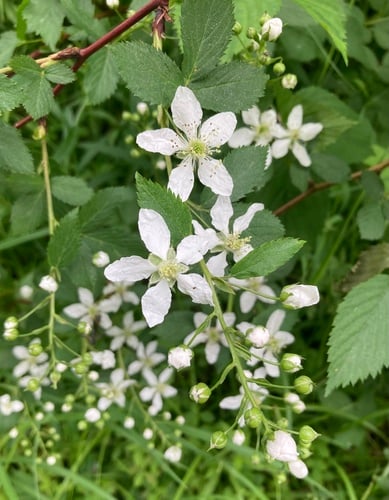
iNaturalist· cc-by-nc-sa
(c) edgeplot, some rights reserved (CC BY-NC-SA)
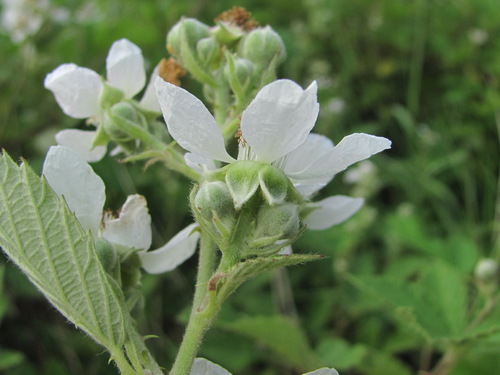
iNaturalist· cc-by-nc-sa
(c) fotoculus, some rights reserved (CC BY-NC-SA)
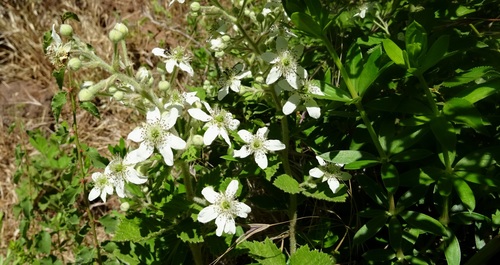
iNaturalist· cc-by-nc-sa
(c) c michael hogan, some rights reserved (CC BY-NC-SA), uploaded by c michael hogan
Summary
Source: WikipediaPrunus laurocerasus, also known as cherry laurel, common laurel and sometimes English laurel in North America, is an evergreen species of cherry (Prunus), native to regions bordering the Black Sea in southwestern Asia and southeastern Europe, from Albania and Bulgaria east through Turkey to the Caucasus Mountains and northern Iran. The common names of P. laurocerasus refer to the similarity of foliage and appearance to bay laurel (Laurus nobilis, the true laurel, in the family Lauraceae), and like the bay laurel, Prunus laurocerasus was used for making laurel wreaths, but the two plants are not closely related. It is not to be confused with its American relative Prunus caroliniana, which is also called cherry laurel.
Description
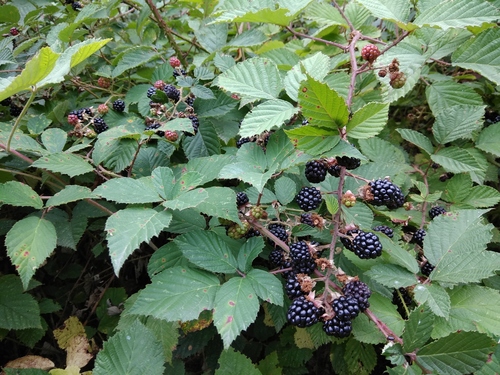
An evergreen shrub or tree. It grows 5-10 m high and spreads 6-9 m wide. It is a broad spreading tree. The bark is grey-brown and smooth. The leaves are oblong and 20 cm long by 6 cm wide. The leaves are alternate. They are glossy dark green above and pale green underneath. They are leathery and pointed. They have small wavy teeth. The leaf stalks are thick. The crushed leaves have the smell of almonds. The flowers are small and white. They are 8 mm across. They occur in erect heads 12 cm long. These are in the axils of leaves. The flowers have a scent. The fruit are small cherries which turn from red to black. They are 1.2 cm across.
Edible Uses
The fruit is sweet and reasonably pleasant when fully ripe, about 8mm in diameter with one large seed. The cultivar 'Camelliifolia' bears large quantities of fruit; when fully ripe it is cherry-sized with a jelly-like texture and a slight astringency. Some sources suggest the fruit is poisonous, likely referring to unripe fruit — it has been eaten in large quantities without ill effect, though any bitter fruit should not be eaten in quantity as bitterness indicates the presence of toxic compounds. Water distilled from the leaves is used as an almond flavouring but should only be used in small quantities, as it is poisonous in large amounts. The seed can be eaten raw or cooked, but should not be consumed if it tastes too bitter — see toxicity notes.
Traditional Uses
CAUTION: The leaves can contain prussic acid. This is removed by boiling and changing the water. The fruit are eaten raw and used in jam. The thick glossy leaves have a flavour like bitter almond and are used in cooking. They flavour dessert puddings. They can be used for tea.
Medicinal Uses
The fresh leaves are antispasmodic, narcotic and sedative, and are of value in treating coughs, whooping cough, asthma, dyspepsia and indigestion. A cold infusion of the leaves is used externally as a wash for eye infections. The leaves should only be used fresh, as the active principles are destroyed by drying. The best time to harvest the leaves is debated. All members of the genus contain amygdalin and prunasin, which break down in water to form hydrocyanic acid (cyanide or prussic acid). In small amounts this exceedingly poisonous compound stimulates respiration, improves digestion and gives a sense of well-being.
Known Hazards
Leaves and seed may cause severe discomfort, and death, to humans if ingested. Historically, it was used for execution and political assassination in the Roman empire (e.g. Nero). The seeds contained within the cherries are poisonous like the rest of the plant, containing cyanogenic glycosides and amygdalin. This chemical composition is what gives the smell of almonds when the leaves are crushed. Laurel water, a distillation made from the plant, contains prussic acid (hydrogen cyanide) and other compounds and is toxic.
Distribution
It is a temperate plant. It is native to S.W. Asia and E. Europe. It is frost hardy. It is tolerant of shade. It grows on most soils except chalk soils. It suits hardiness zones 7-10. Tasmania Herbarium.
Where It Grows
Africa, Argentina, Armenia, Asia, Australia, Azerbaijan, Balkans*, Britain, Bulgaria, Caucasus, Central America, Central Asia, Chile, East Africa, Europe, France, Georgia, Germany, Greece, India, Italy, Jamaica, Macedonia, Mediterranean, New Zealand,North America, Slovenia, South America, Spain, Tajikistan, Tasmania, Turkey, Türkiye, USA, West Indies, Yugoslavia, Zimbabwe,
Cultivation
Requires a well-drained moisture retentive soil. Grows well in heavy clay soils. Thrives in a loamy soil, doing well on limestone. Prefers some chalk in the soil but it is apt to become chlorotic if too much is present, growing badly on shallow chalk. Extremely tolerant of shade, it succeeds in the dense shade of trees with almost no direct light and in their drip line, though it fruits better in a more sunny position. A very ornamental plant, there are many named varieties. The cultivar 'Otto Luyken' is a low growing narrow-leafed form that flowers in spring and autumn. The tiny flowers are powerfully fragrant but have a rather offensive odour. This is a matter of opinion, some people find the smell sweet and delightful. A greedy plant, inhibiting the growth of nearby plants, it should be introduced with care since it often self-sows in woodlands and can prevent the successful regeneration of native trees by shading out the seedlings. Most members of this genus are shallow-rooted and will produce suckers if the roots are damaged. The flowers attract butterflies and moths. This species is notably resistant to honey fungus. Subject to bacterial canker which can kill large branches. Trim (preferably with secateurs) in spring or late summer. Old plants can be cut back hard into the old wood in spring and will soon recover.
Propagation
Seed requires 2–3 months of cold stratification and is best sown in a cold frame as soon as it is ripe. Stored seed should be sown in a cold frame as early in the year as possible. Protect seed from mice. Germination can be slow, sometimes taking 18 months. Prick out seedlings into individual pots when large enough to handle, grow on in a greenhouse or cold frame through their first winter, and plant out in late spring or early summer the following year. Cuttings of half-ripe wood with a heel can be taken in July/August in a frame. Cuttings of mature wood can be taken in October in a sheltered north-facing border outdoors. Layering can be done in spring.
Other Uses
This plant is very tolerant of trimming and makes an excellent hedge, particularly in shady areas. Low-growing forms — notably 'Cherry Brandy', 'Otto Luyken', 'Zabelina' and 'Schipkaensis' — make good ground cover in sun or shade. Water distilled from the leaves is used in perfumery. Bruised leaves rubbed inside a container will remove strong odours such as garlic or cloves, provided any grease has first been fully cleaned off. A green dye can be obtained from the leaves, and a dark grey to green dye from the fruit. The wood is pinkish grey and is used in turnery and lathe work.
Other Information
It is cultivated.
Notes
There are about 200 Prunus species. Wild types can be invasive.
Synonyms
Also Known As
Islay, Chimaja
References (31)
- Ambasta, S.P. (Ed.), 2000, The Useful Plants of India. CSIR India. p 496
- Balut, G., 2016, Medicinal and wild food plants of Marmara Island (Balikesir - Turkey). Acta Societatis Botanicorum Poloniae 85 (2): 3501 (As Laurocerasus officinalis)
- Bussman, R. W., et al, 2016, A comparative ethnobotany of Khevsureti, Samtskhe-Javakheti, Tusheti, Svaneti, and Racha-Lechkhumi, Republic of Georgia (Sakartvelo), Caucasus. Journal of Ethnobiology and Ethnomedicine.
- Bussman, R. W., et al, 2021, Unity in diversity—food plants and fungi of Sakartvelo (Republic of Georgia), Caucasus. Journal of Ethnobiology and Ethnomedicine (2021) 17:72 p 14
- Coombes, A.J., 2000, Trees. Dorling Kindersley Handbooks. p 265
Show all 31 references Hide references
- Cundall, P., (ed.), 2004, Gardening Australia: flora: the gardener's bible. ABC Books. p 1094
- Dashorst, G.R.M., and Jessop, J.P., 1998, Plants of the Adelaide Plains & Hills. Botanic Gardens of Adelaide and State Herbarium. p 74
- Ertug, F, Yenen Bitkiler. Resimli Türkiye Florası -I- Flora of Turkey - Ethnobotany supplement (As Laurocerasus officinalis)
- Facciola, S., 1998, Cornucopia 2: a Source Book of Edible Plants. Kampong Publications, p 199 (As Laurocerasus officinalis)
- Glowinski, L., 1999, The Complete Book of Fruit Growing in Australia. Lothian. p 71
- Harris, E & J., 1983, Field Guide to the Trees and Shrubs of Britain. Reader's Digest. p 96
- Hedrick, U.P., 1919, (Ed.), Sturtevant's edible plants of the world. p 525
- Heywood, V. H. & Zohary, D.,1995, A Catalogue of the Wild Relatives of Cultivated Plants Native to Europe. Flora Mediterranea 5 - 1995, p 395
- Hibbert, M., 2002, The Aussie Plant Finder 2002, Florilegium. p 241
- http://www.botanic-gardens-ljubljana.com/en/plants
- INFOODSUpdatedFGU-list.xls
- Joyce, D., 1998, The Garden Plant Selector. Ryland, Peters and Small. p 153
- Kermath, B. M., et al, 2014, Food Plants in the Americas: A survey of the domesticated, cultivated and wild plants used for Human food in North, Central and South America and the Caribbean. On line draft. p 712
- Kizilarslan, C. & Ozhatay, N., 2012, An ethnobotanical study of the useful and edible plants of İzmit. Marmara Pharmaceutical Journal 16: 134-140, 2012. (As Laurocerasus officinalis)
- Kolayli, S., et al, 2003, Chemical and Antioxidant Properties of Laurocerasus officinalis Roem. (Cherry laurel) Fruit Grown in the Black Sea Region. Journal of Agricultural and Food Chemistry. 51:7489-7494 (As Laurocerasus officinalis)
- Kremer, B.P., 1995, Shrubs in the Wild and in Gardens. Barrons. p 98. (Fruit listed as poisonous)
- Lord, E.E., & Willis, J.H., 1999, Shrubs and Trees for Australian gardens. Lothian. p 67
- Marinelli, J. (Ed), 2004, Plant. DK. p 466
- Pieroni, A., 1999, Gathered wild food plants in the Upper Valley of the Serchio River (Garfagnana), Central Italy. Economic Botany 53(3) pp 327-341
- Plants for a Future, The Field, Penpol, Lostwithiel, Cornwall, PL22 0NG, UK. http://www.scs.leeds.ac.uk/pfaf/
- Ryan, S., 2008, Dicksonia. Rare Plants Manual. Hyland House. p 49
- Sansanelli, S., et al, 2014, Wild food plants traditionall consumed in the area of Bologna (Emilia Romagna region, Italy). Journal of Ethnobiology and Ethnomedicine 10:69
- Sfikas, G., 1984, Trees and shrubs of Greece. Efstathiadis Group. Athens. p 72
- Sp. pl. 1:474. 1753
- Wiersema, J. H. & Leon, B., 2013, World Economic Plants. A Standard Reference CRC Press. 2nd Ed. p 562
- World Checklist of Useful Plant Species 2020. Royal Botanic Gardens, Kew