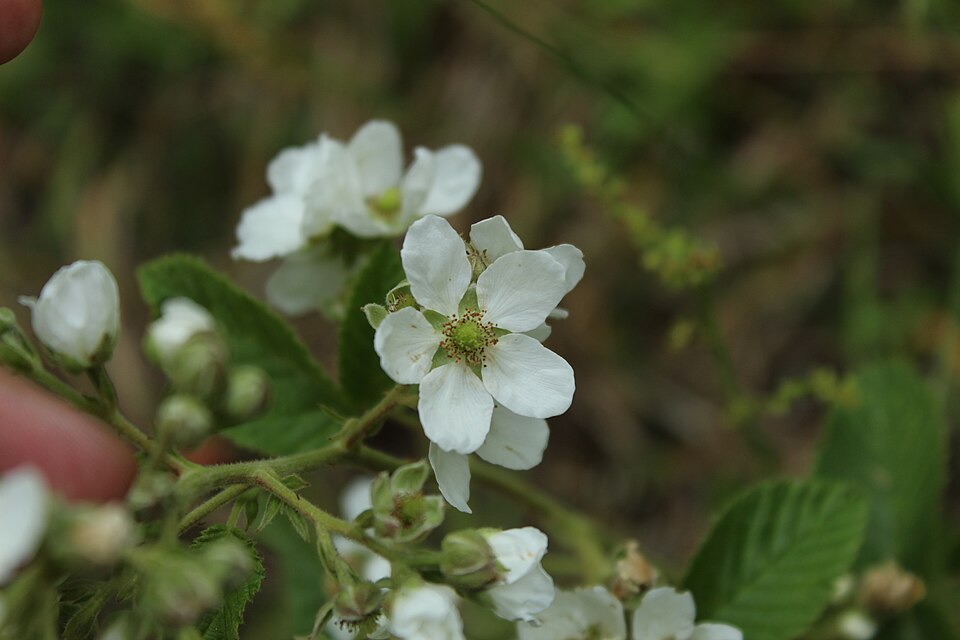
Geum japonicum
Thunb.
iNaturalist· cc0
no rights reserved, uploaded by 葉子
iNaturalist· cc-by-nc
(c) Wolli Huang, some rights reserved (CC BY-NC)
Summary
Source: WikipediaGeum japonicum, known as Asian herb bennet, is a yellow-flowering perennial plant native to North America and East Asia, especially Japan. It may be synonymous with Geum macrophyllum, the North American flower. As a traditional herbal remedy it is known as an astringent and used in poultices. However, in recent years, the Thunberg variant has received attention for other possible medical uses. With regard to muscular recovery, an extract has been found to help muscles recover following "severe injury", to reduce myocardial infarct size by 35–45% when administered following a heart attack. It also has possible anti-viral properties, including action against HIV and HSV. Action against tumors has also been noted.
Description
Geum japonicum is a hardy perennial growing to 0.6 m tall. Flowers appear from June to July with seeds ripening July to August. It tolerates light, medium, or heavy well-drained soils across mildly acidic to basic pH ranges and grows in semi-shade or full sun with preference for moist conditions. Hardy to UK zone 7.
Edible Uses
The plant is edible, though no further details are given.
Medicinal Uses
The root is used as a poultice applied externally to boils and ulcers. The whole plant is diuretic and astringent, and is cooked together with other foods as an astringent treatment for coughs and haemoptysis.
Distribution
It is a temperate plant.
Where It Grows
Asia, China, Japan, Korea,
Cultivation
Easily grown in any moderately good garden soil that is well-drained. Prefers a soil rich in organic matter. Hybridizes freely with other members of this genus.
Propagation
Sow seed in spring or autumn in a cold frame. Once seedlings are large enough to handle, prick them out into individual pots and plant out during summer. Divide clumps in spring or autumn, ideally every 3–4 years to maintain plant vigour. Larger clumps can go directly into permanent positions, but smaller ones are best potted up and grown on in a cold frame until well rooted, then planted out in spring.
Other Uses
None known
Notes
There are about 40 Geum species.
Synonyms
References (2)
- Plants for a Future database, The Field, Penpol, Lostwithiel, Cornwall, PL22 0NG, UK. http://www.scs.leeds.ac.uk/pfaf/
- www.efloras.org Flora of China Volume 9