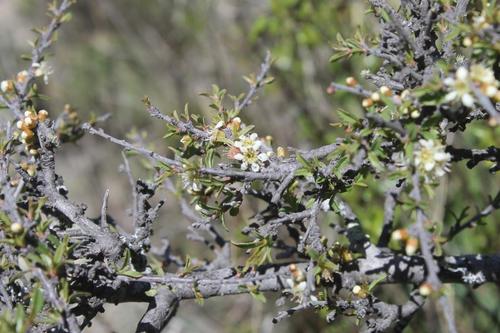
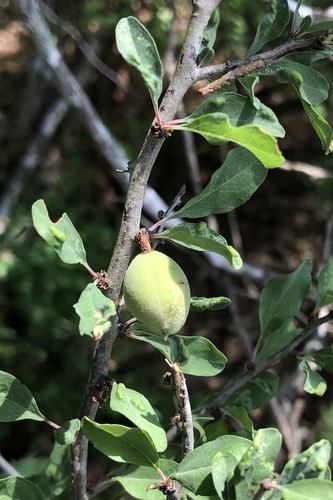
Cerasus humilis
(Bunge) Sokolov
Bush cherry, Ulagana
iNaturalist· cc-by-nc
(c) rudymaex, some rights reserved (CC BY-NC)
iNaturalist· cc-by-nc
(c) rudymaex, some rights reserved (CC BY-NC)
iNaturalist· cc-by-nc
(c) rudymaex, some rights reserved (CC BY-NC)
Description
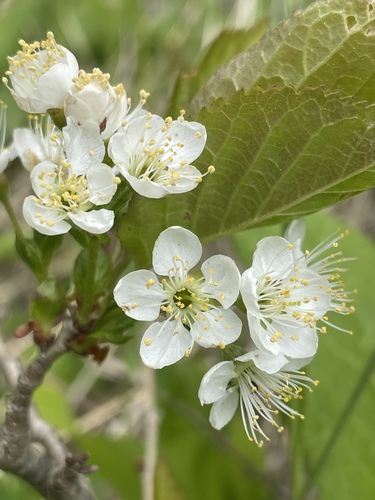
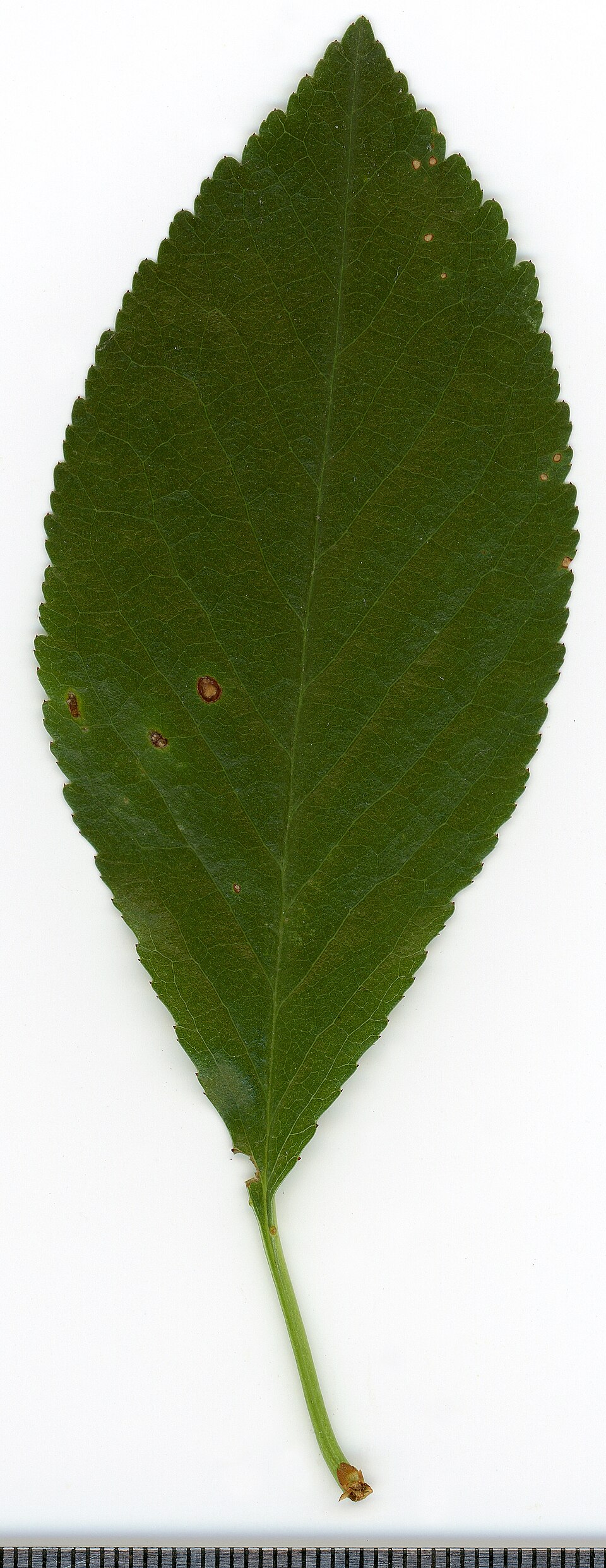
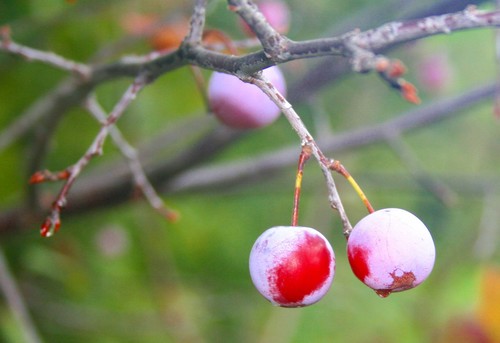
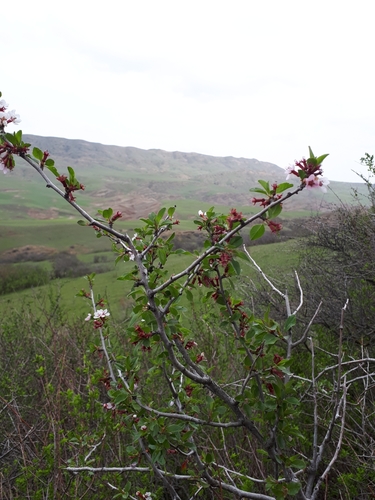
A deciduous shrub in the Rosaceae family that grows up to 1.5 m high, producing purple or red fruit. It is a temperate plant native to northern China, found at altitudes between 400–1,800 m.
Edible Uses
The mature fruit are eaten fresh. The leaves are dried and brewed as a tea drink.
Traditional Uses
The mature fruit are eaten. The leaves are used for a tea drink.
This uses section is brief — help expand it
Distribution
It is a temperate plant. It grows in northern China between 400-1,800 m altitude.
Where It Grows
Asia, China, Mongolia,
Notes
There are about 200 Prunus species.
Synonyms
References (6)
- Enum. pl. China bor. 23. 1833 (Mem. Acad. Imp. Sci. St.-Petersbourg Divers Savans 2:97. 1835) (As Prunus humilis)
- Flora of China Vol. 9, p 400 and Flora of China. www.eFloras.org
- Hui, Y. H., Handbook of Food Science, Technology, and Engineering. Volume 2. Table 98:6
- Khasbagan, Hu-Yin Huai, and Sheng-Ji pei, 2000, Wild Plants in the Diet of Athorchin Mongol Herdsmen in Inner Mongolia. Economic Botany 54(4): 528-536 (As Prunus humilis)
- Plants for a Future, The Field, Penpol, Lostwithiel, Cornwall, PL22 0NG, UK. http://www.scs.leeds.ac.uk/pfaf/ (As Prunus humilis)
Show all 6 references Hide references
- Sachula, et al, 2020, Wild edible plants collected and consumed by the locals in Daqinggou, Inner Mongolia, China. Journal of Ethnobiology and Ethnomedicine (2020) 16:60