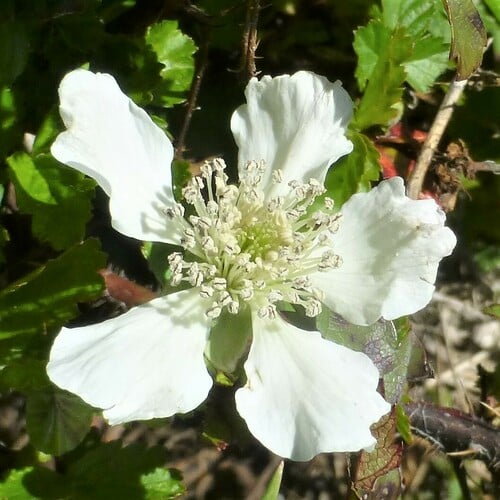
Prunus cerasifera subsp. divaricata
(Ledeb.) Schneid.
Macedonian plum, Wild cherry plum, Sour plum
gbif· cc-by-sa
GBIF
gbif· cc-by-sa
GBIF
gbif· cc-by-sa
GBIF
Summary
Source: WikipediaPrunus cerasifera is a species of plum known by the common names cherry plum and myrobalan plum. Native to Eurasia and naturalized elsewhere, P. cerasifera is believed to be one of the parents of the cultivated plum.
Description
The fruit can be yellow or reddish-violet.
This description is brief — help expand it
Edible Uses
The fruits are edible. Some varieties have sweet fruits that can be eaten fresh, while others are sour and better for making jam. Cherry plums are a key ingredient in Georgian cuisine where they are used to produce tkemali sauce, as well as a number of popular dishes, such as kharcho soup and chakapuli stew. It is a popular tree in Romania where its fruits are used for souring soups when immature, for eating raw when ripened, and for making moonshine when overripe because of their high sugar content.
Traditional Uses
The fruit are sour but are eaten raw. They can also be dried or preserved. It is used as a sour flavouring. They are made into a sauce that seasons soups, stews, vegetable dishes and grilled meats.
Distribution
Temperate.
Where It Grows
Armenia, Asia, Azerbaijan, Caucasus, Central Asia, Europe, Georgia, Greece, Mediterranean, Turkmenistan,
Notes
There are about 200 Prunus species.
Synonyms
References (5)
- Facciola, S., 1998, Cornucopia 2: a Source Book of Edible Plants. Kampong Publications, p 201
- Hedrick, U.P., 1919, (Ed.), Sturtevant's edible plants of the world. p 523 (As Prunus divaricata)
- Plants for a Future database, The Field, Penpol, Lostwithiel, Cornwall, PL22 0NG, UK. http://www.scs.leeds.ac.uk/pfaf/
- Postman, J. D., et al, 2012, Recent NPGS Coordinated Expeditions in the Trans-Caucasus Region to Collect Wild Relatives of Temperate Fruit and Nut Crops. In Acta Horticulturae Number 948 p 191-198
- Sfikas, G., 1984, Trees and shrubs of Greece. Efstathiadis Group. Athens. p 68