Rubus boliviensis
Focke
Zarzamora, Cari-cari
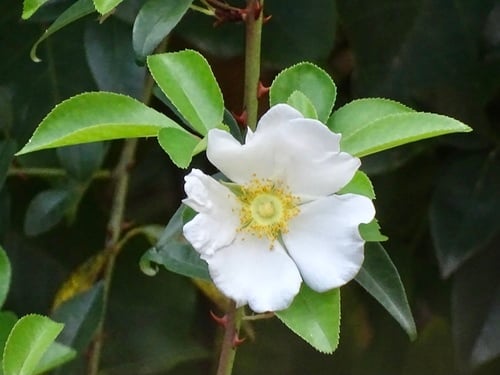
iNaturalist· cc-by-nc
(c) silvia_gallegos, some rights reserved (CC BY-NC)
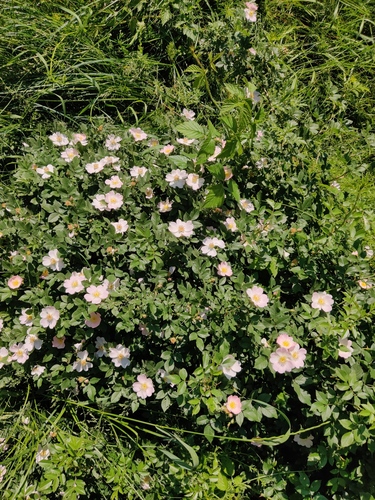
iNaturalist· cc-by-nc
(c) Daniel Hualpa, some rights reserved (CC BY-NC)
iNaturalist· cc-by-nc
(c) Daniel Hualpa, some rights reserved (CC BY-NC)
Description
A creeping plant. It grows to 10 m long. It has spines which curve backwards. The leaves are alternate and with 3 leaflets. They are 3-6 cm long by 2-4 cm wide. The spines are 1-2 mm long. The leaflets are oval. The edges have irregular teeth. They are green on top and whitish underneath. The flowering stalk is in the axils of leaves. The fruit is a multiple fruit made up of many small seeded fruits joined together.
Edible Uses
The fruit is eaten fresh and used to make marmalade.
Traditional Uses
The fruit are eaten and also used for marmalade.
This uses section is brief — help expand it
Distribution
A tropical plant. In Bolivia it grows between 600-2500 m altitude.
Where It Grows
Andes, Argentina, Bolivia, Colombia, Ecuador, South America*,
Notes
There are about 250 Rubus species.
Dangerous Lookalikes
This plant can be confused with the following toxic species. Always verify identification carefully before consuming any wild plant.
Red Baneberry
Actaea rubra
Walter Siegmund (talk)
Zarzamora
Rubus boliviensis
(c) silvia_gallegos, some rights reserved (CC BY-NC)
Red Baneberry: Short herbaceous plant (no thorns), berries on thick red stems, each berry has a single seed, compound sharply-toothed leaves.
Zarzamora: Thorny woody canes (brambles), aggregate berry made of many drupelets, berries pull easily from receptacle.
Also Known As
Mora pequena, Mora silvestre
References (7)
- Abh. Naturwiss. Vereine Bremen 4:158. 1875
- Altschul, S.V.R., 1973, Drugs and Foods from Little-known Plants. Notes in Harvard University Herbaria. Harvard Univ. Press. Massachusetts. no. 1417
- Carretero, A. L., 2005, Useful Plants and traditional knowledge in the Tucumano-Boliviano Forest. M. Sc. Thesis Institute of Biological Science University of Aarhus, Denmark p 55
- Lopez-Diago, D. & Garcia, N., 2021, Wild edible fruits of Colombia. Biota ColomBiana 22 (2) p 49
- Roa, J. A. G. & Boada, D. S. G., 2018, Fundación para el Fortalecimiento de la Fruticultura y Plantas Alimenticias no Convencionales en Colombia.
Show all 7 references Hide references
- Torre, de la, L., et al, 2008, Enciclopedia de las Plantas Útiles del Ecuador. Herbario QCA. Pontificia Universidad Católica del Ecuador. p 537
- Vasquez, Roberto Ch. & Coimbra, German S., 1996, Frutas Silvestres Comestibles de Santa Cruz. p 197