Prosopis cineraria
(L.) Macbride
Khejri bean
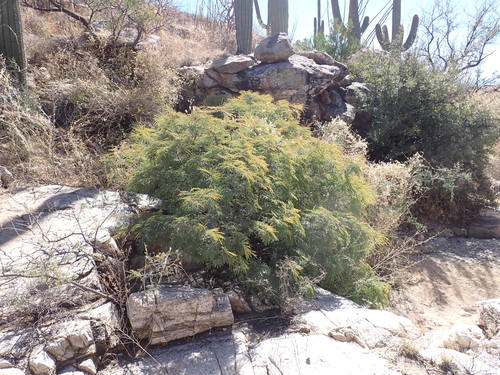
iNaturalist· cc-by-nc
(c) Altaf Habib, some rights reserved (CC BY-NC), uploaded by Altaf Habib
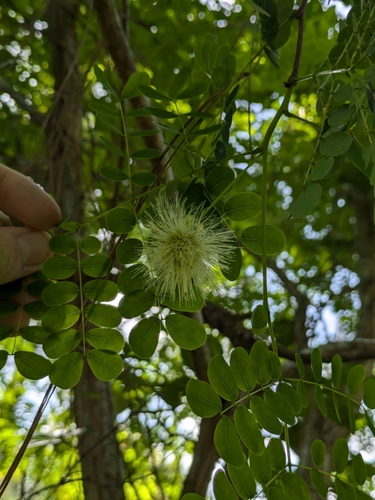
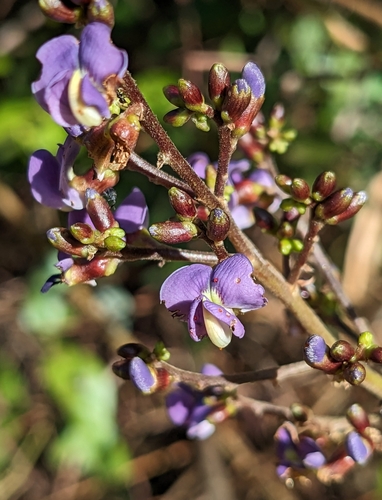
iNaturalist· cc-by-nc-sa
(c) Tamsin Carlisle, some rights reserved (CC BY-NC-SA)
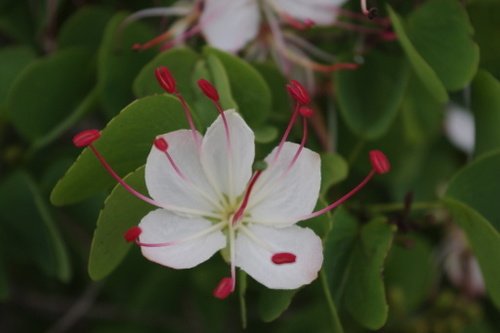
iNaturalist· cc-by-nc
(c) loryntrail9, some rights reserved (CC BY-NC), uploaded by loryntrail9
Summary
Source: WikipediaProsopis cineraria, also known as Persian mesquite or ghaf or khejri, is a species of flowering tree in the pea family, Fabaceae. It is native to arid portions of Western Asia and the Indian subcontinent, including Afghanistan, Bahrain, Iran, India, Oman, Pakistan, Saudi Arabia, the United Arab Emirates, and Yemen. Its leaves are bipinnate. It can survive extreme drought. It is an established introduced species in parts of Southeast Asia, including Indonesia. The ghaf is the national tree of the United Arab Emirates. Through the Give a Ghaf campaign its citizens are urged to plant it in their gardens to combat desertification and preserve their country's heritage. The desert village of Nazwa in the UAE is home to the Al Ghaf Conservation Reserve. Prosopis cineraria is also the state tree of Rajasthan (where it is known as khejri), Western Uttar Pradesh (where it is known as chhonkara) and Telangana (where it is known as jammi) in India. A large and well-known example of the species is the Tree of Life in Bahrain; it is approximately 400 years old and growing in a desert devoid of any obvious sources of water. In 1730 AD, the village of Khejarli near Jodhpur in Rajasthan was the scene of a violent environmental confrontation. Amrita Devi and her three young daughters gave their lives in an attempt to protect some khejri trees which Maharaja Abhai Singh of Marwar had ordered cut to make way for his new palace. This led to widespread defiance in which 363 people were killed trying to save the trees. In the 1970s, the memory of this sacrifice led to the start of the Chipko movement in India.
Description
A deciduous tree. It grows 12 m high. It has a deep taproot that can be 30 m long. It is thorny and has deeply fissured bark. The twigs are reddish when young. The spines occur singly. They are scattered on the twigs and have a cone shaped base. The leaves are twice feathered. They have 1-3 pairs of side stalks. There are 7-12 pairs of leaflets. They are small and pointed. They flowers are small and yellow. They are densely clustered on spikes. The fruit are long, slender, cylindrical pods. They are 12-25 cm long and 5-8 mm wide. They are leathery and hang down. They have a dry sweetish pulp. There are 10-15 seeds.
Edible Uses
The pods are used as a vegetable in both dried and green form and are rich in protein. During India's Rajputana famine of 1868–69, many lives were sustained by eating the sweetish inner bark, which was ground into flour and made into cakes. A gum is also obtained from the tree.
Traditional Uses
The dried bark, leaves and seeds have been dried and ground and mixed with other grain flours. The young leaves are eaten. The gum is edible. The bark has a bitter taste. It is probably better avoided. During famines it was ground to flour and used to make bread. The unripe pods are boiled and used as a vegetable. The mature pods are eaten as a fruit. The dried pods have been eaten raw. The sweetish pulp around the seeds is eaten green or dry, raw or cooked. It is also boiled with vegetables and salt and butter. It can also be dried and preserved.
Medicinal Uses
The plant is astringent, demulcent, and pectoral and is used as a folk remedy for a range of ailments. Flowers mixed with sugar are used to prevent miscarriage. Ashes are rubbed on the skin to remove hair. The bark is anthelmintic, refrigerant, and tonic, and is used to treat asthma, bronchitis, dysentery, leucoderma, leprosy, rheumatism, muscle tremors, piles, and mental wandering. Smoke from the leaves is used for eye troubles. The pod is considered astringent. The plant has been recommended for scorpion sting and snakebite, though it has not proved effective for these purposes.
Distribution
It is a tropical and subtropical plant. The plant grows best on sandy plains, sand dunes. It suits arid regions. It can grow in places with less than 75 cm of annual rainfall. It can tolerate alkaline soils and possibly salty soils. It can tolerate pH up to 9.8.
Where It Grows
Afghanistan, Arabia, Asia, India*, Iran, Indonesia, Kuwait, Middle East, Pakistan, Qatar, Saudi Arabia, Somalia, Sri Lanka, United Arab Emirates, UAE,
Cultivation
It can be grown from seeds, It can also be grown by budding to produce smaller plants. These can be used as a hedge. It can be grown with moth or Urd beans and mustard.
Propagation
Soften the hard seed coat before sowing to allow moisture absorption. This can be done by pouring a small amount of almost boiling water over the seeds and letting it cool quickly so the seeds are not cooked, then soaking for 12–24 hours. Alternatively, carefully abrade an area of the seed coat without damaging the embryo. Seeds retain viability for at least one year and in fact remain viable for decades. The tree also reproduces freely from root suckers.
Other Uses
The tree's deep root system, mono-layered canopy, and nitrogen-fixing ability make it compatible with agri-horticultural crops, boosting the growth and productivity of nearby plants without competing for moisture, so crops can be grown close to its trunk. It is planted to stabilize and reforest sand dunes and can tolerate periodic burial by sand, and it increases soil fertility beneath its canopy. A pale to amber gum with properties similar to gum acacia is obtained from the tree. Bark and leaf galls are used for tanning. Wood ash contains 31% soluble potassium salts, making it a useful potash source. The wood is used for boat frames, houses, posts, and tool handles, though the poor form of unimproved trees limits its timber use. The purplish-brown heartwood is prized in the Punjab for firewood and yields excellent charcoal at 5,000 kcal/kg. Flowers attract bees and other pollinators. Pods are eaten by birds and mammals, and the tree provides shelter and nesting habitat. Bark, fallen pods, and leaf litter shelter invertebrates and provide overwintering sites.
Other Information
Fruit are sold in markets.
Notes
Also as Mimosaceae.
Synonyms
Also Known As
Banni, Chaunkra, Ghaf, Hamra, Jambi, Jambu, Jammi chettu, Jand, Jandi, Jangli matar, Jhand, Jot, Kandi, Khaka, Khanjra, Khar, Khejari, Khejdi, Khejra, Khejri, Khijado, Parampu, Perumbai, Perumbay, Sami, Sangri, Saundad, Saundar, Saunder, Semru, Shami, Shami, Sheh, Shemri, Shum, Summi, Tambu
References (31)
- Ambasta, S.P. (Ed.), 2000, The Useful Plants of India. CSIR India. p 492
- Arora, R. K., 2014, Diversity in Underutilized Plant Species - An Asia-Pacific Perspective. Bioversity International. p 50
- BHANDARI,
- Bot. Exch. Club Soc. Brit. Isles 3:422. 1914 [As (L.) Druce]
- Chaturvedi, Y. et al, 2001, Level of B-carotene and effects of processing on selected fruits and vegetables of the arid zone of India. Plant Foods for Human Nutritiion 56: 127-132
Show all 31 references Hide references
- Dobriyal, M. J. R. & Dobriyal, R., 2014, Non Wood Forest Produce an Option for Ethnic Food and Nutritional Security in India. Int. J. of Usuf. Mngt. 15(1):17-37
- Facciola, S., 1998, Cornucopia 2: a Source Book of Edible Plants. Kampong Publications, p 153 (As Prosopis spicigera)
- Flora of Pakistan. www.eFloras.org
- GUPTA & KANODIA,
- Hedrick, U.P., 1919, (Ed.), Sturtevant's edible plants of the world. p 518 (As Prosopis spicigera)
- http://iscmumbai.maharashtra.gov.in/floristic%20survey.html
- Karim, F. M. & Dakheel, A, J., 2006, Salt-tolerant plants of the United Arab Emirates. 2006. International Center for Biosaline Agriculture, Dubai, UAE. p 115
- Kew Plants of the World Online
- KING,
- Kiple, K.F. & Ornelas, K.C., (eds), 2000, The Cambridge World History of Food. CUP p 1852
- Krishen P., 2006, Trees of Delhi, A Field Guide. DK Books. p 276
- Mahony, D., 1991, Trees of Somalia. A Field Guide for Development Workers. Oxfam Research Paper 3. p 9
- Majeed, M., et al, 2021, Gathered Wild Food Plants among Diverse Religious Groups in Jhelum District, Punjab, Pakistan. Foods 2021, 10, 594.
- Mant. pl. 1:68. 1767 (As Prosopis spicigera)
- Norton, J., et al, 2009, An Illustrated Checklist of the Flora of Qatar. UNESCO Office in Doha.
- Prachi, K., et al, 2012, Underutilized wild fruits of North Maharashtra. Journal of Research in Plant Sciences. (2012) 1:071-076
- Sahni, K.C., 2000, The Book of Indian Trees. Bombay Natural History Society. Oxford. p 78
- Salvi, J. et al, 2016, A review: Underutilized wild edible plants as a potential source of alternative nutrition. International Journal of Botany Studies. Volume 1; Issue 4; May 2016; Page No. 32-36
- SANDISON & HARRIS,
- SAXENA
- SHANKARNARAYAN & SAXENA
- Sharma, R. & Kaur, S., 2016, Antimicrobial and phytochemical screening of Trikuta- traditional food of western Rajasthan. Indian Journal of Traditional Knowledge Vol. 16(2), April 2017, pp. 270-276
- Shekhawat, G.S. & Anand, S., 1984, An Ethnobotanical Profile of Indian Desert. J. Econ. Tax. Bot. Vol.5 No.3 pp 591-598
- Singh, D. et al, 2014, Local wild plants from the Thar Desert for improved health and food security. in Promotion of Underutilized Indigenous Food Resources for Food Security and Nutrition in Asia and Pacific. FAO. Bangkok p 147
- Singh, H.B., Arora R.K.,1978, Wild edible Plants of India. Indian Council of Agricultural Research, New Delhi. p 79
- www.worldagroforestrycentre.org/treedb/