Prosopis chilensis
(Molina) Stuntz
Chilean algarrobo, Chilean mesquite
iNaturalist· cc-by-nc
(c) Diego Almendras G., some rights reserved (CC BY-NC)
iNaturalist· cc0
no rights reserved
iNaturalist· cc0
no rights reserved
Summary
Source: WikipediaProsopis chilensis is a deciduous tree growing to 12 m tall with an 8 m spread at a medium rate, hardy to UK zone 10. It adapts to light sandy and medium loamy soils with good drainage and nutritionally poor conditions. Tolerates mildly acidic through basic soils, very acidic, very alkaline, and saline conditions. Requires full sun and cannot grow in shade. Prefers dry to moist soil with good drought tolerance and resists strong winds but not maritime exposure. Insect-pollinated flowers support nitrogen fixation and wildlife attraction.
Description
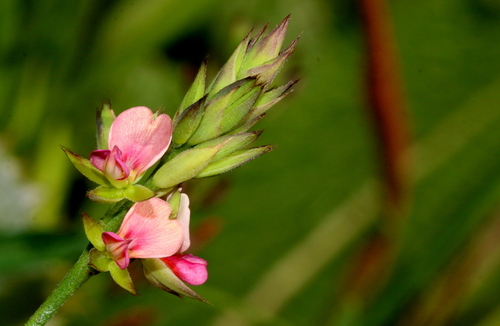
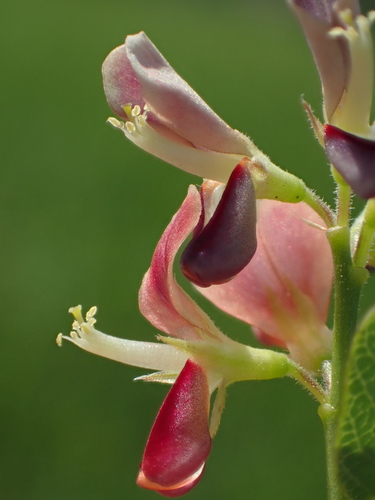
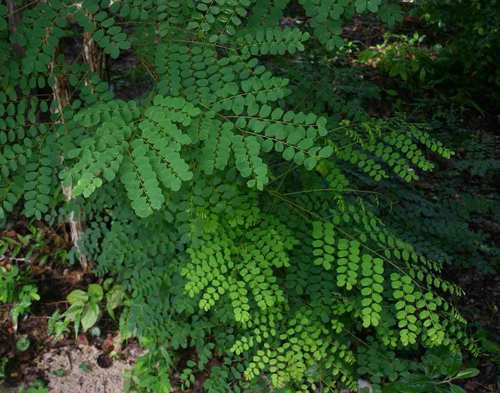
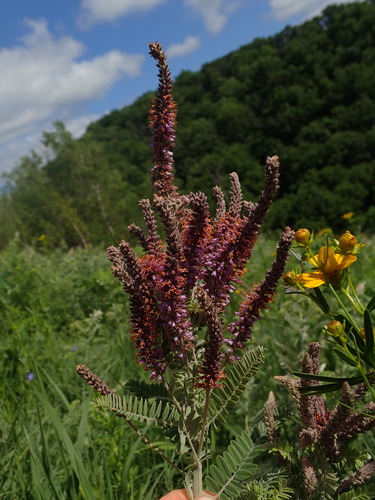
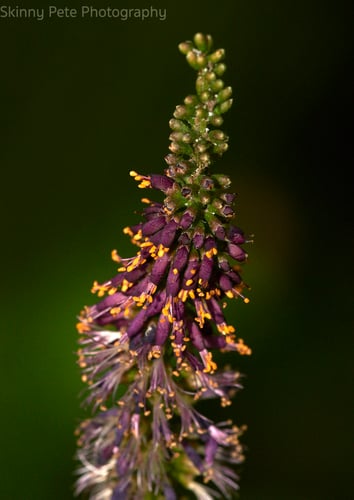
A tree. It grows 10-20 m high. It has thorns. The leaves are compound. They are divided into leaflets along the stalk. They are 12-15 cm long. The leaflets are opposite. They are long and narrow. They are 2-2.5 cm long by 2 mm wide. The flowering stalk hangs down. The flowers are green or yellow. The fruit is a pod. It is 10-20 cm long. It is slightly curved. The seeds are 6-7 mm across.
Edible Uses
The seedpods contain a sweet, edible pulp surrounding the seeds. They can be used to make a drink, or dried and ground into a powder.
Traditional Uses
The soft part of the pods are eaten. They are ground into meal and made into cakes. They are also used for a sweet drink and are fermented into beer. The seeds are also edible.
Medicinal Uses
None known
Distribution
A tropical plant. In Chile it grows at low altitudes. It can grow in drier areas. It grows in full sun. It grows in dry sandy soils. It can grow in salty soils. It grows from sea level to 2,900 m above sea level. In Argentina it grows between 500-2,500 m above sea level. It grows in areas with an annual rainfall between 150-400 mm. It can grow in arid places.
Where It Grows
Africa, Argentina, Australia, Benin, Bolivia, Burkina Faso, Cameroon, Canada, Chad, Chile, Colombia, Côte d'Ivoire, East Africa, Eritrea, Ethiopia, Gabon, Gambia, Ghana, Guinea, Guinée, Hawaii, India, Ivory Coast, Kenya, Liberia, Libya, Mali, Mauritania, Mexico, Middle East, Namibia, Niger, Nigeria, North Africa, North America, Paraguay, Peru, Saudi Arabia, Senegal, Sierra Leone, Somalia, South Africa, South America, Sudan, Tanzania, Togo, Uganda, Uruguay, USA, West Africa, Yemen,
Cultivation
Plants can be grown from seeds. The seeds have a hard outer coat which must be broken before germination. They should then be soaked before planting.
Propagation
Seed remains viable for several years in normal storage. The hard seed coat requires scarification before sowing, which can be achieved by burning, nicking, or immersion in boiling water. If seeds are left in the pods, several minutes of boiling are normally needed to break dormancy. Seeds are usually sown directly into containers. Germination begins after about 2 weeks and may continue for up to a month. Plants are ready for field planting when 30–35cm tall. Direct seeding is also possible.
Other Uses
The tree can be grown as a hedge and has potential for soil stabilization and erosion control. It fixes atmospheric nitrogen and can be used as a windbreak and source of fodder for livestock. The typical form of this species is thornless, making it of interest for breeding cultivars adapted to arid and semi-arid areas. A gum obtained from the stems has been used as a substitute for gum arabic. The heartwood is reddish-brown to dark brown; the sapwood is pale yellow. The grain is straight with a bright lustre. The wood is fairly dense, durable to very durable, easy to saw and plane, and capable of a good finish. It is used for parquet floors, doors, furniture, and general construction. The wood is excellent for firewood and charcoal; it ignites readily, has a high calorific value, emits intense heat, makes enduring embers, and leaves little ash. Flowers are rich in nectar and pollen, attracting bees and other pollinators. Pods are eaten by birds and mammals, and the tree provides shelter and nesting habitat. Bark, fallen pods, and leaf litter offer shelter and overwintering sites for invertebrates.
Other Information
It is cultivated.
Notes
Also as Mimosaceae.
Nutrition
| Part | Moisture | kJ | kcal | Protein | Vit A | Vit C | Iron | Zinc |
|---|---|---|---|---|---|---|---|---|
| Fruit | 6.1 | — | — | 12.5 | — | — | — | — |
Synonyms
Also Known As
Algarroba, Algarrobo chileno, Cashaw bean, Cupesi, Ibopope-guasu, Kabuli, Kiawe, Kikkar, Taco, Vilayati kheijra, Vilayati
References (27)
- Abbiw, D.K., 1990, Useful Plants of Ghana. West African uses of wild and cultivated plants. Intermediate Technology Publications and the Royal Botanic Gardens, Kew. p 46
- Ambasta, S.P. (Ed.), 2000, The Useful Plants of India. CSIR India. p 492
- Beckstrom-Sternberg, Stephen M., and James A. Duke. "The Foodplant Database." http://probe.nalusda.gov:8300/cgi-bin/browse/foodplantdb.(ACEDB version 4.0 - data version July 1994)
- Cordero, S. E., Abello, L. A., & Galvez, F. L., 2017, Plantas silvestres comestibles y medicinales de Chile y otras partes del mundo. CORMA p 103
- Ezeagu, I. E., 2009, Nutritional Value of Tropical Plant Seeds. in Modification of Seed Composition to Promote Health and Nutrition. Agronomy Monograph 51. American Society of Agronomy,
Show all 27 references Hide references
- Facciola, S., 1998, Cornucopia 2: a Source Book of Edible Plants. Kampong Publications, p 153
- Grandtner, M. M. & Chevrette, J., 2013, Dictionary of Trees, Volume 2: South America: Nomenclature, Taxonomy and Ecology. Academic Press p 534
- Kermath, B. M., et al, 2014, Food Plants in the Americas: A survey of the domesticated, cultivated and wild plants used for Human food in North, Central and South America and the Caribbean. On line draft. p 703
- Leon-Lobos, P., et al, 2022, Patterns of Traditional and Modern Uses of Wild Edible Native Plants of Chile: Challenges and Future Perspectives. Plants (Basel) v 11 (6) Table S1
- Mahony, D., 1991, Trees of Somalia. A Field Guide for Development Workers. Oxfam Research Paper 3. p 9
- Mbuya, L.P., Msanga, H.P., Ruffo, C.K., Birnie, A & Tengnas, B., 1994, Useful Trees and Shrubs for Tanzania. Regional Soil Conservation Unit. Technical Handbook No 6. p 408
- Kunkel,
- Macbride. J. F., 1942, Flora of Peru. Leguminosae. Field Museum Natural History. Chicago. p 109
- Martin, F. W., et al, 1987, Perennial Edible Fruits of the Tropics. USDA Handbook 642 p 99
- Moerman, D. F., 2010, Native American Ethnobotany. Timber Press. p 436
- Molares, S. & Ladio, A., 2012, The Usefulness of Edible and Medicinal Fabaceae in Argentine and Chilean Patagonia: Environmental Availability and Other Sources of Supply. Evidence-Based Complementary and Alternative Medicine. Volume 2012, Article ID 901918, 12 pages, Hindawi Publishing Corporation.
- Palmeiri, V. S., & Geisa, M. G., 2019, Las plantas comestibles empleadas por las comunidades comechingonas de San Marcos Sierras (Córdoba, Argentina). Primeras aproximaciones. Bol. Soc. Argent. Bot. 54: 295-309.
- Palmieri, V. S., et al, 2022, Wild edible plants of the Central Mountains in Argentina. Comparing subregions to understand the complexity of local botanical knowledge. Rodriguésia 73: e01092021. 2022
- Royal Botanic Gardens, Kew (1999). Survey of Economic Plants for Arid and Semi-Arid Lands (SEPASAL) database. Published on the Internet; http://www.rbgkew.org.uk/ceb/sepasal/internet [Accessed 28th April 2011]
- Scarpa, G. F., 2009, Wild food plants used by the indigenous peoples of South American Gran Chaco: A general synopsis and intercultural comparison. Journal of Applied Botany and Food Quality 83:90-101
- Ulian, T., et al, 2020, Unlocking plant resources to support food security and promote sustainable agriculture. Plants, People, Planet. 2020;2:421–445.
- U.S.D.A. Bur. Pl. Industr. Invent. Seeds 31:85. 1914
- Vasquez, Roberto Ch. & Coimbra, German S., 1996, Frutas Silvestres Comestibles de Santa Cruz. p 120
- Wiersema, J. H. & Leon, B., 2013, World Economic Plants. A Standard Reference CRC Press. 2nd Ed. p 557
- www.chileflora.com
- www.hidawi.com/journals/ecam/2012/901918/tab1/
- www.worldagroforestrycentre.org/treedb/