Acacia colei
Maslin & M.A.J. Thomson
Candelabra Wattle, Soap wattle
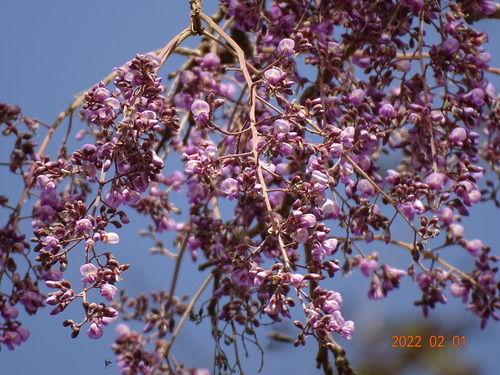
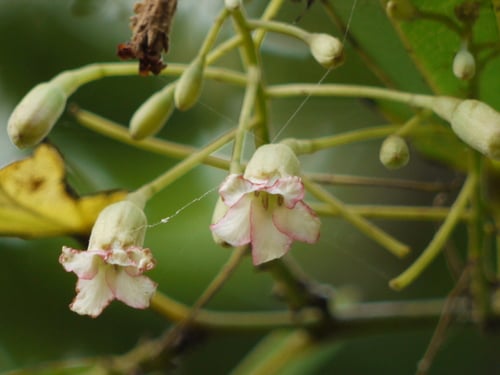
iNaturalist· cc-by
(c) desertnaturalist, some rights reserved (CC BY), uploaded by desertnaturalist
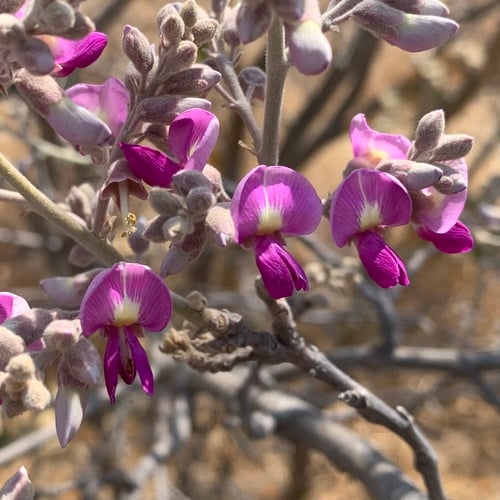
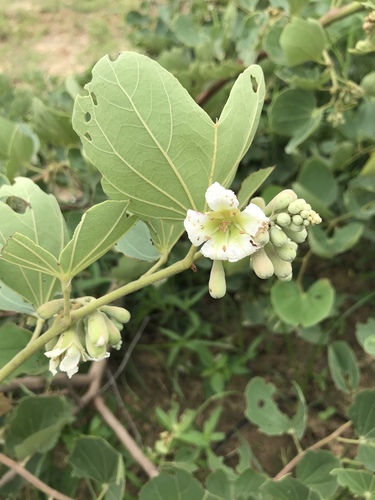
iNaturalist· cc-by-nc
(c) geoffbyrne, some rights reserved (CC BY-NC)
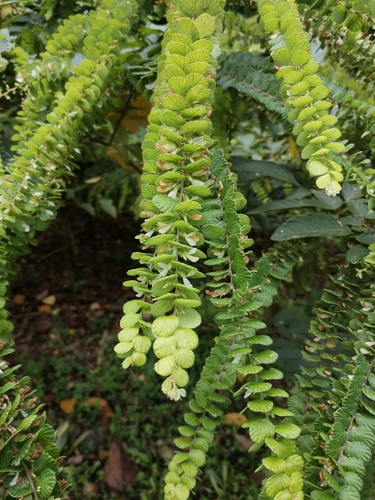
iNaturalist· cc-by-nc-sa
(c) Arthur Chapman, some rights reserved (CC BY-NC-SA), uploaded by Arthur Chapman
Summary
Source: WikipediaAcacia colei, commonly known as Cole's wattle, kalkardi, candelabra wattle or soap wattle, is a species of flowering plant in the family Fabaceae. It forms a spreading shrub or tree with narrowly elliptic, more or less straight phyllodes, spikes of golden yellow flowers, and openly and strongly curved, thinly leathery to crust-like, more or less glabrous pods. The species is endemic to northern Australia and is adapted to a dry environment. Its seeds are edible.
Description
A shrub or small tree. It grows 5 m tall. There are prickles along the stem. The leaves are twice divided and there are 8-18 pairs of pinnae. There are up to 50 pairs of pinnules on each pinnae. The flowers are yellow. They are in large clusters at the ends of branches. The pods are flattened.
Edible Uses
The seeds are cooked and can be prepared in the same ways as other small legume seeds. They are also ground into a powder and used as a flavouring in desserts or as a nutritious supplement in pastries and breads. Traditionally, dry seed was ground to a coarse flour, mixed with water, and either eaten as a paste or baked into a cake. The seedpods are openly and strongly curved, 50–100 mm long and 3.5–4 mm wide, containing very dark brown to black oblong seeds measuring 4–4.5 mm long. Acacia seeds are highly nutritious, containing around 26% protein, 26% available carbohydrate, 32% fibre, and 9% fat. The fat content is higher than most legumes, with the aril providing the bulk of fatty acids, which are largely unsaturated. Energy content is high across all species tested, at 1480 ±270 kJ per 100g. The seeds are low glycaemic index foods — starch is digested and absorbed slowly, producing a small but sustained rise in blood glucose and delaying the onset of exhaustion during prolonged exercise.
Traditional Uses
The green seeds are roasted within the pods. The ripe seeds are ground to make flour.
This uses section is brief — help expand it
Medicinal Uses
The bark, like that of all Acacia species, contains tannins in varying quantities and is astringent. Taken internally, astringents are used in the treatment of diarrhoea, dysentery, and internal bleeding. Applied externally as a wash, they are used to treat wounds and other skin problems, haemorrhoids, perspiring feet, some eye problems, and as a mouthwash. The tree also yields gum from the trunk and stems, which is sometimes taken internally in the treatment of diarrhoea and haemorrhoids.
Known Hazards
The seed of many Acacia species, including this one, is edible and highly nutritious, and can be eaten safely as a fairly major part of the diet. Not all species are edible, however, and some can contain moderate levels of toxins. Especially when harvesting from the wild, especial care should be taken to ensure correct identification of any plants harvested for food. Especially in times of drought, many Acacia species can concentrate high levels of the toxin Hydrogen cyanide in their foliage, making them dangerous for herbivores to eat.
Distribution
It is a tropical plant. It occurs in Australia in red sands.
Where It Grows
Africa, Asia, Australia*, India, Niger, Sahel, West Africa,
Cultivation
The seed are highly nutritious having 21% protein, 10% fat and 57% carbohydrate. Plants flower April to July in the southern hemisphere and fruit September to October. Acacia colei is a component of many semi-arid, subtropical to tropical plant communities in northern Australia, where it is found at elevations up to 450 metres. The mean annual temperature is around 25 - 27°c, rising to around 34 - 40°c in the hot season and falling to 8 - 16°c in the cool season. Light frosts happen occasionally in the most elevated locations. Rainfall is highly erratic, usually ranging from 230 - 725mm. Requires a sunny position. The plant is well-adapted to grow on infertile sandy soils that are not adapted to conventional food crops, and can also grow in claypans. Prefers a circumneutral soil, but can tolerate a pH ranging from 5.5 - 8.5. Established plants are drought tolerant. Acacia colei is a fast-growing but short-lived species, with a life-span of only 3 - 10 years. The plant can produce very heavy seed crops less than two years after planting and might have potential as a new human food in West Africa. They have been tested for toxicity and human trials have indicated that, at levels up to 25% of the diet, no anti-nutritional factors have been observed. Acacia colei has been used as an ornamental in west Africa, Thailand and northern Australia where its silvery foliage, mass flowering and wide adaptability to different soil types are highly valued. The seeds of most acacia species can be quickly and efficiently harvested at full maturity without the need for any specialised equipment, e.g. when a crop is heavy one person can harvest 3-5 kilos of clean seed of Acacia colei or Acacia tumida per hour. Small seed-bearing branches can be cut and beaten on sheets, or bushes can be beaten or shaken directly onto large sheets. In Niger, farmers prefer the curly-podded form (var. ileocarpa) because less seed is lost through shattering prior to harvest. In Australia the curved-podded form is preferred by seed collectors because the seed is more easily and completely dislodged from the pod during beating. Yields of 4 - 6 kilos of seed have been obtained from the plant. This species has a symbiotic relationship with certain soil bacteria; these bacteria form nodules on the roots and fix atmospheric nitrogen. Some of this nitrogen is utilized by the growing plant but some can also be used by other plants growing nearby. Carbon Farming - Cultivation: historic wild staple, new crop. Management: standard, coppice.
Propagation
Seed.
Other Uses
Acacia colei is a colonising species that forms dense regrowth in disturbed sites including roadsides and burnt-over areas, making it useful as a pioneer for restoring native woodland or establishing woodland gardens. It has been planted as a windbreak around fields and along roadsides; its bushy habit to ground level and heavy fall of large, slowly decomposing phyllodes enhance its value for sand stabilisation. It has given very satisfactory results when planted as the lower component of windbreaks combined with Eucalyptus camaldulensis. The plant has a shallow, wide-spreading root system that competes heavily with nearby crops and can reduce their yields. On sandy soils in semi-arid zones it may be used in wide alley cropping systems of approximately 20 metres between rows, where its benefits as a low windbreak may outweigh its depletion of soil moisture in the crop root zone. A red dye can be obtained from the lipid-rich arils by soaking them in water. The heartwood is dark brown, clearly demarcated from the pale sapwood; the wood is hard and dense, suitable for small decorative articles and light construction. It is an excellent source of firewood and charcoal, with a calorific value of 4670 kcal/kg for the wood and 7535 kcal/kg for the charcoal.
Production
Seeds can be stored. The seed are highly nutritious having 21% protein, 10% fat and 57% carbohydrate. Plants flower April to July in the southern hemisphere and fruit September to October.
Notes
There are about 1,350 Acacia species. Over 1,000 occur in Australia. A hexaploid plant. Also as Mimosaceae.
Nutrition
| Part | Moisture | kJ | kcal | Protein | Vit A | Vit C | Iron | Zinc |
|---|---|---|---|---|---|---|---|---|
| Seeds - dry | 8.3 | — | — | 21.2 | — | — | — | — |
| Seeds - young | — | — | — | — | — | — | — | — |
Synonyms
Also Known As
Alerrey, Aliriya, Alkarta, Alkart, Alyari, Cole’s wattle, Kalkardi, Pintupi
References (11)
- Aust. Syst. Bot. 5:737. 1992.
- Bonney, N., 1997, Economic Native Trees and Shrubs for South Australia. Greening Australia (SA) inc. Campbelltown SA 5074 p 3
- Cancilla, D., 2018, Ethnobotanical and Ethnozoological Values Desktop Assessment - Eliwana Project. p 9
- Doran, J. C. & J. W. Turnbull, eds. 1997. Australian trees and shrubs: species for land rehabilitation and farm planting in the tropics. Australian Centre for International Agricultural Research. p 128
- Flora of Australia Volume 11A, Mimosaceae, Acacia part 1. Melbourne: ABRS/CSIRO, 2001, p 32
Show all 11 references Hide references
- Kenneally, K.E., Edinger, D. C., and Willing T., 1996, Broome and Beyond, Plants and People of the Dampier Peninsula, Kimberley, Western Australia. Department of Conservation and Land Management. p 130
- Lister, P.R., P. Holford, T. Haigh, and D.A. Morrison, 1996, Acacia in Australia: Ethnobotany and potential food crop. p. 228-236. In: J. Janick (ed.), Progress in new crops. ASHS Press, Alexandria, VA.
- Miers, G., 2004, Cultivation and sustainable wild harvest of Bushfoods by Aboriginal Communities in Central Australia. RIRDC report W03/124 p 20
- USDA, ARS, National Genetic Resources Program. Germplasm Resources Information Network - (GRIN). [Online Database] National Germplasm Resources Laboratory, Beltsville, Maryland. Available: www.ars-grin.gov/cgi-bin/npgs/html/econ.pl (10 April 2000)
- Vigilante, T., et al, 2013, Island country: Aboriginal connections, values and knowledge of the Western Kimberley islands in the context of an island biological survey. Records of the Western Australian Museum Supplement 2013, 145-182
- World Checklist of Useful Plant Species 2020. Royal Botanic Gardens, Kew