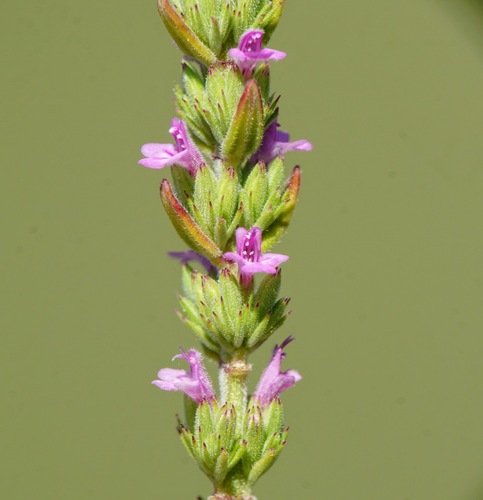
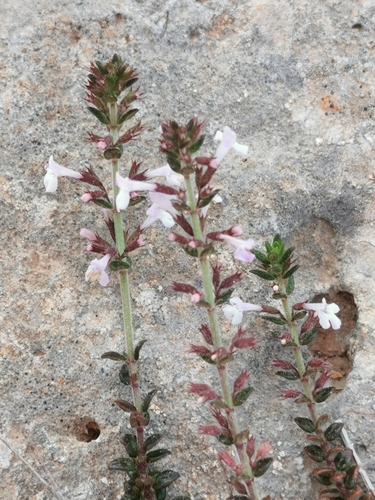
Premna mooiensis
(H. Pearson) W. Pieper
The stinker, Skunk bush
iNaturalist· cc-by-nc
(c) Troos van der Merwe, some rights reserved (CC BY-NC), uploaded by Troos van der Merwe
iNaturalist· cc-by-nc
(c) Troos van der Merwe, some rights reserved (CC BY-NC)
Description
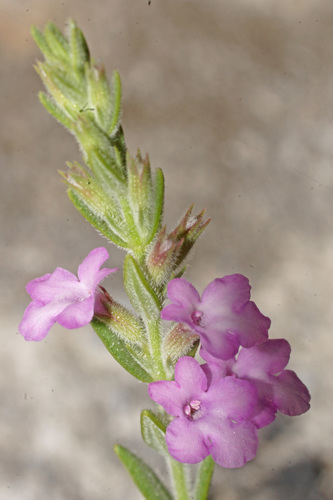
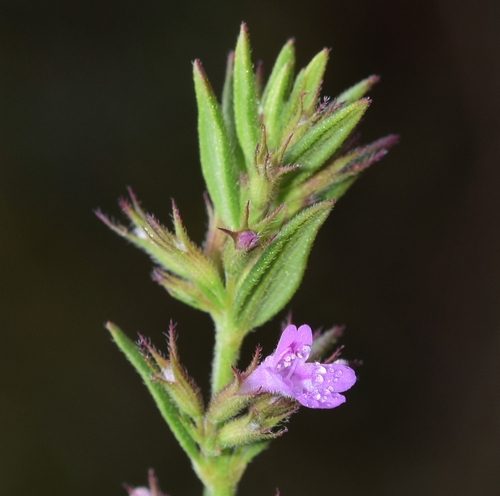
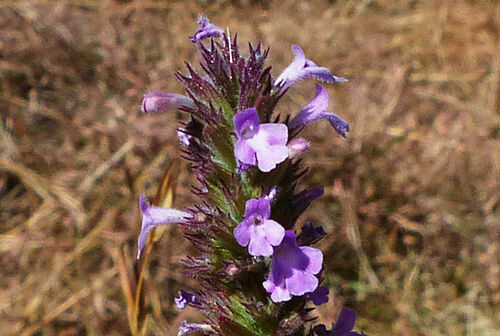
A shrub with several stems. They can be 2-12 m high. The bark is greyish-brown. The leaves are light green. The branches are angled and smooth. The leaves are clustered towards the ends. Leaves are 1.3-2.5 cm long and 0.8-1.3 cm wide. They are oval and the tips can be blunt or sharp. The base is narrowed. The flowers are sweet smelling. They are white or cream. They occur in loose clusters at the ends of branches. The fruit are small and pear shaped. They are 5 mm long. They are black when ripe. The fruit are edible.
Edible Uses
The fruit are eaten raw.
Traditional Uses
The fruit are eaten raw.
This uses section is brief — help expand it
Distribution
It is a tropical plant. It grows at low altitude in rocky areas.
Where It Grows
Africa, Eswatini, Sierra Leone, South Africa, Southern Africa, Swaziland, West Africa,
Other Uses
The wood is durable in the ground and has been used for fencing poles.
Notes
Also put in the family Verbenaceae.
Synonyms
Also Known As
Chacha'bane, Mophurokhu, Sidadada, Umcacabane, Umsuzwane, Umtyetyembane
References (7)
- Fox, F. W. & Young, M. E. N., 1982, Food from the Veld. Delta Books. p 363
- Long, C., 2005, Swaziland's Flora - siSwati names and Uses http://www.sntc.org.sz/flora/
- Palgrave, K.C., 1996, Trees of Southern Africa. Struik Publishers. p 805
- Palmer, E and Pitman, N., 1972, Trees of Southern Africa. Vol. 2. A.A. Balkema, Cape Town p 1949
- Peters, C. R., O'Brien, E. M., and Drummond, R.B., 1992, Edible Wild plants of Sub-saharan Africa. Kew. p 198
Show all 7 references Hide references
- Ruiters-Welcome, A. K., 2019, Food plants of southern Africa. Ph.D. thesis. Univ. of Johannesburg p 71
- Welcome, A. K. & Van Wyk, B.-E., 2019, An inventory and analysis of the food plants of southern Africa. South African Journal of Botany 122 (2019) 136–179