Pouzolzia hirta
(Blume) Hassk.
iNaturalist· cc-by-sa
(c) filibot.web, some rights reserved (CC BY-SA)
iNaturalist· cc-by
(c) Daniel Cahen, some rights reserved (CC BY)
iNaturalist· cc-by
(c) Daniel Cahen, some rights reserved (CC BY)
Description
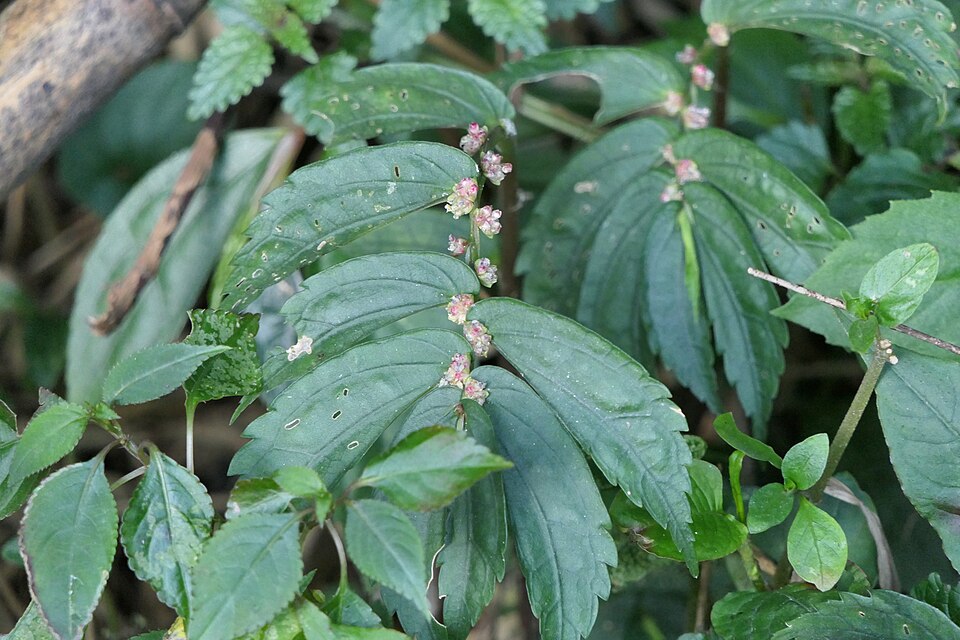
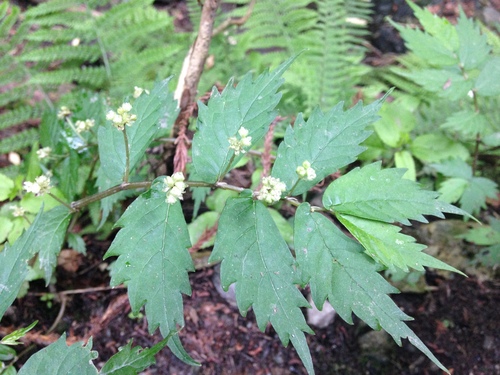
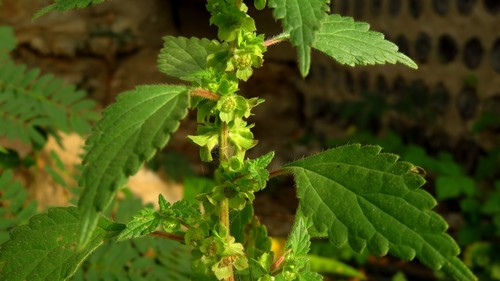
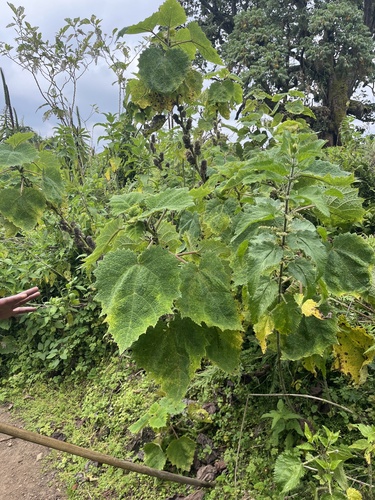
A small shrub or herb which lies along the ground. It grows to 1.5 m tall. It has many branches. The leaves are opposite and without leaf stalks. The leaves are long and sword shaped and with 3-5 side veins. The flowers are like a ball. The male and female flowers are separate and the flower ball is produced in the axils of leaves. The flowers are pinkish. The fruit is dry. It is enclosed in the outer ring of flower parts. Possibly now Gonostegia hirta
Edible Uses
The leaves are eaten raw or cooked, and the stems are also used. The fresh root is chewed.
Traditional Uses
The leaves are eaten raw or cooked. The stems are also used. The fresh root is chewed.
This uses section is brief — help expand it
Medicinal Uses
The leaves are considered to improve milk supply in nursing mothers.
Distribution
A tropical plant. It is common in wet land. It is often in ditches, creek banks and the edges of ponds. In Nepal it grows between 500-2400 m altitude. It grows in moist, open places.
Where It Grows
Asia, Australia, East Timor, Himalayas, India, Indochina, Laos, Malaysia, Myanmar, Nepal, Northeastern India, Pacific, Pakistan, Papua New Guinea, PNG, SE Asia, Timor-Leste, Vietnam,
Cultivation
The plants are grown from seeds or root offshoots.
Other Information
It is also a cultivated plant.
Notes
The leaves are considered to improve milk supply by nursing mothers.
Synonyms
Also Known As
Atenu, Aterno, Chiple, Hosskhoyik, Oike, Oyik, Pathura harjora, Ponnikeerai, Tengayen
References (20)
- Ambasta, S.P. (Ed.), 2000, The Useful Plants of India. CSIR India. p 488
- Cowie, I, 2006, A Survey of Flora and vegetation of the proposed Jaco-Tutuala-Lore National Park. Timor-Lests (East Timor) www.territorystories.nt/gov.au p 55
- Dobriyal, M. J. R. & Dobriyal, R., 2014, Non Wood Forest Produce an Option for Ethnic Food and Nutritional Security in India. Int. J. of Usuf. Mngt. 15(1):17-37
- Flora of Australia, Volume 3, Hamamelidales to Casuarinales, Australian Government Publishing Service, Canberra (1989) p 88
- Gangwar, A. K. & Ramakrishnan, P. S., 1990, Ethnobotanical Notes on Some Tribes of Arunachal Pradesh, Northeastern India. Economic Botany, Vol. 44, No. 1 pp. 94-105
Show all 20 references Hide references
- Hoare, A., 2003, Food use of the Lundayeh SW Sabah. Borneo Research Council.
- Leach, G. J., 1988, Bush Food Plants of the Blackwater and Karawari Rivers Area, East Sepik Province, Papua New Guinea. Science in New Guinea 14(2). p 104
- Lungphi, P., Wangpan, T. & Tangjang, S., 2018, Wild edible plants and their additional uses by the Tangsa community living in the Changlang district of Arunachal Pradesh, India. Pleione 12(2): 151 - 164. 2018.
- Manandhar, N.P., 2002, Plants and People of Nepal. Timber Press. Portland, Oregon. p 249 (As Gonostegia hirta)
- May, R.J., 1984, Kaikai Aniani. A Guide to Bush Foods Markets and Culinary Arts of Papua New Guinea. Robert Brown and Associates. p 63
- Mot So Rau Dai an Duoc O Vietnam. Wild edible Vegetables. Ha Noi 1994, p 64
- Peekel, P.G., 1984, (Translation E.E.Henty), Flora of the Bismarck Archipelago for Naturalists, Division of Botany, Lae, PNG. p 153, 154
- Powell, J.M., Ethnobotany. In Paijmans, K., 1976, New Guinea Vegetation. Australian National University Press. p 111
- Rana, D., et al, 2020, Use of medicinal plants for treating different ailments by the indigenous people of Churah subdivision of district Chamba, Himachal Pradesh, India. Environment, Development and Sustainability. Springer.
- Sivakumar, A. & Murugesan, M., 2005, Ethnobotanical Studies of the wild edible plants used by the tribals of the Anaimalai Hills, the Western Ghats. Ancient Science of Life. XXV(2) Oct-Dec.
- Srivastava, R. C., 2009, Traditional knowledge of Adi tribe of Arunachal Pradesh on plants. Indian Journal of Traditional Knowledge. 8(2): 146-153
- Srivastava, R. C., 2010, Traditional knowledge of Nyishi (Daffla) tribe of Arunachal Pradesh. Indian Journal of Traditional Knowledge. 9(1):26-37
- Taram, M., et al, 2018, Wild Food Plant Resources of Komkar Adi Tribe of Upper Siang District in Arunachal Pradesh, India. Bulletin of Arunachal Forest Research, Vol. 33(2), 27-35
- Thothathri, K., & Pal, G.D., 1987, Further Contribution to the Ethnobotany of Subansiri District, Aranchal Pradesh. J. Econ. Tax. Bot. Vol. 10 No. 1 pp 149-157
- Westerway, J., et al, 2018, Preliminary checklist of the naturalised and pest plants of Timor-Leste. Blumea 63:157-163