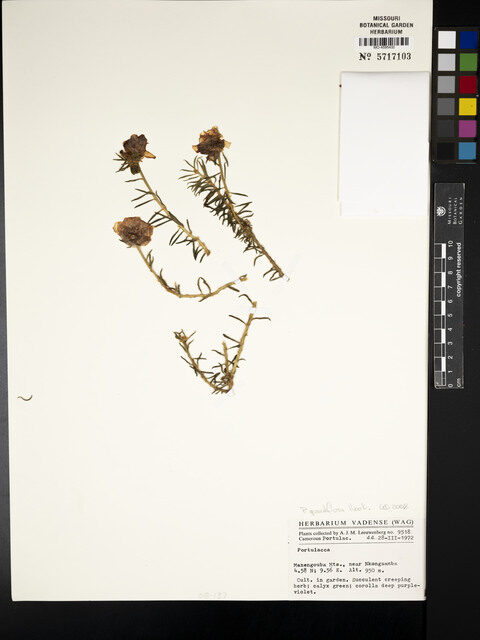
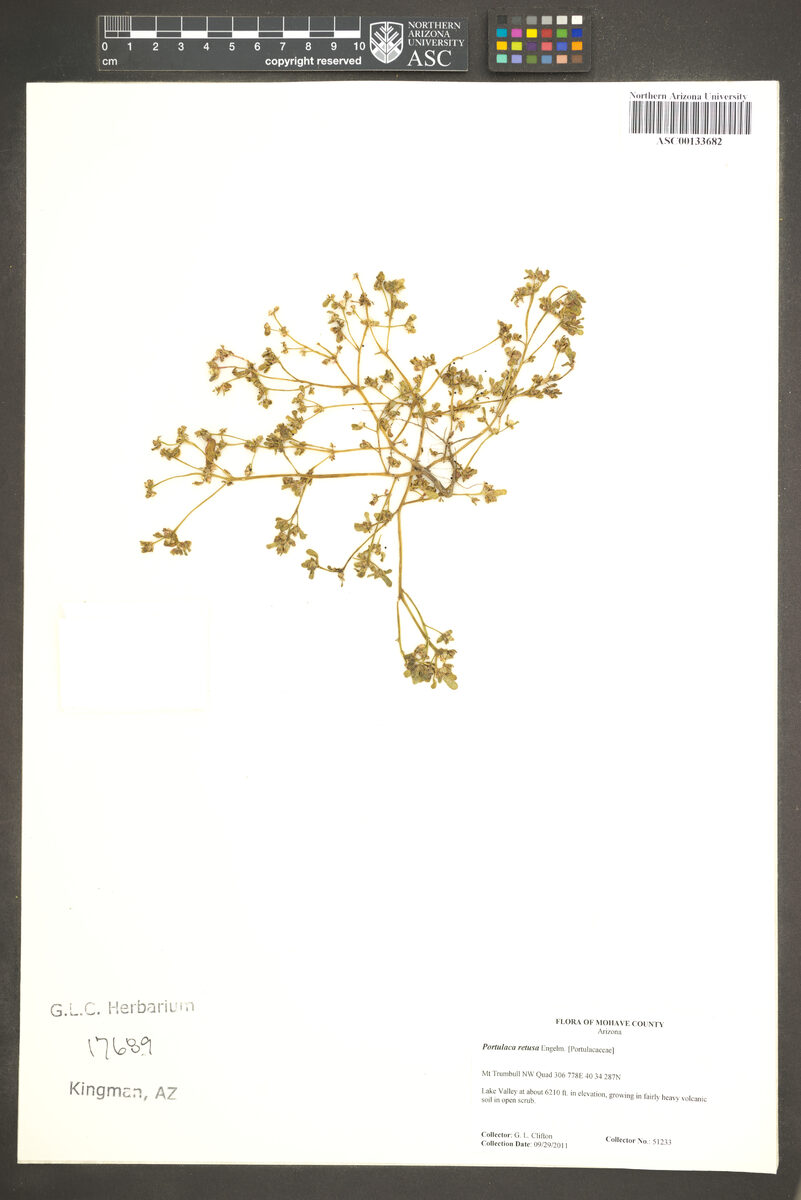
Portulaca bicolor
F. Muell.
iNaturalist· cc-by
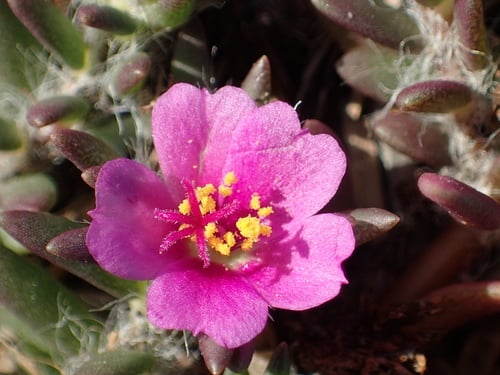
(c) Roland Muench, some rights reserved (CC BY), uploaded by Roland Muench
iNaturalist· cc-by
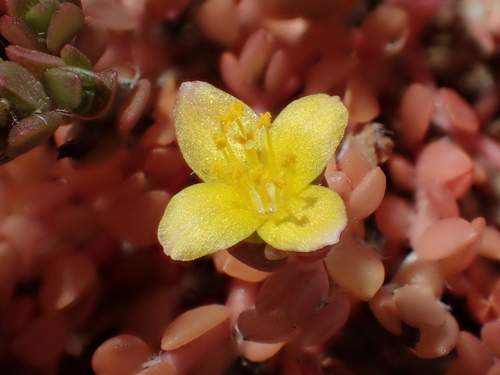
(c) Kym Nicolson, some rights reserved (CC BY), uploaded by Kym Nicolson
iNaturalist· cc-by-nc-sa
(c) Jenny Thynne, some rights reserved (CC BY-NC-SA)
Summary
Source: WikipediaPortulaca bicolor is a succulent species of the family Portulacaceae with cylindrical leaves and red stems. Flowering all year the plant is common to coastal regions of Australia.
Description
A herb which grows from seed each year. It lies along the ground and spreads 1-10 cm wide. The stems are fleshy. The leaves are 0.3-0.8 cm long by 0.3-0.8 cm wide. They are broadly oval or round. They are green, bronze or reddish. They are fleshy. The flowers are 0.5-0.6 cm across and yellow, pink or purple. They occur singly in the axils of the upper leaves. They open in the afternoon. The capsules are about 0.3 cm long. The seeds are black.
Distribution
It is a tropical plant. It grows in inland districts in Australia on shallow soils. It needs very good drainage and a sunny position.
Where It Grows
Australia*,
Cultivation
Plants are grown from seed.
Notes
There are about 200 Portulaca species. They are mostly in the tropics and subtropics.
Dangerous Lookalikes
This plant can be confused with the following toxic species. Always verify identification carefully before consuming any wild plant.
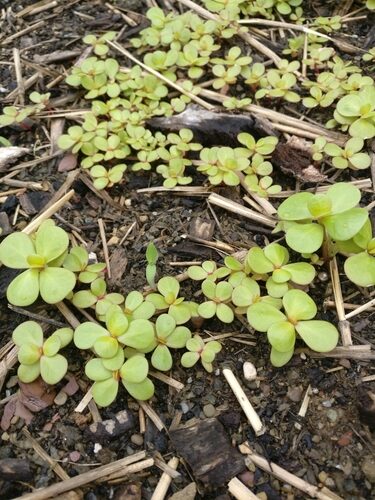
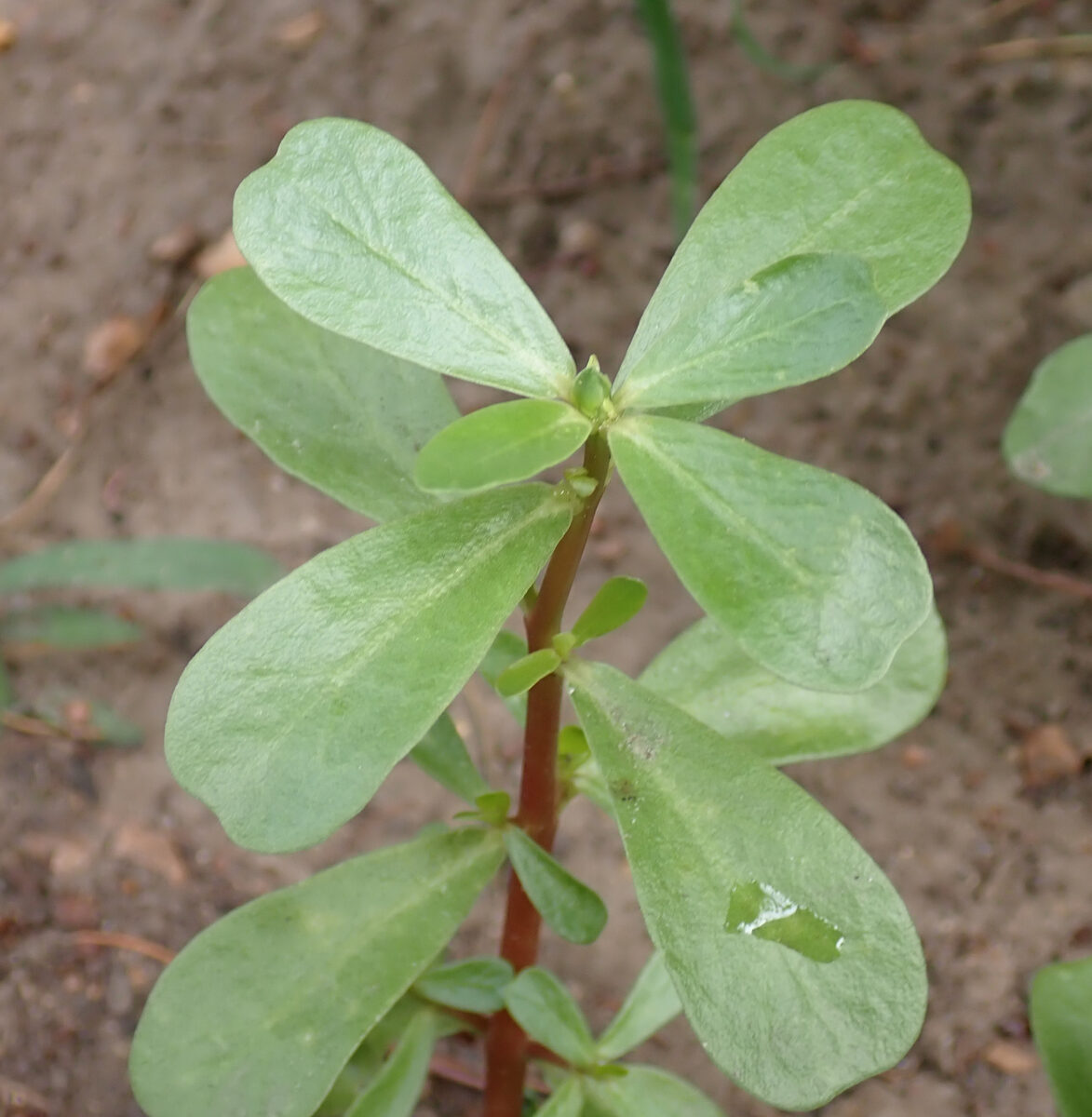
Spotted Spurge
Euphorbia maculata
Hardyplants at English Wikipedia
Portulaca bicolor
Portulaca bicolor
(c) Roland Muench, some rights reserved (CC BY), uploaded by Roland Muench
Spotted Spurge: Milky white latex sap when broken, thinner leaves often with dark spot, prostrate growth, tiny flowers.
Portulaca bicolor: Clear sap, thick succulent leaves, reddish smooth stems, yellow flowers.
References (5)
- Elliot, W.R., & Jones, D.L., 1997, Encyclopedia of Australian Plants suitable for cultivation. Vol 7. Lothian. p 444
- Kenneally, K.E., Edinger, D. C., and Willing T., 1996, Broome and Beyond, Plants and People of the Dampier Peninsula, Kimberley, Western Australia. Department of Conservation and Land Management. p 167
- Paczkowska, G . & Chapman, A.R., 2000, The Western Australian Flora. A Descriptive Calatogue. Western Australian Herbarium. p 462
- Wheeler, J.R.(ed.), 1992, Flora of the Kimberley Region. CALM, Western Australian Herbarium, p 136
- Wightman, Glenn et al. 1994, Gurindji Ethnobotany: Aboriginal Plant Use from Daguragu Northern Australia. Northern Territory Botanical Bulletin No 18. Parks and Wildlife Commission of the Northern Territory. p 44.