Casearia tomentosa
Roxb.
Toothed leaf chilla
iNaturalist· cc-by-nc
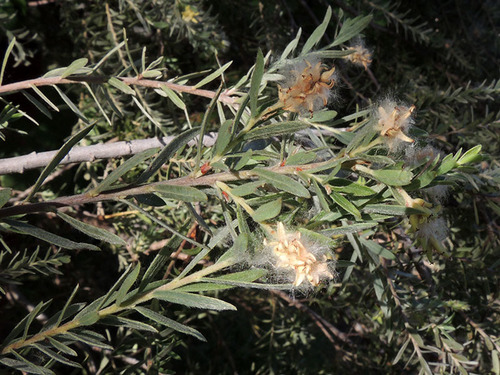
(c) Shiwalee Samant, some rights reserved (CC BY-NC), uploaded by Shiwalee Samant
iNaturalist· cc-by-nc
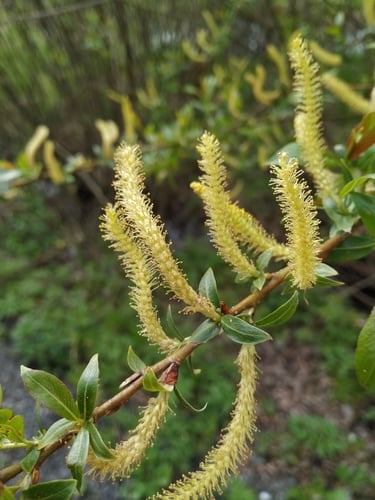
(c) Radha Veach, some rights reserved (CC BY-NC)
Summary
Source: WikipediaCasearia tomentosa, commonly known as the toothed leaf chilla, is a species of flowering plant in the family Salicaceae, native to the Indian Subcontinent and Myanmar. It is one of 1,000 species that can be found in the Salicaeceae family.
Description
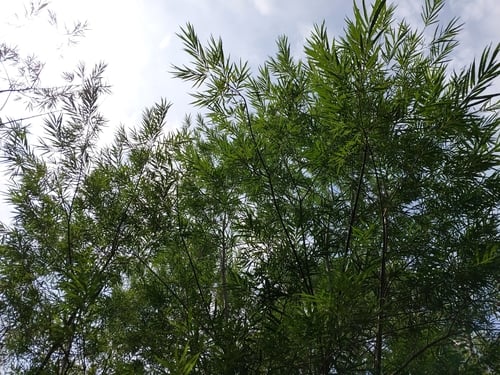
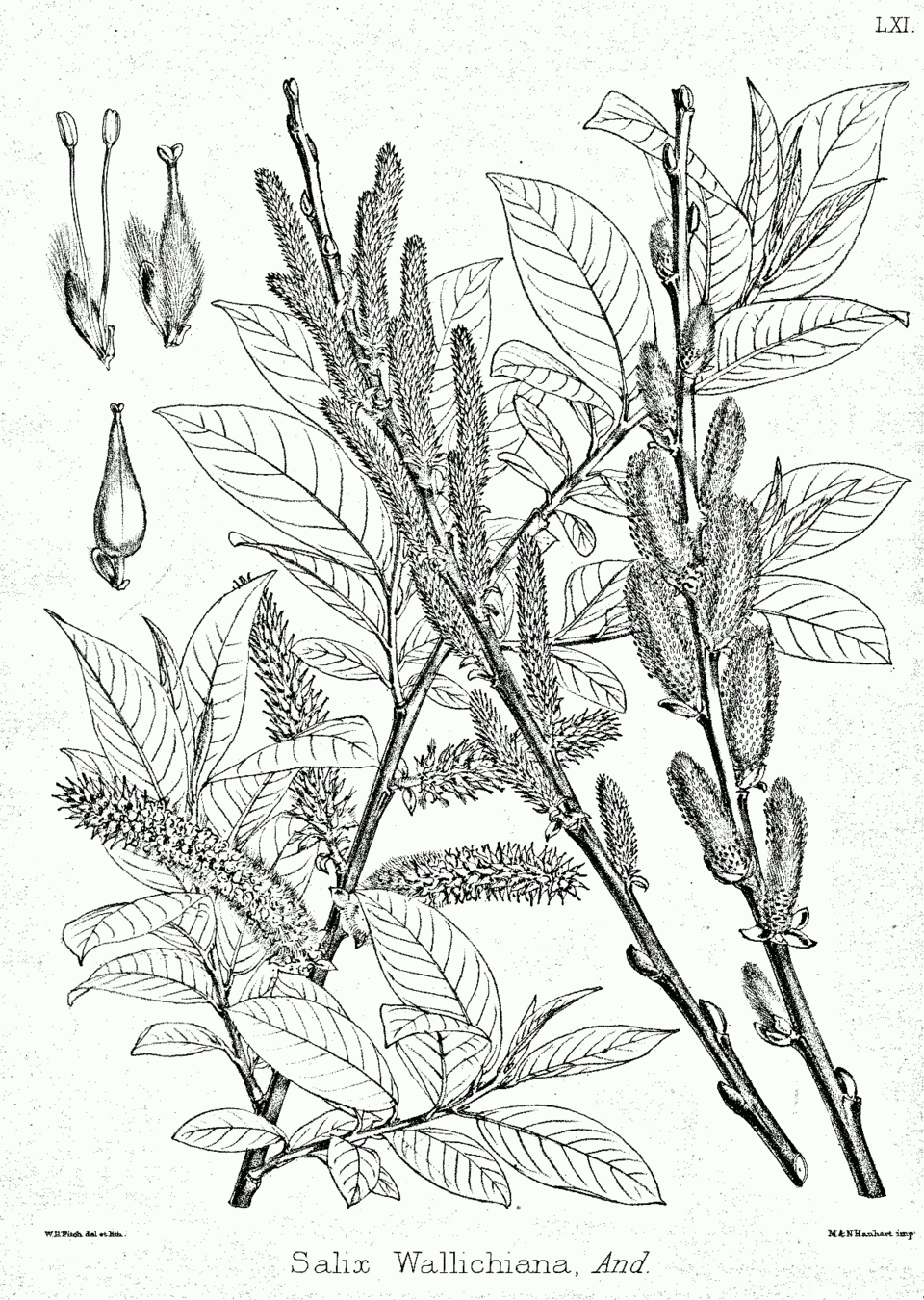
A small tree. It grows 8 m tall. It loses its leaves during the year. The branches are spreading. The leaves are narrowly oblong and have teeth along the edge. They taper towards the tip. The base is unequal. The leaves are 5-12 cm long. The leaf stalks and midrib are hairy The flowers are in clusters. The flowers are velvety and 8 mm across. They are greenish-yellow. The fruit has 6 ribs and 3 valves. The pulp is red and it has seeds in it.
Edible Uses
The fruit is a capsule containing a number of seeds that are surrounded by a red, fleshy aril. We have no specific reports of edibility for this species, but the aril of several species in this genus are known to be edible and, unless it is very bitter, in an emergency the aril of this species is likely to supply a tiny bit of nutriment.
Medicinal Uses
Casearia tomentosa has various phytochemical and pharmacological properties that are used in traditional medicine preparations said to be helpful for many illnesses. It is most notably sold to people who suffer from seafood poisoning, diabetes, ringworm, and snake bites. Other common names include Bhari, Maun, Churcha, Sonne bethe, and Kakoli based on the region where it is found. Traditionally, the whole plant (root, stem, and leaves) are ground into a fine powder following drying. Combined with other ingredients such as honey, turmeric, buttermilk, water, or lime juice, the powder is sold to people who have pectic ulcers, edemas, fissures and cracks on the feet, colic pain, fever associated with malaria, tonsillitis, sunstroke, diarrhea, wounds, and bone fractures by herbal physicians. Adding the juice of the fruit to water causes the death of fish, as it turns into a toxin. The juice of the bark and root can be given to diabetics as it is hypoglycaemic. Seed oil of Casearia tomentosa is used in the treatment of sprains. The juice of the bark on the stem is also used to cure ringworm.
Known Hazards
The bitter-tasting fruit juice is used as a fish poison. The fruit is a capsute containing several seeds - although the capsule of some species (and possibly also the seeds contained therein) is somewhat toxic, the fleshy aril surrounding the seeds is a different matter and in some species (see information below on edibility to see if this is one of them) is often eaten and is considered to be perfectly wholesome.
Distribution
It is a subtropical plant.
Where It Grows
Asia, Australia, China, Himalayas, India, Malaysia, Nepal, Northeastern India, Pakistan, SE Asia, Sikkim,
Cultivation
A very drought tolerant species. A fairly slow-growing species, especially when in a forest environment. The tree responds well to coppicing, the coppice shots growing fairly rapidly often reaching 1.5 metres in their first year. The tree is virtually immune to attacks from grazing animals.
Propagation
The seed of species in this genus often has a short period of viability and so is best sown as soon as it is ripe. The seed is collected when the fruits start to open - leave them in the sun to open completely to release the seed, then rinse the seed in water to remove the arils. Sow the seed in a partially shaded position in a nursery seedbed, only just covering the seed, and keep moist. Germination rates vary, but can usually be expected to be low, with the seed sprouting within 20 - 30 days. When the seedlings are 3 - 5cm tall, pot them up into individual containers and they should be ready to plant out a few months later. Cuttings.
Other Uses
The yellowish-white wood is close-grained and moderately hard.Rather brittle, it is only used for small woodwork. It is good for making combs and, if cut green so as to prevent discoloration, ought to be good for carving.. The wood is used for fuel.
Synonyms
Also Known As
Chilhaka, Katiccai, Minjaal, Modgi, Munjihaad
References (2)
- Hazarika, T. K., et al, 2012, Studies on wild fruits of Mizoram, India used as ethno-medicines. Genetic Resources and Crop Evolution. Published on line 03 February, 2012
- Sundriyal, M. & Sundriyal, R. C., 2004, Structure, Phenology, Fruit Yield, and Future Prospects of some Prominent Wild Edible Plant Species of the Sikkim Himalaya, India. Journal of Ethnobiology 24(1): 113-138