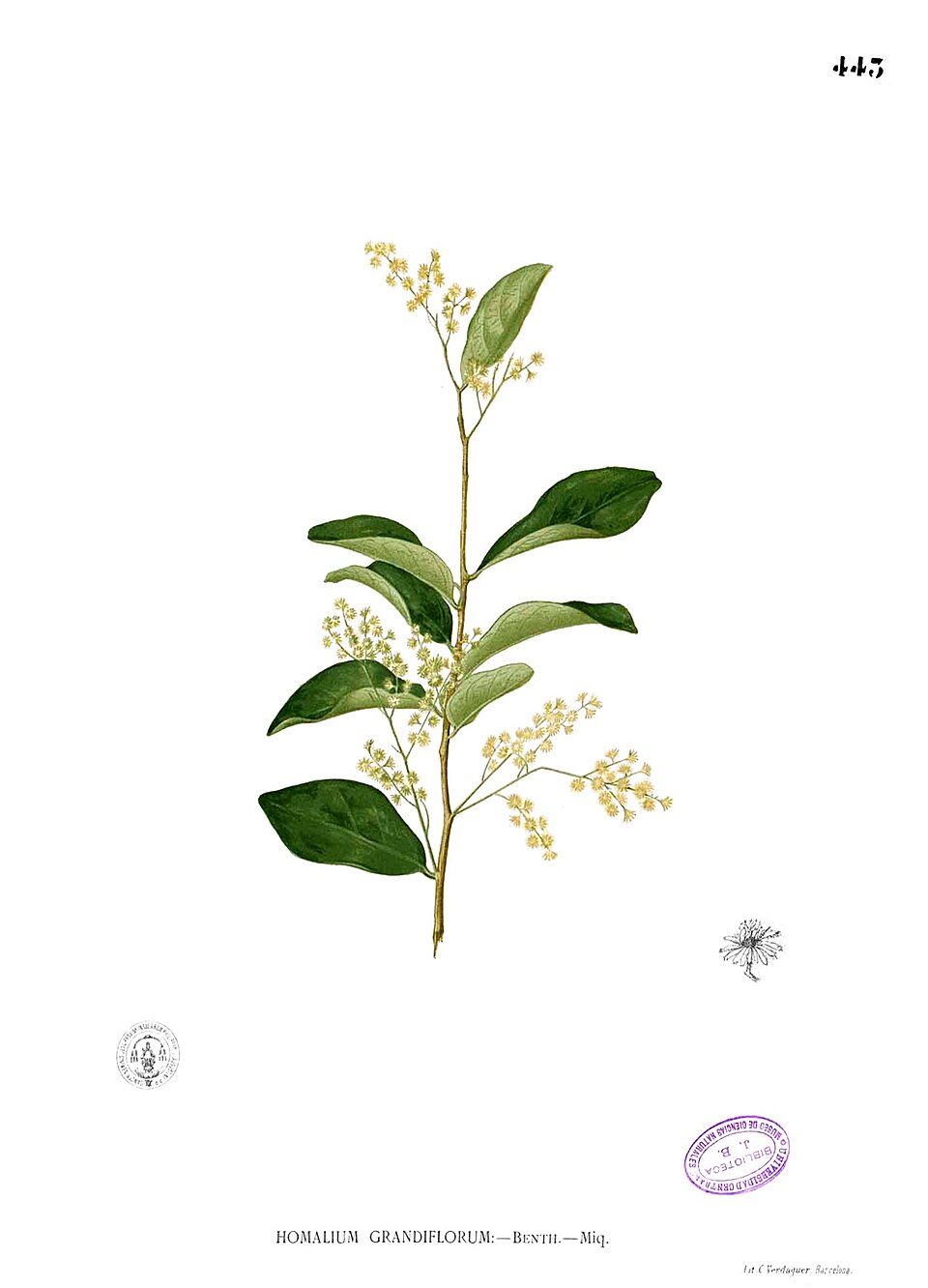
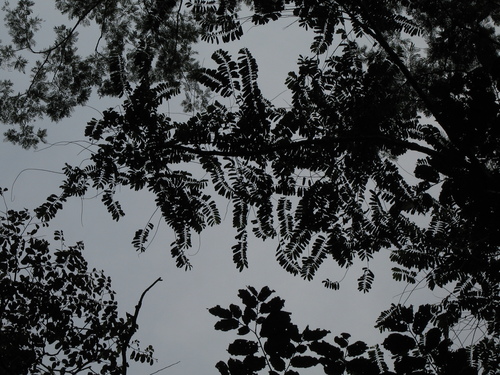
Dovyalis abyssinica
(A. Rich.) Warb.
Dovyalis (Abyssinian), African gooseberry
iNaturalist· cc-by-nc
(c) David Torres, some rights reserved (CC BY-NC), uploaded by David Torres
gbif· cc-by
Sebastián Ordóñez
iNaturalist· cc-by-nc-sa
(c) Giovanni Ramón, some rights reserved (CC BY-NC-SA), uploaded by Giovanni Ramón
iNaturalist· cc-by-nc-sa
(c) Giovanni Ramón, some rights reserved (CC BY-NC-SA), uploaded by Giovanni Ramón
Summary
Source: WikipediaAn evergreen shrub reaching 6 meters tall with a spreading habit. Grows at a medium rate and thrives in well-drained soil across sandy, loamy, and clay types. Prefers mildly acid to neutral conditions and tolerates very acid soils. Requires full sun and moist soil. Hardy to UK zone 10.
Description
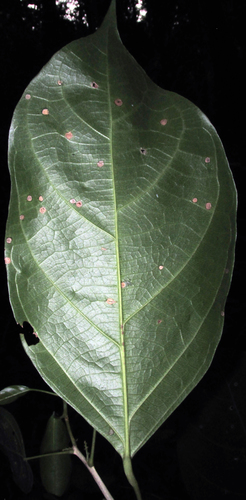
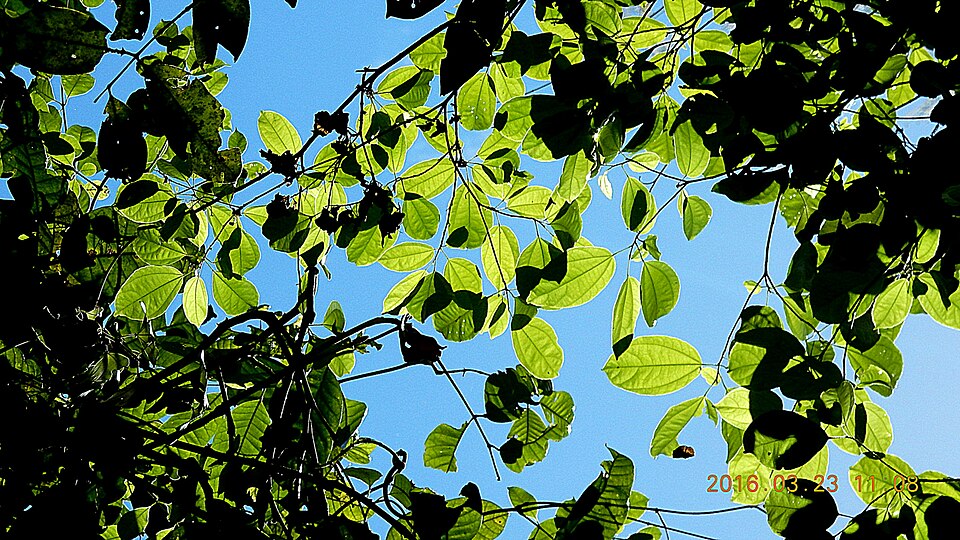
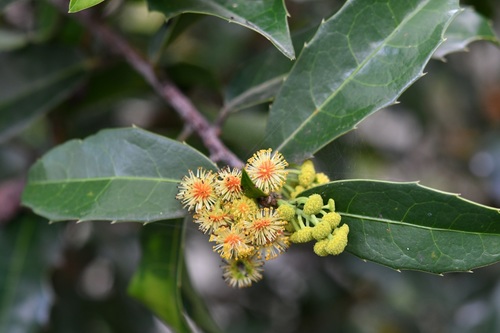
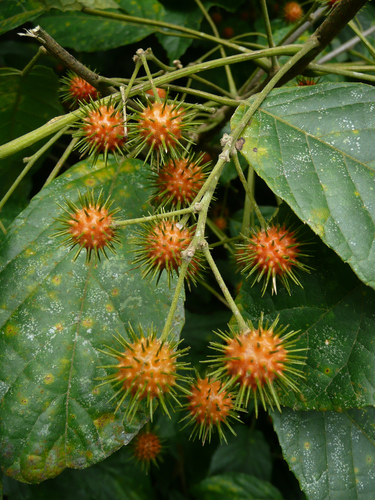
A medium sized shrub. It grows up to 10 m tall. It has many branches. The trunk is up to 20 cm thick. Young branches can have spines. The bark is grey brown. There are many raised lenticels. The leaves are oval and slender. They are 2.5-9 cm long by 2-5 cm wide. The edges of the leaves can be wavy or jagged. Plants are separately male and female. Flowers are green. Male flowers are covered in soft hairs. They are in clusters in the axils of leaves. Female flowers occur singly. The fruit are small and orange. They are round and have pale dots. They are up to 2 cm across. The flesh is yellow. They are very acid and have a strong smell. The seeds are few and flat.
Edible Uses
The fruit can be eaten raw or cooked. It has a thin, tender skin and juicy, melting flesh with a faint apricot-like aroma and flavour. When fully ripe it makes a very pleasant jelly, and measures about 25mm in diameter. The roots and stems are eaten in a tonic soup.
Traditional Uses
The ripe fruit is eaten fresh and used in jam. It is also used for jelly and fruit punch.
This uses section is brief — help expand it
Medicinal Uses
The leaves are pounded, soaked in water, and the resulting liquid is taken to treat indigestion. The roots are also used to treat indigestion and venereal disease.
Distribution
A tropical plant. It is native to NE Africa. Plants grow between 1000 and 3000 m altitude in Ethiopia and between 2000 and 2700 m altitude in Kenya. A rainfall between 1000 and 1700 mm is probably suitable. It suits hot dry climates. It grows poorly on limestone soils.
Where It Grows
Africa, Cuba, East Africa, Eritrea, Ethiopia, Kenya, Malawi, Middle East, Socotra, Somalia, Tanzania, Uganda, West Indies, Yemen, Zambia,
Cultivation
It can be grown by seed or cuttings. Fruit are normally picked from the tree. Fruits do not store well and bruise easily.
Propagation
Propagate by seed, layering, or by grafting and shield-budding desirable varieties onto seedling rootstocks.
Other Uses
The wood is hard and used for making tool handles, spoons, and bedsteads. It is also used as fuel.
Production
It takes 7-8 months between flowering and fruit maturity. In Tanzania fruit are collected from April to June.
Other Information
The fruit are eaten especially by children.
Notes
The fruit are rich in Vitamin C. There are about 15-22 Dovyalis species. Most have edible fruit. They are mostly in Africa and Sri Lanka. Also put in the Flacourtiaceae family.
Synonyms
Also Known As
Abyssinian gooseberry, Aihada, Akoku, Akudho, Ankakute, Dhugoo, Gibin, Imolo, Kimukiet, Kinokuet, Korqiicho, Koshim, Koshimii, Koshum, Kudah, Limoro, Longo, Mahhahhari, Mbuchi, Mgola, Mmango, Mnzuyuyu, Msambwa, Muirungi, Mukambura, Mundariwa, Mundililwa, Nokok, Nukchat, Ol-morogi, Ongolatz, Sangana, Songla, Songola
References (43)
- Addis, G., et al, 2005, Ethnobotanical Study of Edible Wild Plants in Some Selected Districts of Ethiopia. Human Ecology, Vol. 33, No. 1, pp. 83-118
- Alemneh, D., 2020, Ethnobotany of wild edible plants in Yilmana Densa and Quarit Districts of West Gojjam Zone, Amhara Region, Ethiopia. Ethnobotany Research & Applications. 20:47
- Asfaw, Z. and Tadesse, M., 2001, Prospects for Sustainable Use and Development of Wild Food Plants in Ethiopia. Economic Botany, Vol. 55, No. 1, pp. 47-62
- Ashagre, M., et al, 2016, Ethnobotanical study of wild edible plants in Burji District, Segan Area Zone of Southern Nations, Nationalities and Peoples Region (SNNPR), Ethiopia. Journal of Ethnobiology and Ethnomedicine (2016) 12:32
- Barwick, M., 2004, Tropical and Subtropical Trees. A Worldwide Encyclopedic Guide. Thames and Hudson p 156
Show all 43 references Hide references
- Bekele-Tesemma A., Birnie, A., & Tengnas, B., 1993, Useful Trees and Shrubs for Ethiopia. Regional Soil Conservation Unit. Technical Handbook No 5. p 200
- Bussman, R. W., 2006, Ethnobotany of the Samburu of Mt Nyiru, South Turkana, Kenya. Journal of Ethnobiology and Ethnomedicine. 2:35
- Bussman, R. W., et al, 2011, Plant Use in Odo-Bulu and Demaro, Bale region, Ethiopia. Journal of Ethnobiology and Ethnomedicine. 2011, 7:28
- Dale, I. R. and Greenway, P. J., 1961, Kenya Trees and Shrubs. Nairobi. p 224
- Demise, S. & Asfaw, Z., 2020, Ethno Botanical Study of Wild Edible Plants in Adola District, Southern, Ethiopia. International Journal of Research and Analytical Reviews (IJRAR) 7(2).
- Dharani, N., 2002, Field Guide to common Trees & Shrubs of East Africa. Struik. p 88
- Emire, A., et al, 2021, Ethnobotanical Study of Wild Edible Fruit Tree and Shrub Species in Adola Rede and Odo Shakiso Midland Districts of Guji Zone, Southern Ethiopia. Int. J. Adv. Res. Biol. Sci. (2021). 8(12): 96-109
- H. G. A. Engler & K. A. E. Prantl, Nat. Pflanzenfam. 3(6a):44. 1893
- Ethiopia: Famine Food Field Guide. http://www.africa.upenn.edu/faminefood/category3.htm
- Facciola, S., 1998, Cornucopia 2: a Source Book of Edible Plants. Kampong Publications, p 116
- FAO, 1988, Traditional Food Plants, FAO Food and Nutrition Paper 42. FAO Rome p 254
- Fowler, D. G., 2007, Zambian Plants: Their Vernacular Names and Uses. Kew. p 84
- Glover, 1967,
- Ichikawa, M., 1980, The Utilization of Wild Food Plants by the Suiei Dorobo in Northern Kenya. J. Anthrop. Soc. Nippon. 88(1): 25-48
- Jardin, C., 1970, List of Foods Used In Africa, FAO Nutrition Information Document Series No 2.p 133
- Johns, T., and Kokwaro, J.O., 1991, Food Plants of the Luo of Siayo District, Kenya. Economic Botany 45(1), pp 103-113
- Katende, A.B., Birnie, A & Tengnas B., 1995, Useful Trees and Shrubs for Uganda. Identification, Propagation and Management for Agricultural and Pastoral Communities. Technical handbook No 10. Regional Soil Conservation Unit, Nairobi, Kenya. p 246
- Kebebew, M. & Leta, G., 2016, Wild Edible Plant Bio-diversity and Utilization System in Nech Sar National Park, Ethiopia. International Journal of Bio-resource and Stress Management 2016, 7(4):885-896
- Lovett, J. C. et al, Field Guide to the Moist Forest Trees of Tanzania. p 61
- Lulekal, E., et al, 2011, Wild edible plants in Ethiopia: a review on their potential to combat food insecurity. Afrika Focus - Vol. 24, No 2. pp 71-121
- Martin, F. W., et al, 1987, Perennial Edible Fruits of the Tropics. USDA Handbook 642 p 27
- Maundu, P. et al, 1999, Traditional Food Plants of Kenya. National Museum of Kenya. 288p
- Mbuvi, M. T. E., et al, 2019, Annonated checklist of plant species of Loita Forest Narok County, Kenya. Int. J. Adv. Res. Biol. Sci. (2019). 6(3): 54-110
- Mengistu, F. & Hager, H., 2008, Wild Edible Fruit Species Cultural Domain, Informant Species Competence and Preference in Three Districts of Amhara Region, Ethiopia. Ethnobotany Research & Applications 6:487-502
- Miguel, E., et al, 1989, A checklist of the cultivated plants of Cuba. Kulturpflanze 37. 1989, 211-357
- Morton, J. F., 1987, Fruits of Warm Climates. Wipf & Stock Publishers p 313
- Msola, D. K., 2007, The role of Wild Foods in Household Income and Food Security in Mufundi District, Tanzania. Morogoro, Tanzania. p 44
- Msuya, T. S., et al, 2010, Availability, Preference and Consumption of Indigenous Foods in the Eastern Arc Mountains, Tanzania, Ecology of Food and Nutrition, 49:3, 208-227
- Mutie, F. M., et al, 2023, Important Medicinal and Food Taxa (Orders and Families) in Kenya, Based on Three Quantitative Approaches. Plants 2023, 12, 1145
- Ojelel, S., et al, 2019, Wild edible plants used by communities in and around selected forest reserves of Teso-Karamoja region, Uganda. Journal of Ethnobiology and Ethnomedicine (2019) 15:3
- Peters, C. R., O'Brien, E. M., and Drummond, R.B., 1992, Edible Wild plants of Sub-saharan Africa. Kew. p 113
- Regassa, T., et al, 2014, Ethnobotany of Wild and Semi-Wild Edible Plants of Chelia District, West-Central Ethiopia. Science, Technology and Arts Research Journal. 3(4): 122-134
- Ruffo, C. K., Birnie, A. & Tengnas, B., 2002, Edible Wild Plants of Tanzania. RELMA p 286
- Seyoum, Y., et al, 2015, Edible Wild Fruit Trees and Shrubs and Their Socioeconomic Significance in Central Ethiopia. Ethnobotany Research & Applications. 14:183-197
- Sina, B. & Degu, H. D., 2015, Knowledge and use of Wild Edible Plants in the Hula District of the Sidama Zone. International Journal of Bio-resource and Stress Management 6(3):352-365
- Tebkew, M. et al, 2014, Underutilized wild edible plants in the Chilga District, northwestern Ethiopia: focus on wild woody plants. Agriculture & Food Security 3:12
- White, F., Dowsett-Lemaire, F. and Chapman, J. D., 2001, Evergreen Forest Flora of Malawi. Kew. p 268
- World Checklist of Useful Plant Species 2020. Royal Botanic Gardens, Kew