Polypodium vulgare
L.
Common polypody, Wall fern
iNaturalist· cc-by-nc
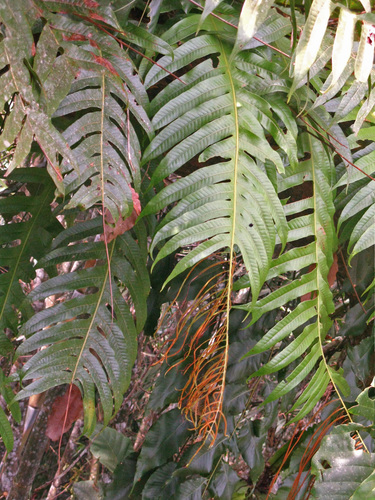
(c) Norbert Sauberer, some rights reserved (CC BY-NC), uploaded by Norbert Sauberer
iNaturalist· cc-by
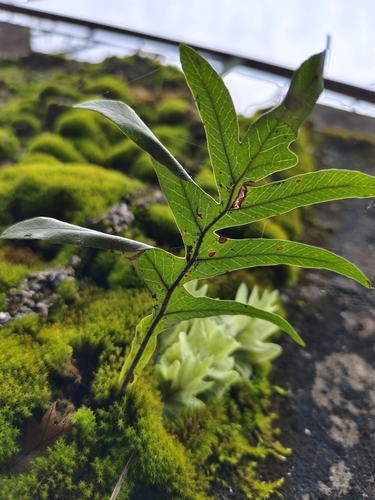
(c) Thomas Gyselinck, some rights reserved (CC BY), uploaded by Thomas Gyselinck
iNaturalist· cc-by-nc
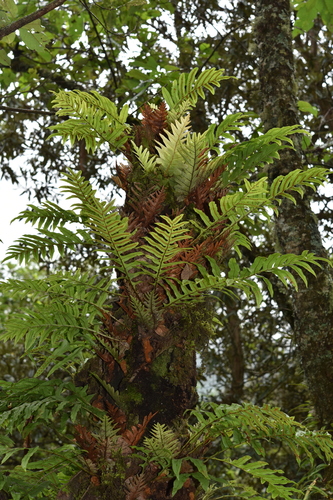
(c) Norbert Sauberer, some rights reserved (CC BY-NC), uploaded by Norbert Sauberer
Summary
Source: WikipediaPolypodium vulgare, the common polypody, is an evergreen fern of the family Polypodiaceae. The name is derived from Greek poly- ("many") and pous, podos ("foot"). Polypody has traditional uses in cooking for its aroma and sweet taste, and in herbal medicine as a purgative and vermifuge. This species is expansive and highly adapted to many environments.
Description
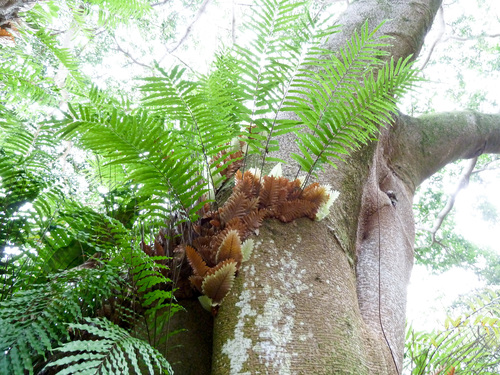
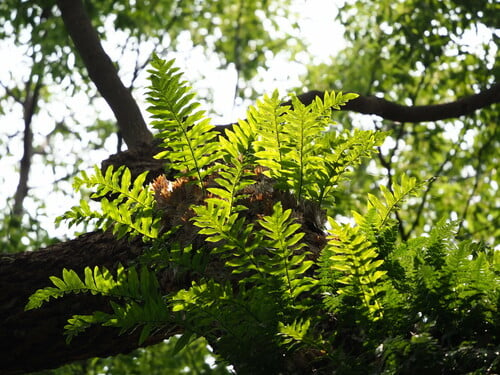
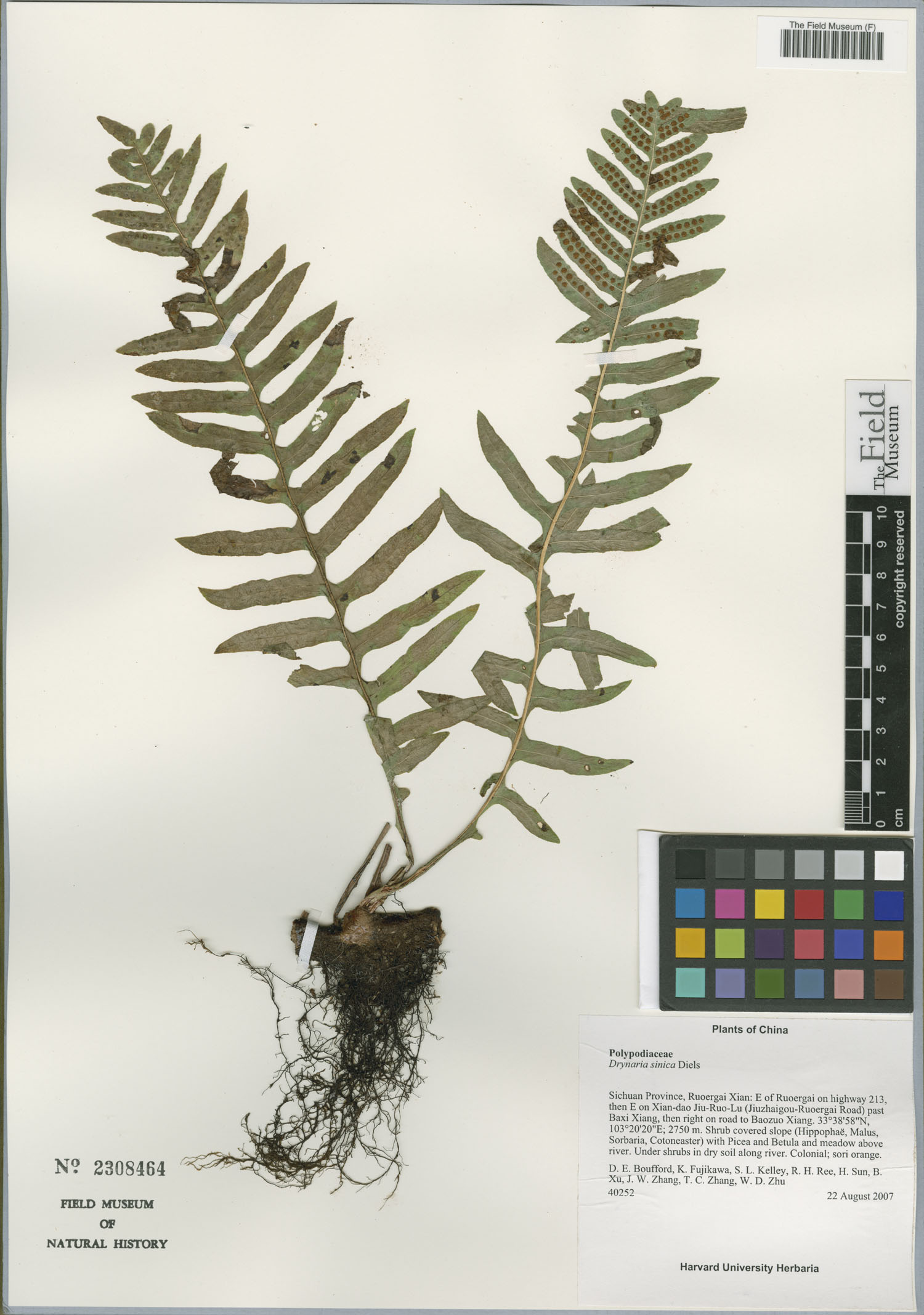
A small fern. It grows 15-38 cm high and spreads indefinitely sideways. The rhizome is tough and creeping. The fronds are sword shaped, leathery and dark green. They rise from the rhizome. It can grow in soil or attached to other plants or objects. The fruiting bodies or sori are large and round. They are bright orange to reddish-brown.
Edible Uses
The root is very sweet, containing 15.5% saccharose and 4.2% glucose, along with tannin and oils, and is used as a liquorice adulterant. It has a distinctive, rather unpleasant odour and a sweet, cloying flavour that quickly becomes nauseating.
Traditional Uses
The roots are used to obtain flour for bread or porridge. The rhizomes are also chewed raw. They are used as a sweetener fresh or dried.
This uses section is brief — help expand it
Medicinal Uses
Polypody stimulates bile secretion and acts as a gentle laxative. In European herbal medicine it has traditionally been used to treat hepatitis, jaundice, indigestion, and loss of appetite. It should not be used externally as it can cause skin rashes. The root is alterative, anthelmintic, cholagogue, demulcent, diuretic, expectorant, pectoral, purgative, and tonic. It can be used fresh or dried and is best harvested in October or November, though it can be collected through to February. The leaves can also be used but are less potent. A tea made from the roots treats pleurisy, hives, sore throats, and stomach aches, and serves as a mild laxative for children. It has also been valued for lung ailments and liver diseases. The poulticed root is applied to inflammations, and a tea or syrup of the whole plant is anthelmintic.
Known Hazards
Although we have found no reports of toxicity for this species, a number of ferns contain carcinogens so some caution is advisable. Many ferns also contain thiaminase, an enzyme that robs the body of its vitamin B complex. In small quantities this enzyme will do no harm to people eating an adequate diet that is rich in vitamin B, though large quantities can cause severe health problems. The enzyme is destroyed by heat or thorough drying, so cooking the plant will remove the thiaminase.
Distribution
It grows in temperate places. It is frost hardy. It can grow in both dry and damp places as long as the drainage is good. It suits hardiness zones 3-5.
Where It Grows
Africa, Albania, Asia, Australia, Austria, Balkans, Belarus, Belgium, Bosnia, Britain, Bulgaria Canada, Caucasus, China, Cyprus, Czech Republic, Denmark, Estonia, Europe, Finland, France, Georgia, Germany, Greece, Hungary, Iceland, Iran, Ireland, Italy, Japan, Kazakhstan, Korea, Lesotho, Luxembourg, Macedonia, Mediterranean, Morocco, Netherlands, New Zealand, North America, Norway, Poland, Portugal, Romania, Russia, Scandinavia, Siberia, Sicily, Slovakia, Slovenia, South Africa, Southern Africa, Spain, Sweden, Switzerland, Turkey, Türkiye, Ukraine, Yugoslavia,
Cultivation
Easily grown in most light soils. Prefers a soil of leaf mould and a cool but not too moist clay. Prefers a cool damp shady position. Thrives in dry shade. Established plants are drought tolerant. They grow well on drystone walls. Plants often grow as epiphytes. Members of this genus are rarely if ever troubled by browsing deer. A rather variable plant, it is considered to be an aggregate species of several very similar species. Only the roots should be planted, the rhizome being fixed to the surface of the soil. Polypodium virginianum (Polypodium vulgare subsp. virginianum (L.) Hultén is a synonym of Polypodium virginianum L.) commonly know as rock cap fern, or common polypody tolerates hardiness zones down to 3. It prefers acidic soil. It is a small evergreen species of fern native to the Eastern United States and Canada. It generally grows on rocks and occasionally on tree roots in nature. A small rhizomatous fern with narrow leaves 8–40 centimetres (3.1–15.7 in) long and 3–6 centimetres (1.2–2.4 in) wide. Polypodium virginianum typically grows on boulders, cliffs, and rocky slopes and does not need well-developed soil.
Propagation
Sow spores as soon as they are ripe, though spring sowing is also possible. Sow on the surface of a humus-rich sterilized soil and keep the compost moist, preferably by covering the pot with a plastic bag. Pot on small clumps of plantlets once large enough to handle and keep humid until well established. Do not plant outside until the ferns are at least two years old, and only in a very well sheltered position. Division is best done in spring but can succeed at most times of year.
Other Uses
Plants make useful ground cover in shady positions, spreading to form a carpet and best spaced around 30cm apart each way. The ash of burnt leaves is rich in carbonate of potash.
Other Information
The rhizomes are often sucked by children.
Notes
There are about 75 Polypodium species.
Synonyms
Also Known As
Birtivu, Edesgyuker, Komez, Lagrits, Magusjuur, Navadna sladka koreninica, Oakfern, Polypody, Sisselrot, Sladic, Sladicka, Slatka paprat, Suhkrupuu, Tree fern, Wall polypody
References (30)
- Abbet, C., et al, 2014, Ethnobotanical survey on wild alpine food plants in Lower and Central Valais (Switzerland). Journal of Ethnopharmacology 151 (2014) 624–634
- Bodkin, F., 1991, Encyclopedia Botanica. Cornstalk publishing, p 820
- Brickell, C. (Ed.), 1999, The Royal Horticultural Society A-Z Encyclopedia of Garden Plants. Convent Garden Books. p 818
- Bussman, R. W., et al, 2016, A comparative ethnobotany of Khevsureti, Samtskhe-Javakheti, Tusheti, Svaneti, and Racha-Lechkhumi, Republic of Georgia (Sakartvelo), Caucasus. Journal of Ethnobiology and Ethnomedicine.
- Bussman, R. W., et al, 2021, Unity in diversity—food plants and fungi of Sakartvelo (Republic of Georgia), Caucasus. Journal of Ethnobiology and Ethnomedicine (2021) 17:72 p 13
Show all 30 references Hide references
- Cundall, P., (ed.), 2004, Gardening Australia: flora: the gardener's bible. ABC Books. p 1068
- Denes, A., et al, 2012, Wild plants used for food by Hungarian ethnic groups living in the Carpathian Basin. Acta Societatis Botanicorum Poloniae 81 (4): 381-396
- Girard, N. J., 2020, Sustainable Foraging of Wild Edible Plants in Norway. A Biocultural Approach. M. Sc. thesis Norwegian University. p 37
- Goudey, C.J., 1988, A Handbook of Ferns for Australia and New Zealand. Lothian. p 145
- Hibbert, M., 2002, The Aussie Plant Finder 2002, Florilegium. p 238
- http://www.botanic-gardens-ljubljana.com/en/plants
- Irving, M., 2009, The Forager Handbook, A Guide to the Edible Plants of Britain. Ebury Press p 352
- Joyce, D., 1998, The Garden Plant Selector. Ryland, Peters and Small. p 336
- Kalle, R. & Soukand, R., 2012, Historical ethnobotanical review of wild edible plants of Estonia (1770s-1960s) Acta Societatis Botanicorum Poloniae 81(4):271-281
- Kew Plants of the World Online
- Kuhnlein, H. V. and Turner, N. J., 1991, Traditional Plant Foods of Canadian Indigenous Peoples. Food and Nutrition in History and Anthropology Volume 8. Gordon and Breach. p 31
- Licata, M., et al, 2016, A survey of wild plant species for food use in Sicily (Italy) – results of a 3-year study in four Regional Parks. Journal of Ethnobiology and Ethnomedicine 12:12
- Lim, T. K., 2015, Edible Medicinal and Non Medicinal Plants. Volume 9, Modified Stems, Roots, Bulbs. Springer p 68
- Luczaj, L., 2012, Ethnobotanical review of wild edible plants of Slovakia. Acta Societatis Botanicorum Poloniae 81(4):245-255
- Łukasz Łuczaj and Wojciech M Szymański, 2007, Wild vascular plants gathered for consumption in the Polish countryside: a review. J Ethnobiol Ethnomedicine. 3: 17
- Luczaj, L. et al, 2012, Wild food plant use in 21st century Europe: the disappearance of old traditions and the search for new cuisines involving wild edibles. Acta Soc Bot Pol 81(4):359–370
- Luczaj, L., et al, 2015, Wild food plants and fungi used by Ukrainians in the western part of the Maramureş region in Romania. Acta Soc Bot Pol 84(3):339–346
- Mattalia, G., et al, 2012, Traditional uses of wild food and medicinal plants among Brigasc, Kye ́, and Provenc ̧al communities on the Western Italian Alps. Genet Resour Crop Evol. Springer
- Plants for a Future database, The Field, Penpol, Lostwithiel, Cornwall, PL22 0NG, UK. http://www.scs.leeds.ac.uk/pfaf/
- Redzic, S. J., 2006, Wild Edible Plants and their Traditional Use in the Human Nutrition in Bosnia-Herzegovina. Ecology of Food and Nutrition, 45:189-232
- SAYCE,
- Simkova, K. et al, 2014, Ethnobotanical review of wild edible plants used in the Czech Republic. Journal of Applied Botany and Food Quality 88, 49-67
- Slocum, P.D. & Robinson, P., 1999, Water Gardening. Water Lilies and Lotuses. Timber Press. p 131
- Sp. pl. 2:1085. 1753
- World Checklist of Useful Plant Species 2020. Royal Botanic Gardens, Kew