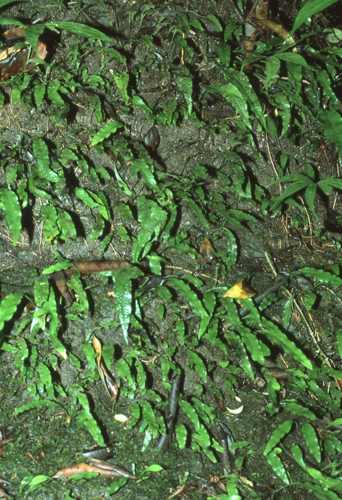
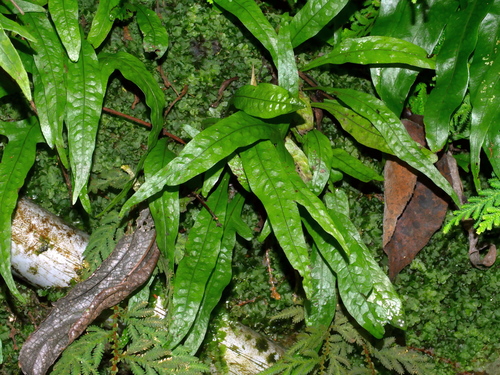
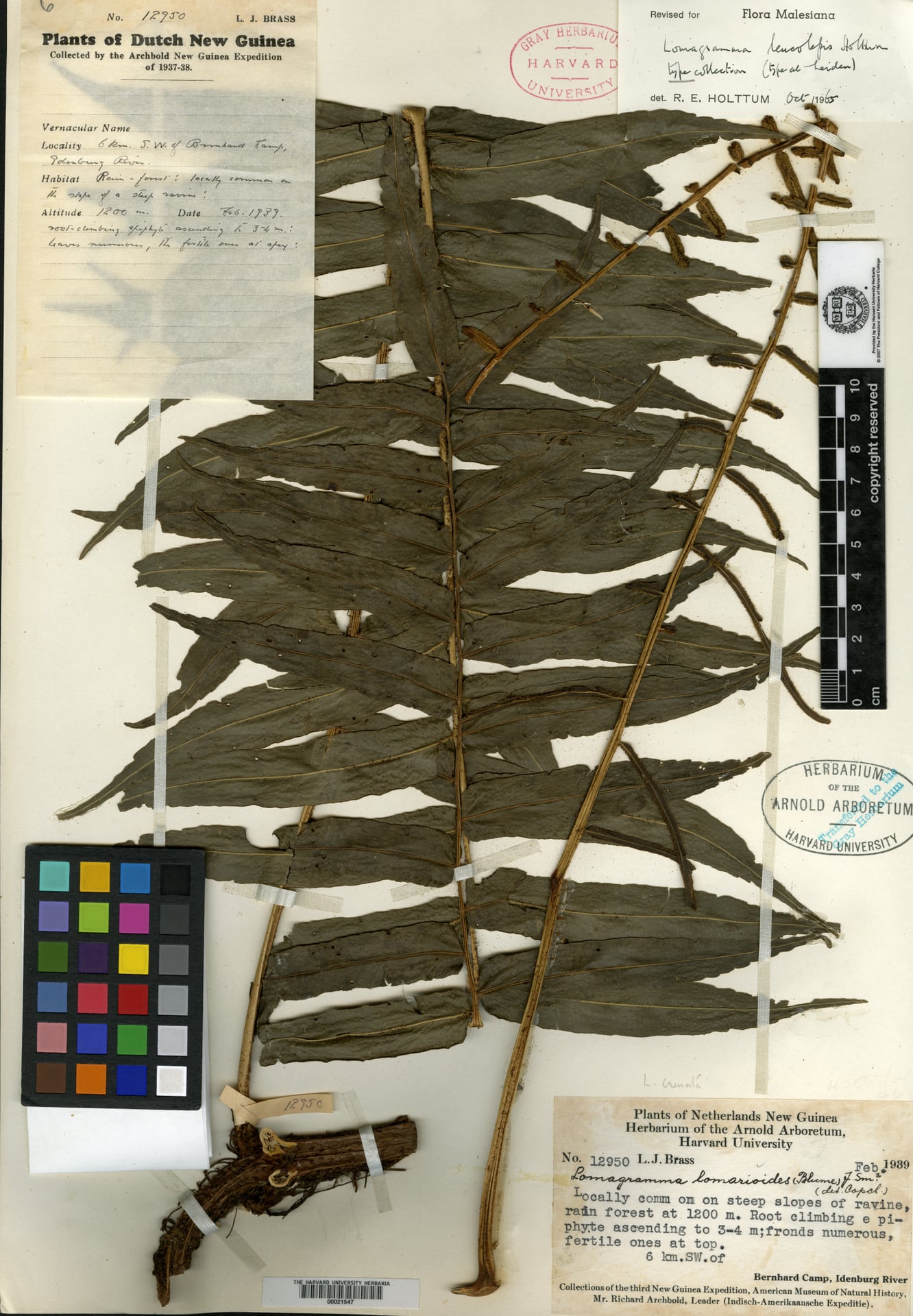
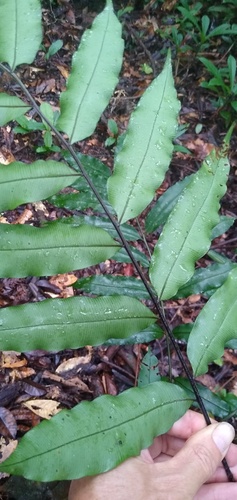
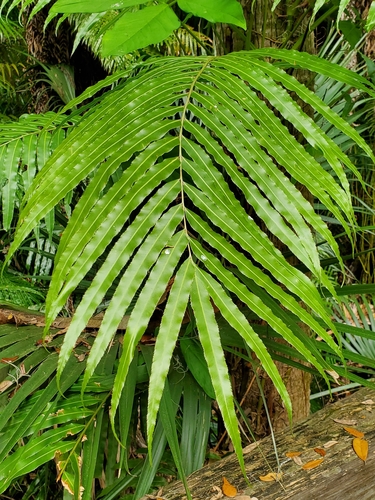
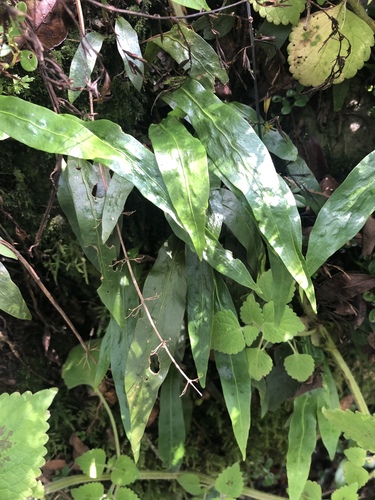
Polypodium scouleri
Hook. & Grev.
Leathery polypody
iNaturalist· cc-by-nc
(c) Sadie Hickey, some rights reserved (CC BY-NC), uploaded by Sadie Hickey
iNaturalist· cc0
no rights reserved
iNaturalist· cc0
no rights reserved
Summary
Source: WikipediaPolypodium scouleri is a species of fern known by the common names leathery polypody, Scouler's polypody, coast polypody and leather-leaf fern. It is native to coastal western North America from British Columbia to Guadalupe Island off Baja California. It is a plant of the coastline, growing in cracks on coastal bluffs, in oceanside forests, beach dunes, and similar habitat. It is often affected by heavy fogs and sea spray. This polypody anchors with a waxy, scaly rhizome. It produces triangular or oblong leaves up to 85 centimeters (33 in) in maximum length and 8 cm (3.1 in) width. Each leaf is made up of many round-tipped linear or oblong segments which are usually stiff and leathery in texture and edged with shallow, rounded teeth. The underside of each leaf segment is crowded with rounded sori each up to half a centimeter wide. The sori contain the spores.
Description
A temperate fern in the Polypodiaceae family with a thick, chewable rhizome.
This description is brief — help expand it
Edible Uses
The thick rhizome is chewed, especially by children.
Traditional Uses
The thick rhizome is chewed.
This uses section is brief — help expand it
Distribution
It is a temperate plant.
Where It Grows
North America, USA,
Other Information
It is chewed especially by children.
Synonyms
References (1)
- Moerman, D. F., 2010, Native American Ethnobotany. Timber Press. p 425