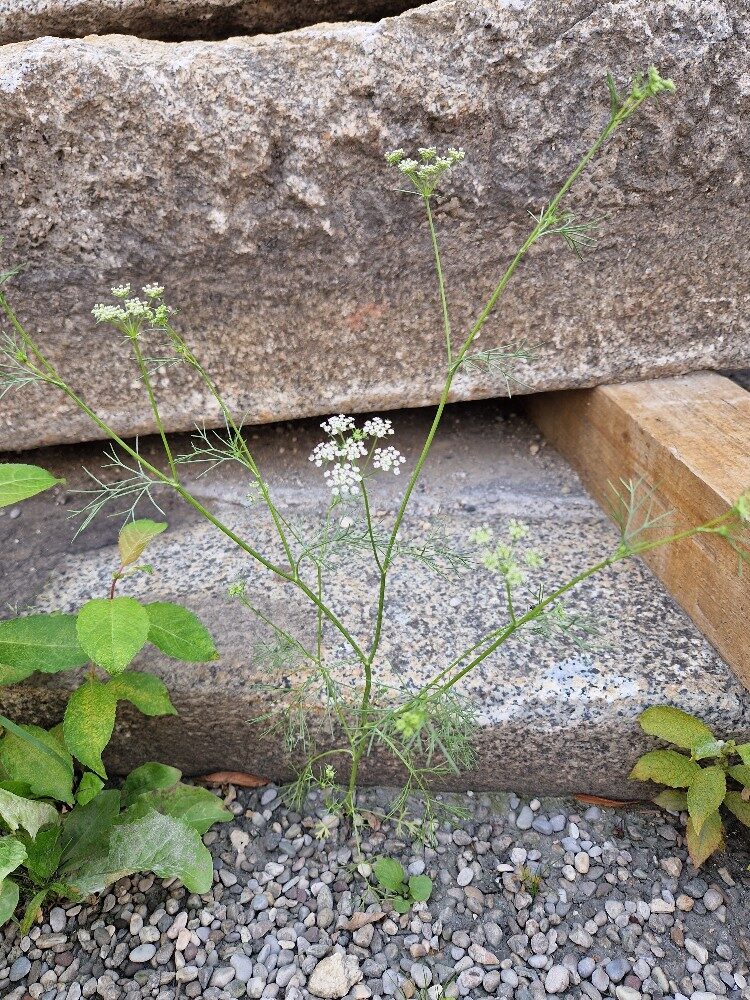
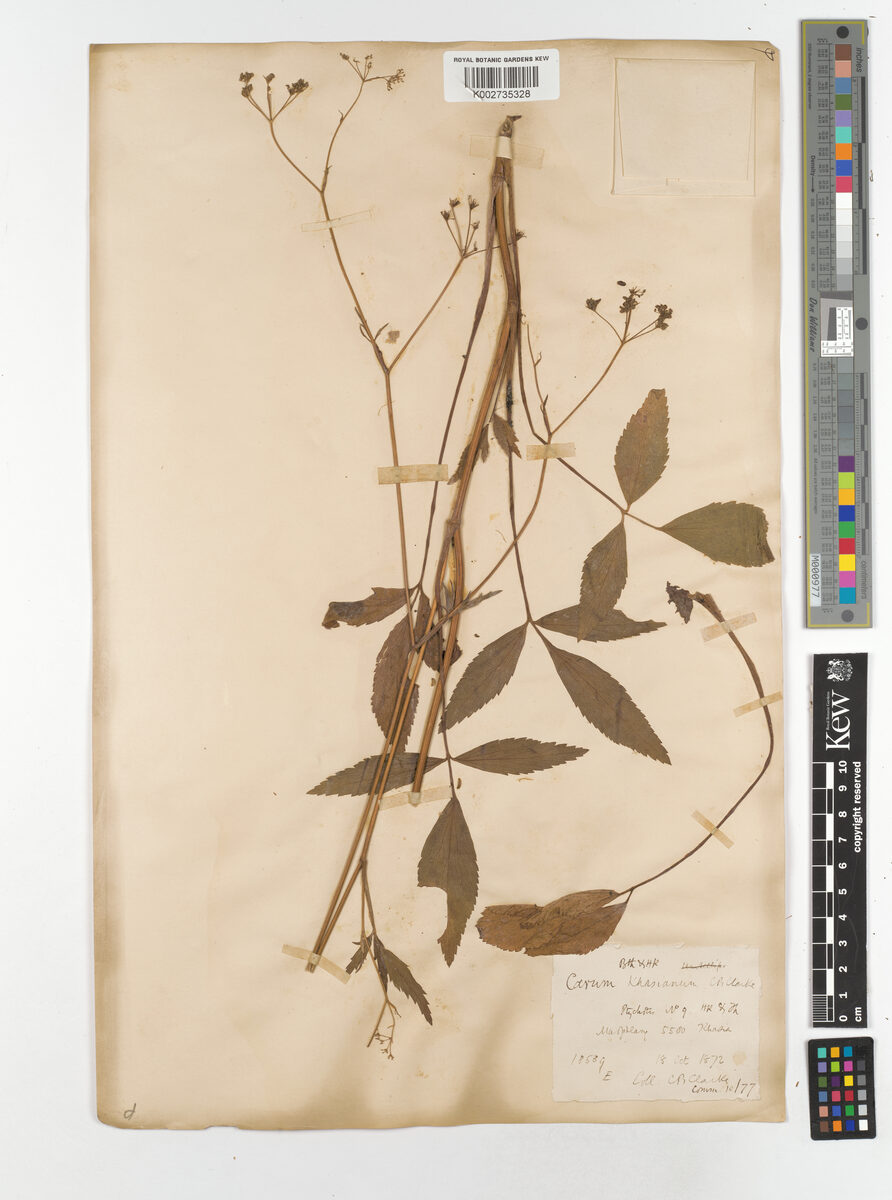
Anethum graveolens
L.
Dill
iNaturalist· cc-by-nc
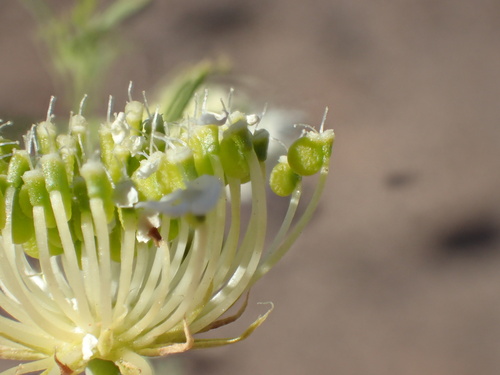
(c) Олександр Гриб, some rights reserved (CC BY-NC), uploaded by Олександр Гриб
iNaturalist· cc-by-sa
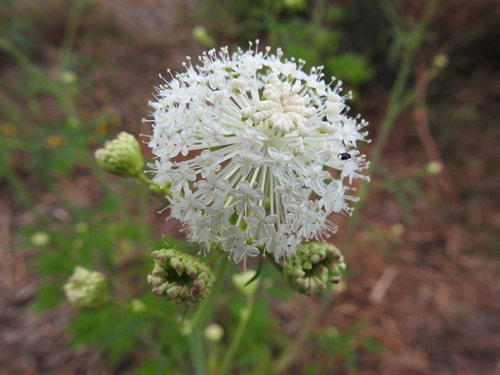
(c) Matt Lavin, some rights reserved (CC BY-SA)
iNaturalist· cc-by-sa
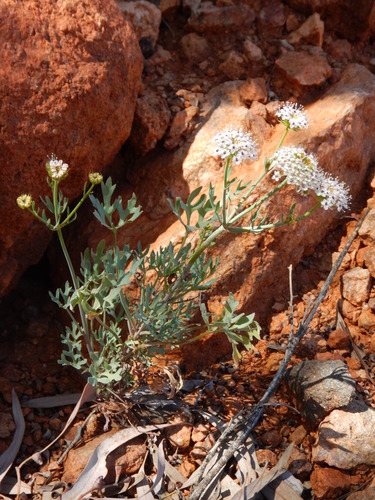
(c) Sigfrid Lundberg, some rights reserved (CC BY-SA)
Summary
Source: WikipediaAnethum graveolens is an annual herb growing to 0.8 m (2ft 7in) tall and 0.2 m (0ft 8in) wide at a medium rate. Hardy to UK zone 8. In leaf from May to November, flowering from April to July, with seeds ripening July to August. Requires full sun and well-drained light sandy or medium loamy soil. Tolerates mildly acid to basic pH. Prefers moist conditions and attracts pollinating bees and other wildlife.
Description
A fine leafy herb up to about 1 m tall. It can spread 50 cm across. It is an annual plant regrowing each year from seeds. The root is long and wiry. The stems of the plant are smooth, dark green and with pale stripes. They are finely grooved and hollow. The leaves are bluish-green and like a feather. They can be 35 cm long. The leaves are twice divided and have a sheath wrapping around the stem at the base. The small leaflets are like threads. Flowers are yellow and in flat compound arrangements where flowers are on stalks coming from one point. These flower arrangements can be 9 cm across. The fruit are oval one seeded dry ribbed fruits. Plants have an aniseed scent. The fruit are 1.5 times as long as wide. There are several named cultivars.
Edible Uses
Dill leaves can be eaten raw or used as a flavouring in salads and cooked dishes. Because they lose their flavour with prolonged heat, leaves are best added to hot dishes only a few minutes before serving. Harvest leaves at any point during the growing season, ideally just before the plant comes into flower. Per 100g, fresh leaves contain 253 calories, 7.2g water, 20g protein, 4.4g fat, 55.8g carbohydrate, 11.9g fibre, 12.6g ash, 1784mg calcium, 543mg phosphorus, 48.8mg iron, 451mg magnesium, 208mg sodium, 3308mg potassium, 3.3mg zinc, 0.42mg thiamine, 0.28mg riboflavin, 2.8mg niacin and 1.5mg vitamin B6. The seeds are pungent and bitter and work well as a flavouring in salads, preserves, dill vinegar and pickled gherkins. They can also be sprouted and used in breads, soups and salad dressings. Per 100g, seeds contain 305 calories, 7.7g water, 14.5g fat (0.73g saturated, 124mg phytosterol, no cholesterol), 55.2g carbohydrate, 21g fibre, 6.7g ash, 1516mg calcium, 277mg phosphorus, 16.3mg iron, 256mg magnesium, 20mg sodium, 1186mg potassium, 5.2mg zinc, 53IU vitamin A, 0.42mg thiamine and 0.28mg riboflavin. An essential oil extracted from the seed is also used as a flavouring in the food industry. Tea can be made from the leaves, seeds or both.
Traditional Uses
The seeds are used to flavour foods. They are added to pickles. The young leaves can be eaten. They have an aniseed flavour and are used in soups, salads, sauces, and with vegetables. The flowers are also used. It is one of the main ingredients in curry powder. The leaves and seeds are used for tea.
Medicinal Uses
Dill has a well-documented herbal history spanning more than 2,000 years. The seeds are a widely used and effective household remedy for digestive complaints. An infusion is particularly useful for treating gripe in babies and flatulence in young children. The seed is aromatic, carminative, mildly diuretic, galactogogue, stimulant and stomachic, and its properties can be accessed either through an infusion or by eating the seed whole. The essential oil in the seed relieves intestinal spasms and griping, helping to settle colic. Chewing the seed also helps counter bad breath. Dill makes a useful addition to cough, cold and flu remedies and can be combined with antispasmodics such as Viburnum opulus to relieve period pains. It helps increase milk flow in nursing mothers, and the active constituents then pass through breast milk to help prevent colic in the nursing infant.
Known Hazards
Dill is said to contain the alleged 'psychotroph' myristicine. There are also reports that dill can cause photosensitivity and or dermatitis in some people. Avoid dill oil during pregnancy.
Distribution
It is a temperate plant. It is suited to shady places but does best in sunny positions. It is easily damaged by wind. It is frost resistant but drought tender. It needs moist, well drained, humus rich soil. In hot weather it produces flowers quickly. It is best with temperatures of 16-18°C. A pH of 5.6-6.5 is best. It grows below 1,900 m above sea level. It can grow in arid places. It suits hardiness zones 8-10. In Sichuan.
Where It Grows
Afghanistan, Africa, Algeria, Andaman Is., Andorra, Angola, Argentina, Asia, Australia, Austria, Bahamas, Bahrain, Balkans, Bangladesh, Belarus, Belgium, Brazil, Britain, Bulgaria, Cameroon, Canada, Canary Is., Cape Verde, Caribbean, Caucasus, Central Asia, Chad, Chile, China, Cook Islands, Crete, Cuba, Cyprus, Denmark, Dominica, Dominican Republic, East Africa, East Timor, Ecuador, Egypt, Eritrea, Ethiopia, Europe, Finland, France*, Georgia, Germany, Ghana, Greece, Guatemala, Haiti, Hawaii, Himalayas, Hungary, India, Indochina, Indonesia, Iran, Iraq, Israel, Italy, Jamaica, Japan, Jordan, Kazakhstan, Kenya, Kyrgyzstan, Laos, Lebanon, Lesser Antilles, Libya, Lithuania, Macedonia, Malaysia, Marquesas, Mediterranean, Mexico, Middle East, Moldova, Mongolia, Morocco, Mozambique, Myanmar, Nepal, Netherlands, Niger, Nigeria, North Africa*, North America, Northeastern India, Norway, Pacific, Pakistan, Palestine, Papua New Guinea, PNG, Peru, Philippines, Poland, Portugal, Puerto Rico, Qatar, Romania, Russia, Sahel, Saudi Arabia, Scandinavia, SE Asia, Serbia, Slovenia, Somalia, South Africa, Southern Africa, South America, Spain*, Sri Lanka, Sudan, Sweden, Switzerland, Syria, Tajikistan, Tanzania, Tasmania, Thailand, Timor-Leste, Trinidad-Tobago, Tunisia, Turkey, Türkiye, Ukraine, United Arab Emirates, UAE, USA, Uzbekistan, Vietnam, Virgin Islands, West Africa, West Indies, Yugoslavia, Zimbabwe,
Cultivation
An easily grown plant, it prefers a moderately rich loose soil and full sun. Requires a well-drained soil and shelter from the wind. Tolerates a pH in the range 5.3 to 7.8. Dill is a commonly cultivated herb, especially in warm temperate and tropical zones. It is grown mainly for its edible leaves and seeds, though it is also used medicinally. There are many named varieties. 'Bouquet' is an American cultivar that has a prolific production of seeds. The sub-species A. graveolens sowa from India has a slightly different flavour to the type species. The plant quickly runs to seed in dry weather. It often self-sows when growing in a suitable position. A good companion for corn and cabbages, also in moderation for cucumbers, lettuce and onions, but it inhibits the growth of carrots. Dill reduces a carrot crop if it is grown to maturity near them. However, the young plant will help to deter carrot root fly. The flowers are very attractive to bees.
Propagation
Sow seed directly in its final position in April through to early summer, covering only lightly. In warm soil, germination takes around two weeks. For a continuous supply of leaves, make successional sowings from May through to the end of June. Autumn sowings can succeed in mild winters. Dill is very intolerant of root disturbance and should not be transplanted, as this causes the plant to run to seed quickly.
Other Uses
The seed contains up to 4% essential oil, which is used to perfume soaps and medicines and as a food flavouring. Certain compounds in dill — d-carvone is one noted example — have been shown to significantly increase the effectiveness of insecticides when added to them.
Production
Plants are fast growing. The leaves can be cut for use at any time, but they are at their best just before flowering. Plants can be cut 6 weeks after planting. Seeds are harvested when the plants are mature and have finished flowering and the fruits are fully formed. Harvesting during the cool of morning or evening avoids seeds being shattered and lost.
Other Information
It is sold in markets. In Papua New Guinea not yet widely grown or used. It is a cultivated herb.
Notes
There are 2 (4) Anethum species. Source of essential oils, proteins, fiber, fatty oil, carbohydrates and macroelements (calcium, potassium, magnesium, phosphorus, sodium), vitamin A and niacin.
Nutrition
| Part | Moisture | kJ | kcal | Protein | Vit A | Vit C | Iron | Zinc |
|---|---|---|---|---|---|---|---|---|
| Seed | 7.7 | 1276 | 305 | 16 | 5 | 21 | 16.3 | 5.2 |
| Leaves - dried | 7.3 | 1059 | 253 | 20 | 585 | 50 | 48.8 | 3.3 |
| Leaves - fresh | 86 | 180 | 43 | 3.5 | 772 | 85 | 6.6 | 0.9 |
Synonyms
Also Known As
Adas china, Adas manis, Adas sowa, Anis aleman, Anithi, Baqdonis, Besbes arbi, Dercotu, Dereotu, Ender, Enduro, Eneldo, Koperek, Krapai, Krapus, Krop, Lubicha, Masala, Navadni koper, Phak chee lao, Phak si, Satapashpi, Shepi, Sowa arxa, Soya, Suwa, Tereotu, Ukrop, Yabani dere otu, Zanrkay
References (78)
- Al-Sodany, Y. M., et al, 2013, Medicinal Plants in Saudi Arabia: I. Sarrwat Mountains at Taif, KSA. Academic Journal of Plant Sciences 6 (4): 134-145
- Ambasta S.P. (Ed.), 2000, The Useful Plants of India. CSIR India. p 41
- Arora, R. K., 2014, Diversity in Underutilized Plant Species - An Asia-Pacific Perspective. Bioversity International. p 100
- Berihun, T. & Molla, E., 2017, Study on the Diversity and Use of Wild Edible Plants in Bullen District Northwest Ethiopia. Hindawi Journal of Botany. Article ID 8383468
- Bernholt, H. et al, 2009, Plant species richness and diversity in urban and peri-urban gardens of Niamey, Niger. Agroforestry Systems 77:159-179
Show all 78 references Hide references
- Bianchini, F., Corbetta, F., and Pistoia, M., 1975, Fruits of the Earth. Cassell. p 100
- Bircher, A. G. & Bircher, W. H., 2000, Encyclopedia of Fruit Trees and Edible Flowering Plants in Egypt and the Subtropics. AUC Press. p 28
- Blamey, M and Grey-Wilson, C., 2005, Wild flowers of the Mediterranean. A & C Black London. p 158 (As Peucedanum anisum)
- Bodkin, F., 1991, Encyclopedia Botanica. Cornstalk publishing, p 82 (Also as Peucedanum graveolens p 788)
- Bremness, L., 1994, Herbs. Collins Eyewitness Handbooks. Harper Collins. p 229
- Brickell, C. (Ed.), 1999, The Royal Horticultural Society A-Z Encyclopedia of Garden Plants. Convent Garden Books. p 118
- Brown, D., 2002, The Royal Horticultural Society encyclopedia of Herbs and their uses. DK Books. p 121
- Burkill, H. M., 1985, The useful plants of west tropical Africa, Vol. 1. Kew.
- Burkill, I.H., 1966, A Dictionary of the Economic Products of the Malay Peninsula. Ministry of Agriculture and Cooperatives, Kuala Lumpur, Malaysia. Vol 1 (A-H) p 158
- Burnie, G & Fenton-Smith, J., 1999, A Grower's Guide to Herbs. Murdoch Books. p 30
- Bussman, R. W., et al, 2016, A comparative ethnobotany of Khevsureti, Samtskhe-Javakheti, Tusheti, Svaneti, and Racha-Lechkhumi, Republic of Georgia (Sakartvelo), Caucasus. Journal of Ethnobiology and Ethnomedicine (2016) 12:43
- Bussman, R. W. et al, 2017, Ethnobotany of Samtskhe-Javakheti, Sakartvelo (Republic of Georgia), Caucasus. Indian Journal of Traditional Knowledge Vol. 16(1) pp 7-24
- Cheifetz, A., (ed), 1999, 500 popular vegetables, herbs, fruits and nuts for Australian Gardeners. Random House p 114
- Cundall, P., (ed.), 2004, Gardening Australia: flora: the gardener's bible. ABC Books. p 154
- Dogan, Y., et al, 2004, The Use of Wild Edible Plants in Western and Central Anatolia (Turkey). Economic Botany 58(4) pp. 684-690
- Dogan, A., et al, 2014, A review of edible plants on the Turkish Apiaceae species. J. Fac. Pharm. Istanbul, 44(2) pp 251-262
- Dogan, Y., 2012, Traditionally used wild edible greens in the Aegean Region of Turkey. Acta Societatis Botanicorum Poloniae 81(4): 329-342
- Dogan, Y. et al, 2013, Wild Edible Plants sold in the Local Markets of Izmir, Turkey Pak. J. Bot. 45(S1): 177-184
- Duarte, M. C., et al, 2022, Diversity of Useful Plants in Cabo Verde Islands: A Biogeographic and Conservation Perspective. Plants 2022, 11, 1313 p 8
- Ertug, F, Yenen Bitkiler. Resimli Türkiye Florası -I- Flora of Turkey - Ethnobotany supplement
- Esperanca, M. J., 1988. Surviving in the wild. A glance at the wild plants and their uses. Vol. 1. p 310
- Facciola, S., 1998, Cornucopia 2: a Source Book of Edible Plants. Kampong Publications, p 14
- Farooq, S., et al, 2012, Ethnobotanical Studies of the Flora of Tehsil Birmal in South Waziristan Agency, Pakistan. Pak. J. Weed Sci. Res. 18(3): 277-291
- Flora of Pakistan. www.eFloras.org
- French, B., 1986, Food Plants of Papua New Guinea, Asia Pacific Science Foundation p 310
- Girard, N. J., 2020, Sustainable Foraging of Wild Edible Plants in Norway. A Bioculutral Approach. M. Sc. thesis Norwegian University. p 37
- Gouldstone, S., 1983, Growing your own Food-bearing Plants in Australia. Macmillan p 188
- Gunes, S. et al, 2018, Survey of wild food plants for human consumption in Karaisali (Adana-Turkey). Indian Journal of Traditional Knowledge. Vol. 17(2), April 2018, pp 290-298
- Gurdal, B. & Kultur, S., 2014, The edible and miscellaneous useful plants in Marmaris (Southwest Turkey). İstanbul Ecz. Fak. Derg. / J. Fac. Pharm. Istanbul 44(1) 2014 pp.69-78
- Hancer, C. K., et al, 2020, Traditional Knowledge of Wild Edible Plants of Biga (Çanakkale), Turkey. Acta Societatis Botanicorum Poloniae / 2020 / Volume 89 / Issue 1 / Article 8914
- Hedrick, U.P., 1919, (Ed.), Sturtevant's edible plants of the world. p 473 (As Peucedanum graveolens)
- Hepper, E.N., 1993, Illustrated Encyclopedia of Bible Plants, IVP, England. p 132
- Hu, Shiu-ying, 2005, Food Plants of China. The Chinese University Press. p 589
- Janaćković, P. et al, 2019, Traditional knowledge on plant use from Negotin Krajina (Eastern Serbia): An ethnobotanical study. Indian Journal of Traditional Knowledge Vol 18 (1), pp 25-33
- Japanese International Research Centre for Agricultural Science www.jircas.affrc.go.jp/project/value_addition/Vegetables
- Kew Plants of the World Online
- Khodram,S. D., et al, 2019, Local knowledge of edible flowers used in Mizoram. Indian Journal of Traditional Knowledge Vol 18(40 pp 715-723
- Kiple, K.F. & Ornelas, K.C., (eds), 2000, The Cambridge World History of Food. CUP p 433, 1768
- Kiran, K. C., et al, 2019, Diversity and Seasonal Availability of Potential Wild Edible Plants from Vidarbha Region of Maharashtra State, India. Int.J.Curr.Microbiol.App.Sci (2019) 8(2): 1434-1446
- Kybal, J., 1980, Herbs and Spices, A Hamlyn Colour Guide, Hamlyn Sydney p 32
- Lazarides, M. & Hince, B., 1993, Handbook of Economic Plants of Australia, CSIRO. p 20
- Marandi, R. R. & Britto, S. J., 2015, Medicinal Properties of Edible Weeds of Crop Fields and Wild plants Eaten by Oraon Tribals of Latehar District, Jharkhand. International Journal of Life Science and Pharma Research. Vo. 5. (2) April 2015
- Martin, F.W. & Ruberte, R.M., 1979, Edible Leaves of the Tropics. Antillian College Press, Mayaguez, Puerto Rico. p 101, 220
- Molla, A., Ethiopian Plant Names. http://www.ethiopic.com/aplants.htm
- Mukemre, M., et al, 2016, Survey of wild food plants for human consumption in villages of Catak, (Van-Turkey), Indian Journal of Traditional Knowledge. Vol. 15(2) pp. 183-191
- Norrington, L., & Campbell, C., 2001, Tropical Food Gardens. Bloomings Books. p 63
- Norton, J., et al, 2009, An Illustrated Checklist of the Flora of Qatar. UNESCO Office in Doha.
- Ochse, J. J. et al, 1931, Vegetables of the Dutch East Indies. Asher reprint. p 697
- Oran, S. A. S., 2015, Selected Wild Aromatic Plants in Jordan. International Journal of Medicinal Plants. Photon 108 (2015) 686-699
- Özdemir, E. and Kültür, S., 2017, Wild Edible Plants of Savaştepe District (Balıkesir, Turkey), Marmara Pharm J 21/3: 578-589
- Plants for a Future database, The Field, Penpol, Lostwithiel, Cornwall, PL22 0NG, UK. http://www.scs.leeds.ac.uk/pfaf/
- Plants of Haiti Smithsonian Institute http://botany.si.edu
- Purseglove, J.W., 1968, Tropical Crops Dicotyledons, Longmans. p 648
- Rivera, D. et al, 2006, Gathered Mediterranean Food Plants - Ethnobotanical Investigations and Historical Development, in Heinrich M, Müller WE, Galli C (eds): Local Mediterranean Food Plants and Nutraceuticals. Forum Nutr. Basel, Karger, 2006, vol 59, pp 18–74
- Royal Botanic Gardens, Kew (1999). Survey of Economic Plants for Arid and Semi-Arid Lands (SEPASAL) database. Published on the Internet; http://www.rbgkew.org.uk/ceb/sepasal/internet [Accessed 13th June 2011]
- Seidemann J., 2005, World Spice Plants. Economic Usage, Botany, Taxonomy. Springer. p 40
- Siminiuc, R. & Turcanu, D., 2021, Study of Edible Spontaneous Herbs in the Republic of Moldova for Ensuring a Sustainable Food System. Food and Nutrition Sciences, 2021, 12, 703-718 p 710
- Solomon, C., 2001, Encyclopedia of Asian Food. New Holland. p 121
- Sp. pl. 1:263. 1753
- Staples, G.W. and Herbst, D.R., 2005, A tropical Garden Flora. Bishop Museum Press, Honolulu, Hawaii. p 113 (Drawing)
- Terra, G.J.A., 1973, Tropical Vegetables. Communication 54e Royal Tropical Institute, Amsterdam, p 25
- Tindall, H.D., 1983, Vegetables in the Tropics, Macmillan p 398
- Torre, de la L., et al, 2008, Enciclopedia de las Plantas Útiles del Ecuador. Herbario QCA. Pontificia Universidad Católica del Ecuador. p 168
- Tronickova, E. & Krejcova, Z., 1987, Ortaggi, Instituto Geografico de Agostini, Cecoslovacchia. p 188
- Tyagi, R. K., et al, 2004, Conservation of Spices Germplasm in India. Indian J. Plant Genet. Resour. 17(3): 163-174
- van Wyk, B., 2005, Food Plants of the World. An illustrated guide. Timber press. p 59
- Vlkova, M., et al, 2015, Edible Plants Sold on Marginal Rural Markets in Fergana Valley, Southern Kyrgyzstan. Bulgarian Journal of Agricultural Science, 21 (No 2) 2015, 243–250
- Welcome, A. K. & Van Wyk, B.-E., 2019, An inventory and analysis of the food plants of southern Africa. South African Journal of Botany 122 (2019) 136–179
- Wiersema, J. H. & Leon, B., 2013, World Economic Plants. A Standard Reference CRC Press. 2nd Ed. p 54
- Woodward, P., 2000, Asian Herbs and Vegetables. Hyland House. p 22
- World Checklist of Useful Plant Species 2020. Royal Botanic Gardens, Kew
- Youssef, R. S. A., 2013, Medicinal and non-medicinal uses of some plants found in the middle region of Saudi Arabia. Journal of Medicinal Plants Research. Vol. 7(34), pp. 2501-2517
- Zeven, A. C. & de West, J. M. J., 1982, Dictionary of cultivated plants and their regions of diversity. Wageningen. p 79, 118