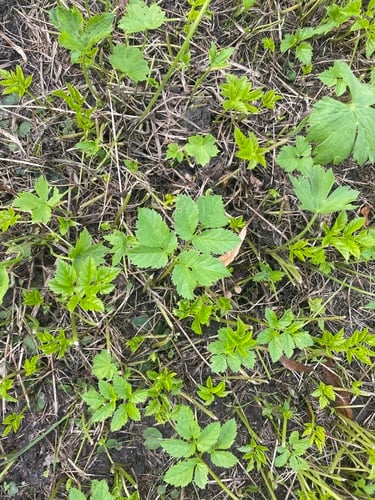
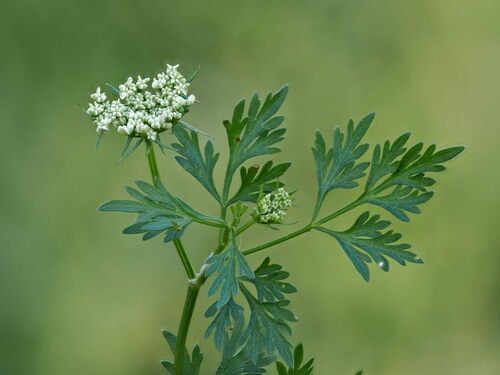
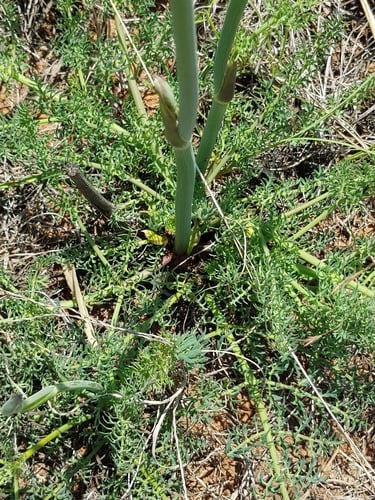
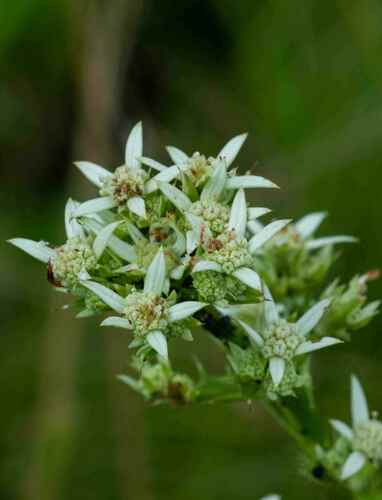
Hydrocotyle vulgaris
L.
Pennywort
iNaturalist· cc-by-sa
(c) anonymous, some rights reserved (CC BY-SA)
iNaturalist· cc-by-sa
(c) Kenraiz, some rights reserved (CC BY-SA)
iNaturalist· cc-by-sa
(c) Krzysztof Ziarnek, Kenraiz, some rights reserved (CC BY-SA)
Description
Hydrocotyle vulgaris is a PERENNIAL growing to 0.1 m (0ft 4in) by 0.5 m (1ft 8in). See above for USDA hardiness. It is hardy to UK zone 6 and is not frost tender. It is in flower from June to August, and the seeds ripen from July to October. The species is hermaphrodite (has both male and female organs). The plant is self-fertile. Suitable for: light (sandy), medium (loamy) and heavy (clay) soils. Suitable pH: mildly acid, neutral and basic (mildly alkaline) soils and can grow in very acid soils. It can grow in semi-shade (light woodland) or no shade. It prefers moist or wet soil.
Edible Uses
Leaves - cooked. A strong carroty taste, they cannot be eaten in quantity.
Distribution
Europe, including Britain, from Scandanavia south and east to N. Africa, Greece and the Caspian Sea.
Where It Grows
TEMPERATE ASIA: Israel, Jordan, Azerbaijan, Georgia EUROPE: Denmark, United Kingdom, Ireland, Sweden, Austria, Belgium, Switzerland, Czech Republic, Germany, Hungary, Netherlands, Slovakia, Belarus, Estonia, Lithuania, Latvia, Ukraine, Albania, Croatia, Italy (incl. Sicily), Montenegro, Spain, France (incl. Corsica), Portugal AFRICA: Morocco
Cultivation
Requires a permanently moist position in sun or light shade. Plants can be very invasive, though they are fairly easy to control by pulling out the rooted stems.
Propagation
Seed - we have no information on this species but suggest sowing it in early spring in a cold frame. When they are large enough to handle, prick the seedlings out into individual pots and plant them out in the summer. If you have sufficient seed it would probably be worthwhile sowing the seed outdoors in situ in the spring. Division of rooted runners. Probably best done in spring but can be done at any time in the growing season if the plants are kept moist.