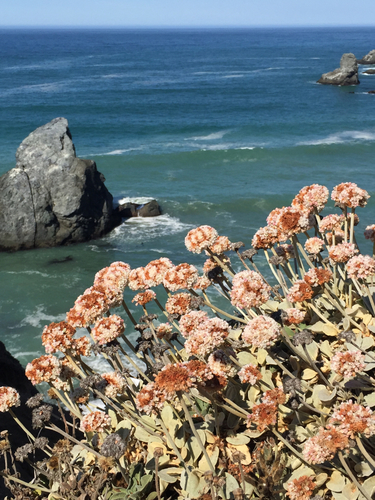
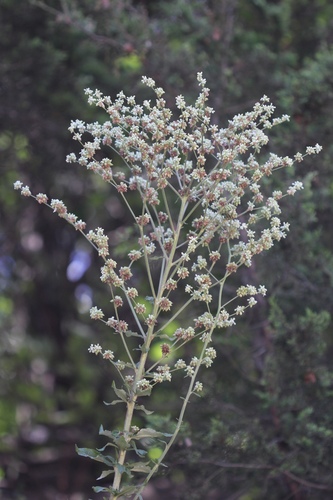
Persicaria vivipara
(L.) Ronse Decr.
Alpine bistort, Alpine smartweed, Serpent grass, Swinegrass, Common bistort
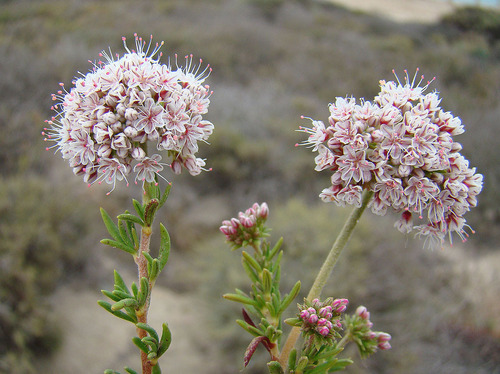
iNaturalist· cc-by
(c) Sarah Johnson, some rights reserved (CC BY)
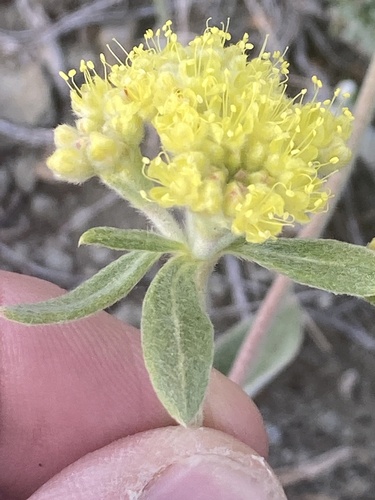
iNaturalist· cc-by-nc
(c) Andy Goerdel - Texas Master Naturalist, Good Water Chapter, some rights reserved (CC BY-NC)
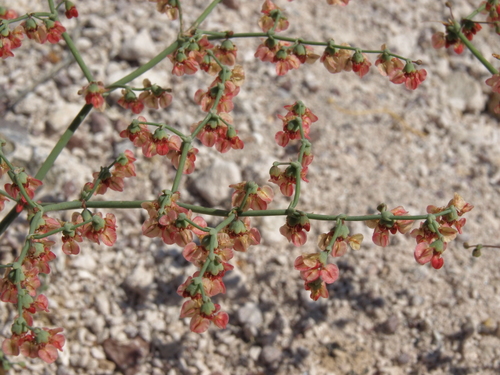
iNaturalist· cc-by-nc
(c) Jack Farley, some rights reserved (CC BY-NC)
Description
A herb. It keeps growing from year to year. It grows 5-15 cm tall. The rootstock is often twisted and starchy. It is edible. It grows to 40 cm high. The leaves are 4-10 cm long by 1.3-2.5 cm wide. They are narrow and oblong. The edges curve. The leaves curl downwards at the edges. They are green above and greyish underneath. The leaves at the base have long stalks and the leaves on the stems do not have stalks. The leaves are in a cluster from the rootstock and are dark-green and shiny. The flower stems are 30 cm tall. The flowers are in a slender spike. It forms small bulbils along the flower stalk. These fall off to form new plants. The flowers are white or pink. The flowers are in spikes at the ends of the plant. At the base of the flowers are small bulblets that fall off to produce new plants.
Edible Uses
The bulbils can be stripped from the lower flower stalks and eaten raw. The young roots are edible raw, while older ones must be cooked. The young leaves can be eaten raw or cooked. The roots are eaten in Russia, especially by the Samoyed peoples.
Traditional Uses
The tiny bulbils are stripped from the lower part of the flower stalk and eaten raw. The rootstocks can be dug and eaten raw, boiled or roasted. They are used to flavour meat. The young leaves can be used in salads or cooked. Older leaves can be cooked and eaten. Seeds are pickled. The ripe fruit are eaten. CAUTION: Although plants are not poisonous they can cause skin reactions.
Distribution
It is a cool temperate plant. It grows in Arctic regions and on alpine and subalpine slopes. It grows on gravelly and rocky soils. It is a hardy plant. In Nepal plants grow between 3000-4500 m altitude. In Sikkim it grows between 1,500-2,500 m above sea level. It suits hardiness zones 5-8. In Sichuan.
Where It Grows
Alaska, Arctic, Asia, Balkans, Bhutan, Bosnia, Britain, Canada, Central Asia, China, Europe, Greenland, Himalayas, Iceland, India, Indochina, Japan, Kazakhstan, Korea, Kyrgyzstan, Mongolia, Myanmar, Nepal, Northeastern India, North America, Norway, Russia, Scandinavia, SE Asia, Siberia, Sikkim, Slovenia, Sweden, Tajikistan, Thailand, USA,
Cultivation
Plants are grown from seed.
Other Information
It is a commonly known edible plant.
Notes
There are about 50 Polygonum species.
Synonyms
Also Known As
Bajir, Bilauri, Harerug, Inuit nuts, Khalti, Mameche, Maslun, Masun, Mortog, Na-ram, Pangram, Pantsa ramba, Rambu, Rambu godpa, Syukl'yagyak, Viviparous bistort, živorodna dresen, Zivorodni dvornik
References (33)
- Ainana, L. & Zagrebin, I., 2014, Edible Plants Used by the Siberian Yupik Eskimos of Southeastern Chukotka Peninsula, Russia, (English translation). p 62 (As Bistorta vivipara)
- Ambasta, S.P. (Ed.), 2000, The Useful Plants of India. CSIR India. p 482 (As Polygonum viviparum)
- Beckstrom-Sternberg, Stephen M., and James A. Duke. "The Foodplant Database." http://probe.nalusda.gov:8300/cgi-bin/browse/foodplantdb.(ACEDB version 4.0 - data version July 1994) (As Polygonum viviparum)
- Boesi, A., 2014, Traditional knowledge of wild food plants in a few Tibetan communities. Journal of Ethnobiology and Ethnomedicine 10:75 (As Polygonum viviparum)
- Cerne, M., 1992, Wild Plants from Slovenia used as Vegetables. Acta Horticulturae 318 (As Polygonum viviparum)
Show all 33 references Hide references
- Dobriyal, M. J. R. & Dobriyal, R., 2014, Non Wood Forest Produce an Option for Ethnic Food and Nutritional Security in India. Int. J. of Usuf. Mngt. 15(1):17-37 (As Polygonum viviparum)
- Elias, T.S. & Dykeman P.A., 1990, Edible Wild Plants. A North American Field guide. Sterling, New York p 155 (As Polygonum viviparum)
- Esperanca, M. J., 1988. Surviving in the wild. A glance at the wild plants and their uses. Vol. 1. p 34 (As Polygonum viviparum)
- Facciola, S., 1998, Cornucopia 2: a Source Book of Edible Plants. Kampong Publications, p 184 (As Polygonum viviparum)
- Ferns, Plants for a Future. (As Polygonum viviparum)
- Flora of China @ efloras.org Volume 5 (As Polygonum viviparum)
- Girard, N. J., 2020, Sustainable Foraging of Wild Edible Plants in Norway. A Biocultural Approach. M. Sc. thesis Norwegian University. p 133 (As Bistorta vivipara)
- http://www.botanic-gardens-ljubljana.com/en/plants (As Polygonum viviparum)
- Ghimire, S. K., et al, 2008, Non-Timber Forest Products of Nepal Himalaya. WWF Nepal p 113 (As Bistorta vivipara)
- https://en.wikipedia.org/wiki/List of wild edible plants in Mongolian cuisine (As Polygonum viviparum)
- Kang, J. et al, 2016, Wild food plants and fungi used in the mycophilous Tibetan community of Zhagana (Tewo Country, Gansu, China) Journal of Ethnobiology and Ethnomedicine. 12:21
- Kermath, B. M., et al, 2014, Food Plants in the Americas: A survey of the domesticated, cultivated and wild plants used for Human food in North, Central and South America and the Caribbean. On line draft. p 676 (As Polygonum viviparum)
- MacKinnon, A., et al, 2009, Edible & Medicinal Plants of Canada. Lone Pine. p 323 (As Bistorta vivipara)
- Manandhar, N.P., 2002, Plants and People of Nepal. Timber Press. Portland, Oregon. p 113 (As Bistorta viviparum)
- Morley, B. & Everard, B., 1970, Wild Flowers of the World. Ebury press. Plate 5 (As Polygonum viviparum)
- Mullory, C. & Aitken, S., 2012, Common Plants of Nunavut. Inhabit Media p 82(As Bistorta vivipara)
- Plants for a Future database, The Field, Penpol, Lostwithiel, Cornwall, PL22 0NG, UK. http://www.scs.leeds.ac.uk/pfaf/ (As Polygonum viviparum)
- Porsild, A.E., 1953, Edible Plants of the Arctic, Arctic 6:15-34, page 31 (As Polygonum viviparum)
- Porsild, A.E., 1974, Rocky Mountain Wild Flowers. Natural History Series No. 2 National Museums of Canada. p 148 (As Polygonum viviparum)
- Redzic, S. J., 2006, Wild Edible Plants and their Traditional Use in the Human Nutrition in Bosnia-Herzegovina. Ecology of Food and Nutrition, 45:189-232 (As Polygonum viviparum)
- Scotter, G. W., & Flygare, H., 1993, Wildflowers of the Canadian Rockies. Hurtig. p 22 (As Polygonum viviparum)
- Sp. pl. 1:360. 1753 (As Polygonum viviparum)
- Sundriyal, M., et al, 1998, Wild edibles and other useful plants from the Sikkim Himalaya, India. Oecologia Montana 7:43-54 (As Bistorta vivipara)
- Sundriyal, M., et al, 2004, Dietary Use of Wild Plant Resources in the Sikkim Himalaya, India. Economic Botany 58(4) pp 626-638 (As Bistorta vivipara)
- Svanberg, I., et al, 2012, Edible wild plant use in the Faroe Islands and Iceland. Acta Societatis Botanicorum Poloniae 81(4): 233-238 (As Bistorta vivipara)
- Svanberg, I., 2012, The use of wild plants as food in pre-industrial Sweden. Acta Societatis Botanicorum Poloniae 81(4): 317-327 (As Bistorta vivipara)
- Turner, N. J. et al, 2011, Edible and Tended Wild Plants, Traditional Ecological Knowledge and Agroecology. Critical Reviews in Plant Sciences, 30:198-225 (As Polygonum viviparum)
- Zhang, Y., et al, Yunatov’s Records of Wild Edible Plant Used by the Mongols in Mongolia During 1940- 1951: Ethnobotanical Arrangements and Discussions. Inner Mongolia Normal University. p 6, 14 (As Polygonum viviparum)