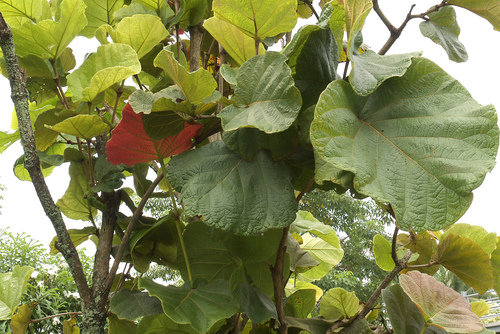
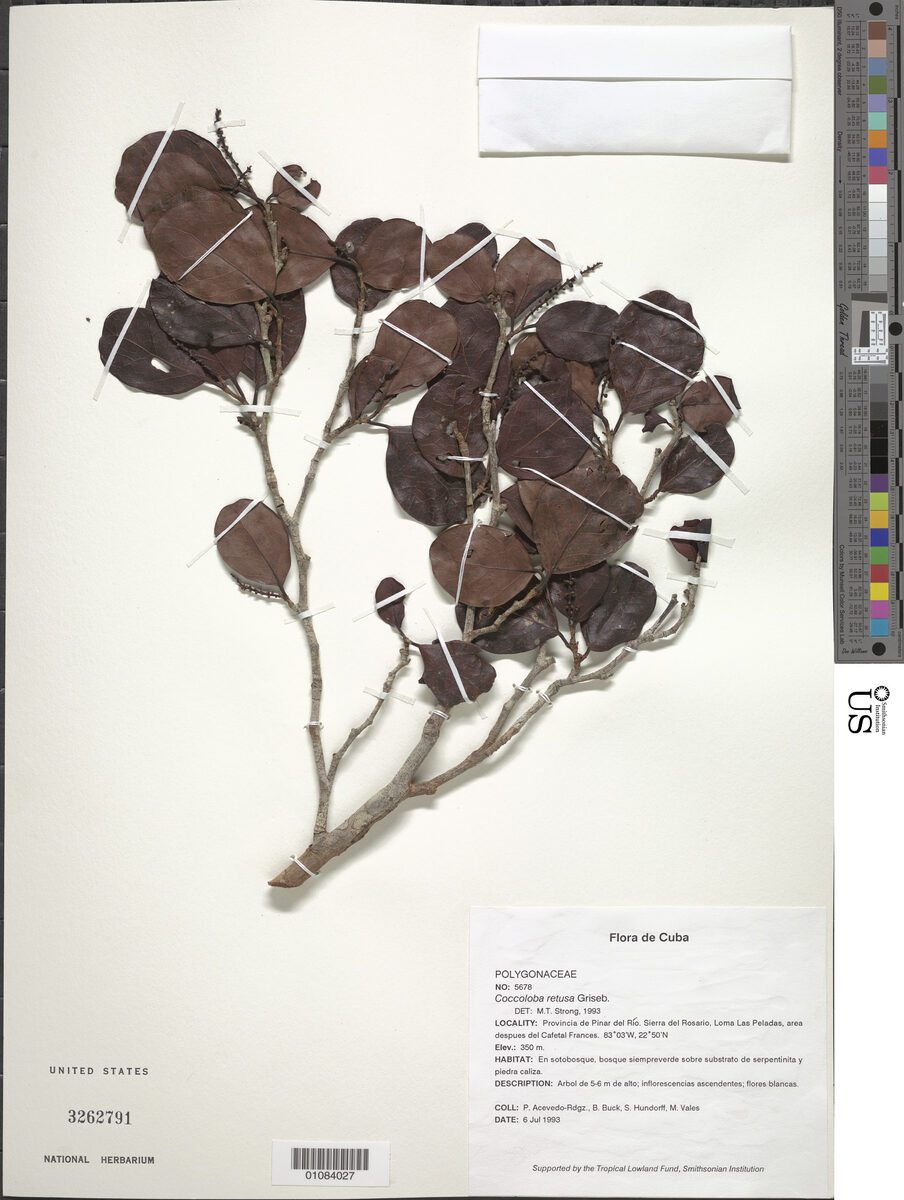
Persicaria alpina
(All.) Gross
Alaska wild rhubarb, Alpine knotweed
iNaturalist· cc-by
(c) Fyodor Pudovikov, some rights reserved (CC BY)
iNaturalist· cc-by
(c) Fyodor Pudovikov, some rights reserved (CC BY)
iNaturalist· cc-by-nc
(c) Богданович Светлана, some rights reserved (CC BY-NC)
Description
A tall herb. It grows 2 m high. It branches from above the middle. The stems have grooves and are pale reddish or white. The leaves are oval or sword shaped. They are 3-9 cm long by 1-3 cm wide. They narrow to a short stalk. There can be some hairs underneath. The flowers are small and pale pink or white. They are in branched, pyramid shaped clusters. These can be 30 cm long.
Edible Uses
The leaves are eaten raw or cooked. Young stems are peeled, cut into pieces, and prepared like rhubarb with sugar. Seeds are also edible.
Traditional Uses
The leaves are eaten raw or cooked. The young stems are peeled, cut into pieces and used like rhubarb with sugar.
This uses section is brief — help expand it
Medicinal Uses
Traditionally used to purify the blood in parts of Britain.
Distribution
It is a temperate plant. It grows on the edges of forests and grassy slopes. It grows between 800-2,400 m above sea level. It grows in north and west China. In the western Himalayas it grows between 1,500-3,000 m altitude.
Where It Grows
Afghanistan, Asia, Central Asia, China, Europe, Himalayas, India, Italy, Kazakhstan, Korea, Kyrgyzstan, Mediterranean, Mongolia, North America, Northeastern India, Pakistan, Russia, Siberia, Sikkim, Spain, Turkey, Türkiye, USA,
Notes
There are about 50 Polygonum species.
Nutrition
| Part | Moisture | kJ | kcal | Protein | Vit A | Vit C | Iron | Zinc |
|---|---|---|---|---|---|---|---|---|
| Root | — | — | 10.8 | — | — | — | — | — |
Synonyms
Also Known As
Elayiz, Kizlez, Kapousta, Kamouslouk
References (13)
- Ainana, L. & Zagrebin, I., 2014, Edible Plants Used by the Siberian Yupik Eskimos of Southeastern Chukotka Peninsula, Russia, (English translation). p 53 (As Aconogonum alaskanum)
- Ambasta, S.P. (Ed.), 2000, The Useful Plants of India. CSIR India. p 478 (As Polygonum alpinum)
- Auct. syn. meth. stirp. hort. regii. taur. 42. 1773 (Meanges Philos. Math. Soc. Roy. Turin 5:94. 1774) (As Polygonum alpinum)
- Cakir, E. A., 2017, Traditional knowledge of wild edible plants of Iğdır Province (East Anatolia, Turkey). Acta Soc Bot Pol. 2017;86(4):3568
- Flora of China @ efloras.org Volume 5 (As Polygonum alpinum)
Show all 13 references Hide references
- Flora of Pakistan. www.eFloras.org (As Aconogonum alpinum)
- Hedrick, U.P., 1919, (Ed.), Sturtevant's edible plants of the world. p 511 (As Polygonum alpinum)
- Manju, S., and Sundriyal, R. C., 2001, Wild Edible Plants of the Sikkim Himalaya: Nutritive Values of Selected Species. Economic Botany 55(3): 377-390 (As Polygonum alpinum)
- Moerman, D. F., 2010, Native American Ethnobotany. Timber Press. p 422 (As Polygonum alpinum)
- Plants for a Future database, The Field, Penpol, Lostwithiel, Cornwall, PL22 0NG, UK. http://www.scs.leeds.ac.uk/pfaf/ (As Polygonum alpinum)
- Polunin, O., & Stainton, A., 2006, Flowers of the Himalaya, Oxford India Paperbacks. p 343 (As Aconogonum alpinum)
- Sert. fl. Transsilv. 64. 1853 (As Aconogonum alpinum)
- Singh, H.B., Arora R.K.,1978, Wild edible Plants of India. Indian Council of Agricultural Research, New Delhi. p 33 (As Polygonum alpinum)