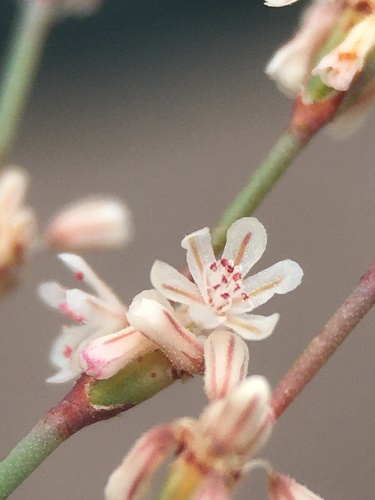
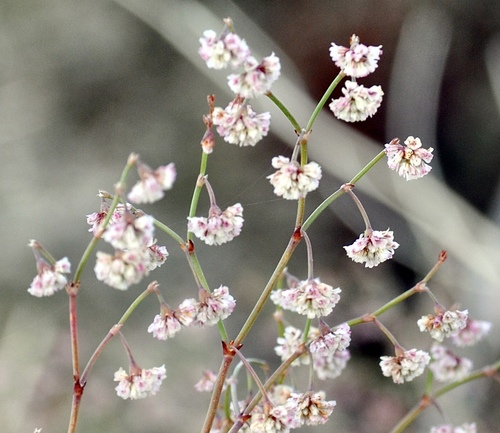
Polygonum rigidum
Skv.
gbif· cc-by
Moscow State University (copyright is managed by Dr. Alexey P. Seregin)
gbif· cc-by
Moscow State University (copyright is managed by Dr. Alexey P. Seregin)
Summary
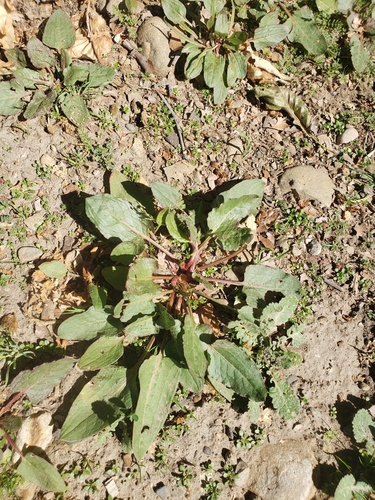
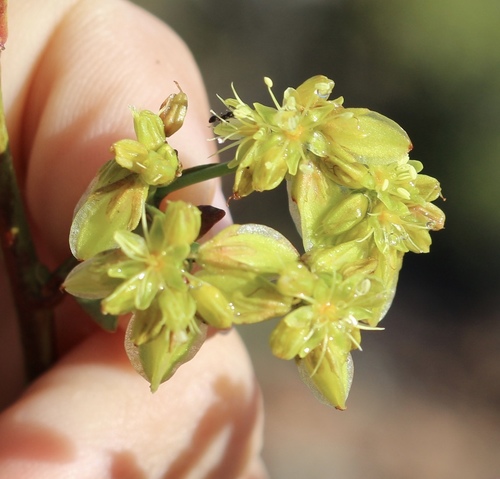
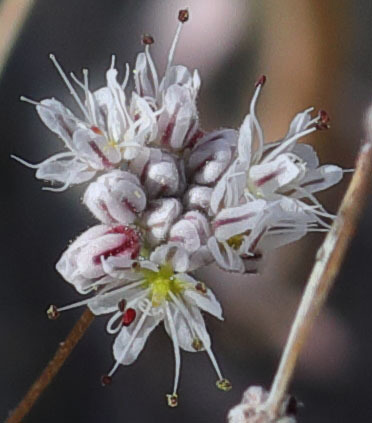
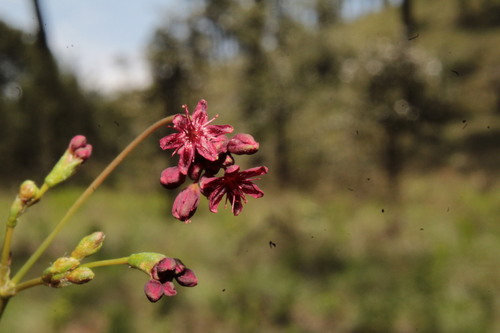
A compact annual reaching 0.5 m (1ft 8in) tall with hermaphrodite flowers. Blooms June to August with seeds ripening July to September. Tolerates light sandy, medium loamy, and heavy clay soils across mildly acidic to basic pH ranges. Grows in semi-shade or full sun, preferring moist soil.
Description
A compact annual reaching 0.5 m (1ft 8in) tall with hermaphrodite flowers. Blooms June to August with seeds ripening July to September. Tolerates light sandy, medium loamy, and heavy clay soils across mildly acidic to basic pH ranges. Grows in semi-shade or full sun, preferring moist soil.
Edible Uses
Leaves and young shoot tips can be eaten raw or cooked. This plant is regarded as an emergency food, used when other options are unavailable. The seed can also be eaten raw or cooked, though it is quite small and fiddly to work with.
Traditional Uses
The tips of the shoots are eaten.
This uses section is brief — help expand it
Medicinal Uses
None known
Known Hazards
Although no specific mention has been made for this species, there have been reports that some members of this genus can cause photosensitivity in susceptible people. Many species also contain oxalic acid (the distinctive lemony flavour of sorrel) - whilst not toxic this substance can bind up other minerals making them unavailable to the body and leading to mineral deficiency. Having said that, a number of common foods such as sorrel and rhubarb contain oxalic acid and the leaves of most members of this genus are nutritious and beneficial to eat in moderate quantities. Cooking the leaves will reduce their content of oxalic acid. People with a tendency to rheumatism, arthritis, gout, kidney stones or hyperacidity should take especial caution if including this plant in their diet since it can aggravate their condition.
Distribution
It is a temperate plant. It grows between 400-2,500 m above sea level.
Where It Grows
Asia, China, Manchuria, Mongolia, Russia,
Cultivation
We have very little information on this species and do not know if it is hardy in Britain, though judging by its native range it should succeed outdoors in many parts of the country. The following notes are based on the general needs of the genus. Succeeds in an ordinary garden soil but prefers a moisture retentive not too fertile soil in sun or part shade. Repays generous treatment. Plants seem to be immune to the predations of rabbits.
Propagation
Sow seed in spring in a cold frame. Germination is usually straightforward. Once seedlings are large enough to handle, prick them out into individual pots and plant out during summer if they have grown sufficiently. If not, keep them in a cold frame over winter and plant out the following spring after the last expected frosts. Division can be done in spring or autumn. Larger divisions can go directly into their permanent positions. Smaller divisions are better potted up and grown on in light shade in a cold frame until well established, then planted out in late spring or early summer.
Other Uses
None known
Notes
There are about 50 Polygonum species.
References (3)
- BARANOV,
- Flora of China @ efloras.org Volume 5
- Plants for a Future database, The Field, Penpol, Lostwithiel, Cornwall, PL22 0NG, UK. http://www.scs.leeds.ac.uk/pfaf/