Reynoutria japonica
Siebold & Zucc.
Japanese knotweed, Giant knotweed
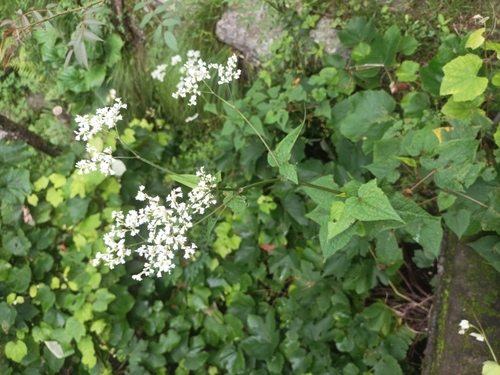
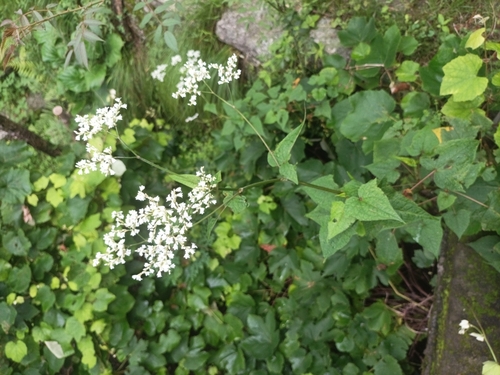
iNaturalist· cc-by-nc
(c) JODY HSIEH, some rights reserved (CC BY-NC), uploaded by JODY HSIEH
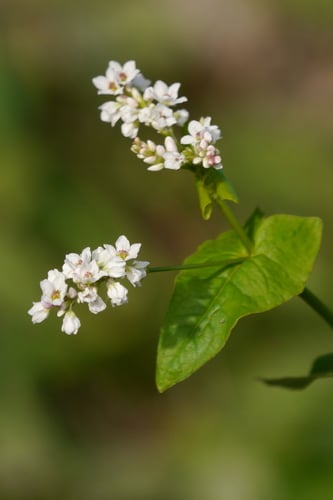
iNaturalist· cc-by-nc
(c) yell, some rights reserved (CC BY-NC)
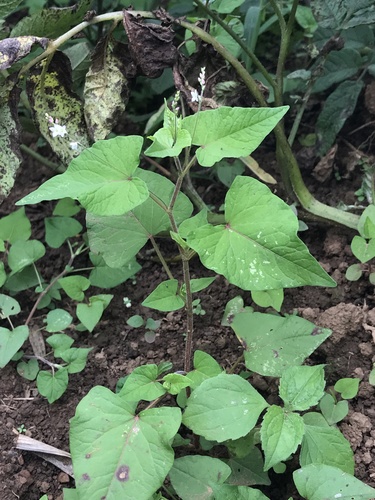
iNaturalist· cc-by-sa
(c) Douglas Goldman, some rights reserved (CC BY-SA), uploaded by Douglas Goldman
Summary
Source: WikipediaReynoutria japonica, synonyms Fallopia japonica and Polygonum cuspidatum, is a species of herbaceous perennial plant in the knotweed and buckwheat family Polygonaceae. Common names include Japanese knotweed and Asian knotweed. It is native to East Asia in Japan, China and Korea. In North America and Europe, the species has successfully established itself in numerous habitats; it is classified as a pest and invasive species in several countries. The plant is popular with beekeepers and its young stems are edible, making it an increasingly popular foraged vegetable with a flavour described as lemony rhubarb.
Description
A climbing herb which keeps growing from year to year. It grows 1-2 m tall. The roots are stiff and woody. They are hollow. Young roots have purplish spots on the surface. The leaves grown singly. They are 5-15 cm long by 1-1.5 cm wide. The leaves do not have hairs. The flowers are white. The fruit are triangular shaped.
Edible Uses
Young spring shoots can be cooked and used as an asparagus substitute; their acid flavour also makes them suitable as a rhubarb substitute in pies, fruit soups, and jams. Older stems and shoot tips, when cooked, taste like a milder version of rhubarb. The seed, though small and fiddly to process, can be eaten raw or cooked, ground into a powder for use as a flavouring and thickener in soups, or mixed with cereals when baking bread and cakes. The root is sometimes eaten. Edible portions include leaves, shoots, rhizomes, and roots.
Traditional Uses
The young shoots and leaves are eaten. They are treated like asparagus. The leaves are used for sarma in Turkey. They are rolled around a filling of rice or minced meat. They can be chilled and served with salad dressing. The young shoots can be used like rhubarb in pies, fruit soups, sweet sauces, jams and puddings. The rhizomes are sometimes eaten.
Medicinal Uses
The root may share properties common to other knotweeds, potentially acting as an antiphlogistic, bechic, depurative, diuretic, emmenagogue, emollient, febrifuge, stomachic, and vulnerary, and has uses in treating women's complaints. A decoction is used for burn injuries, boils, abscesses, poisonous snakebites, acute hepatitis, appendicitis, traumatic injuries, and menstrual irregularities. Crushed leaves can be applied externally as a poultice to abscesses and cuts, while dried, powdered root is also used externally. Plant extracts have shown antitumour activity.
Known Hazards
Although no specific mention has been made for this species, there have been reports that some members of this genus can cause photosensitivity in susceptible people. Many species also contain oxalic acid (the distinctive lemony flavour of sorrel) - whilst not toxic this substance can bind up other minerals making them unavailable to the body and leading to mineral deficiency. Having said that, a number of common foods such as sorrel and rhubarb contain oxalic acid and the leaves of most members of this genus are nutritious and beneficial to eat in moderate quantities. Cooking the leaves will reduce their content of oxalic acid. People with a tendency to rheumatism, arthritis, gout, kidney stones or hyperacidity should take especial caution if including this plant in their diet since it can aggravate their condition.
Distribution
It is a tropical and subtropical plant. It grows in forests and humid areas. It grows in wetlands. In Yunnan.
Where It Grows
Asia, Balkans, Bosnia, China, Indochina, Japan, Myanmar, North America, Norway, Romania, Scandinavia, SE Asia, USA, Vietnam,
Cultivation
Experimental Crop Industrial Crop: Fiber Management: Hay. Climate: cold to warm temperate. Humidty: humid. Carbon Farming Solutions - Cultivation: experimental. Management: hay (Describes the non-destructive management systems that are used in cultivation). In garden design, as well as the above-ground architecture of a plant, root structure considerations help in choosing plants that work together for their optimal soil requirements including nutrients and water.
Propagation
Plants can be grown from seed.
Other Uses
Classified as an industrial fibre crop under Carbon Farming Solutions, grown for non-food material use. Special uses: carbon farming, food forest.
Other Information
It is cultivated for its young stems. It is sold in local markets in China.
Notes
It is used in medicine. It has anticancer properties. There are about 50 Polygonum species.
Synonyms
Also Known As
Bambus, Cotkhi, Dienthat, Itadori, Hhaoqqailhaoqbivaq, Hoathuyetdan, Hotruong, Japanese Fleece-flower, Mexican bamboo, Parkslirekne, Siebold 's Knotweed, Suan gan tong, Tiger stick
References (25)
- Abh. Math.-Phys. Cl. Koenigl. Bayer. Akad. Wiss. 4(3):208. 1846 (As Polygonum cuspidatum)
- Burkill, I.H., 1966, A Dictionary of the Economic Products of the Malay Peninsula. Ministry of Agriculture and Cooperatives, Kuala Lumpur, Malaysia. Vol 2 (I-Z) p 1821 (As Polygonum cuspidatum)
- Dogan, Y., et al, 2015, Of the importance of a leaf: the ethnobotany of sarma in Turkey and the Balkans. Journal of Ethnobiology and Ethnomedicine, 11:56
- Duke, J.A., 1992, Handbook of Edible Weeds. CRC Press. p 154 (As Polygonum cuspidatum)
- Elias, T.S. & Dykeman P.A., 1990, Edible Wild Plants. A North American Field guide. Sterling, New York p 99 (As Polygonum cuspidatum)
Show all 25 references Hide references
- Esperanca, M. J., 1988. Surviving in the wild. A glance at the wild plants and their uses. Vol. 2. p 31 (As Polygonum cuspidatum)
- Facciola, S., 1998, Cornucopia 2: a Source Book of Edible Plants. Kampong Publications, p 185
- Girard, N. J., 2020, Sustainable Foraging of Wild Edible Plants in Norway. A Biocultural Approach. M. Sc. thesis Norwegian University. p 133
- Hani Medicine of Xishuangbanna, 1999, p 295 (As Polygonum cuspidatum)
- Hu, Shiu-ying, 2005, Food Plants of China. The Chinese University Press. p 371 (As Polygonum cuspidatum)
- Kermath, B. M., et al, 2014, Food Plants in the Americas: A survey of the domesticated, cultivated and wild plants used for Human food in North, Central and South America and the Caribbean. On line draft. p 675 (As Polygonum cuspidatum)
- Kintzios, S. E., 2006, Terrestrial Plant-Derived Anticancer Agents and Plant Species Used in Anticancer research. Critical Reviews in Plant Sciences. 25: pp 79-113 (As Polygonum cuspidatum)
- Kiple, K.F. & Ornelas, K.C., (eds), 2000, The Cambridge World History of Food. CUP p 1797 (As Polygonum cuspidatum)
- Li, D. et al, 2017, Ethnobotanical survey of herbal tea plants from the traditional markets in Chaoshan, China. Journal of Ethnopharmacology. 205 (2017) 195-206
- Lim, T. K., 2015, Edible Medicinal and Non Medicinal Plants. Volume 9, Modified Stems, Roots, Bulbs. Springer p 73
- Luo, B., et al, 2019, Wild edible plants collected by Hani from terraced rice paddy agroecosystem in Honghe Prefecture, Yunnan, China. Journal of Ethnobiology and Ethnomedicine 15:56
- Pham-Hoang Ho, 1999, An Illustrated Flora of Vietnam. Nha Xuat Ban Tre. p 748 (As Polygonum cuspidatum)
- READ, (As Polygonum cuspidatum)
- Redzic, S., 2010, Use of Wild and Semi-Wild Edible Plants in Nutrition and Survival of People in 1430 Days of Siege of Sarajevo during the War in Bosnia and Herzegovina (1992–1995). Coll. Antropol 34 (2010) 2:551-570
- Terra, G.J.A., 1973, Tropical Vegetables. Communication 54e Royal Tropical Institute, Amsterdam, p 68 (As Polygonum cuspidatum)
- UPHOF, (As Polygonum cuspidatum)
- USDA, ARS, National Genetic Resources Program. Germplasm Resources Information Network - (GRIN). [Online Database] National Germplasm Resources Laboratory, Beltsville, Maryland. Available: www.ars-grin.gov/cgi-bin/npgs/html/econ.pl (10 April 2000) (As Polygonum cuspidatum)
- Wiersema, J. H. & Leon, B., 2013, World Economic Plants. A Standard Reference CRC Press. 2nd Ed. p 582
- World Checklist of Useful Plant Species 2020. Royal Botanic Gardens, Kew
- Zhang, Y., et al, 2014, Diversity of wetland plants used traditionally in China: a literature review. Journal of Ethnobiology and Ethnomedicine. 10:72