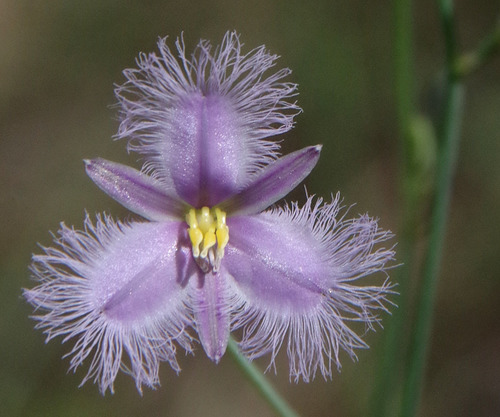
Polygonatum sibiricum
F. Delaroche ex Redoute
Huang jing
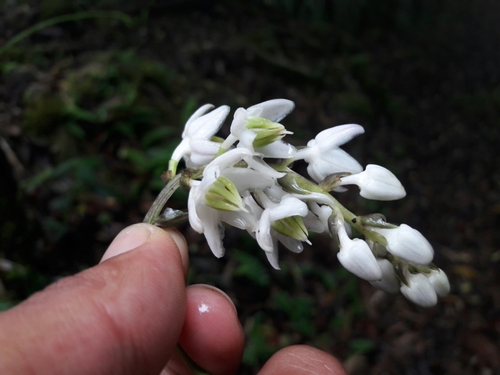
iNaturalist· cc-by-nc
(c) Daba, some rights reserved (CC BY-NC), uploaded by Daba
iNaturalist· cc-by-nc
(c) Ryzhkov Oleg, some rights reserved (CC BY-NC)
Summary
Polygonatum sibiricum is a hardy perennial reaching 1 m tall, suitable for UK zone 3. It produces hermaphrodite, bee-pollinated flowers from May to June, with seeds ripening August to September. Self-fertile with good growing flexibility, it accepts light, medium, or heavy soils with good drainage and mildly acid to basic pH. The plant performs well in full to semi-shade and prefers moist soil conditions.
Description
A herb. It has rhizomes or underground stems. These are usually shortly branched. They are 1-2 cm thick. The stem is erect and can be lying over. It is 50-90 cm long. The leaves are in rings of 4-6. They do not have a leaf stalk. The leaf blade is sword shaped and 8-15 cm long by 4-16 mm wide. The tip is curved. The flowering stalk usually has 2-4 flowers. The flowers hang down. They are white or pale yellow. The fruit are black berries. They are 7-10 mm across. There are 4-7 seeds.
Edible Uses
Young shoots are cooked and can be used as an asparagus substitute. The root is also eaten cooked and is rich in starch.
Traditional Uses
The rhizome contains starch and sugars and are used for pastry. The rhizomes are repeatedly steamed and dried then have sugar or honey added and are eaten as a candy.
Medicinal Uses
The root is antibacterial, antifungal, antirheumatic, antiseptic, demulcent, lenitive, tonic, and a vasodilator. Its use lowers blood pressure and helps prevent atherosclerosis and fatty infiltration of the liver. It is employed in treating dry coughs caused by chronic bronchitis and pulmonary tuberculosis, as well as fatigue and poor appetite.
Known Hazards
Although no reports of toxicity have been seen for this species, some members of this genus have poisonous fruits and seeds.
Distribution
It is a temperate plant. It grows in forests and thickets on shaded slopes between 800-2800 m altitude in N China.
Where It Grows
Asia, China, India, Korea, Mongolia, Russia, Siberia,
Cultivation
Prefers a fertile humus rich moisture retentive well-drained soil in cool shade or semi-shade. Plants are intolerant of heat and drought but tolerate most other conditions. This species is closely related to P. verticillatum. Members of this genus are rarely if ever troubled by browsing deer or rabbits. The young shoots of most members of this genus are very attractive to slugs. Plants adopt a semi-climbing habit, scrambling through small shrubs. Hybridizes with other species in this genus.
Propagation
Seed is best sown as soon as it is ripe in early autumn in a shady part of a cold greenhouse. Stored seed should be sown as early in the year as possible. Germination can be slow, seedlings may not come true to type, and it takes several years to reach a good size. Prick seedlings into individual pots when large enough to handle and grow on in a shady position in the greenhouse for at least their first winter, then plant out in late spring or early summer after the last expected frosts. Divide in March or October. Larger divisions can go directly into permanent positions, while smaller ones are better potted up and grown on in light shade in a cold frame until well established before planting out in late spring or early summer.
Other Uses
The plant has insecticidal properties.
Other Information
It is sold in local markets in China. It is cultivated.
Notes
There are about 50 Polygonatum species. Also put in the family Convallariaceae.
Synonyms
References (10)
- Chen Xinqi, Liang Songyun, Xu Jiemei, Tamura M.N., Liliaceae. Flora of China. p 162
- "Chinese Nutrition Journal", 2002, Vol 23(8) p 298
- Hu, Shiu-ying, 2005, Food Plants of China. The Chinese University Press. p 320
- Hui, Y. H., Handbook of Food Science, Technology, and Engineering. Volume 2. Table 98:6
- Khasbagan, Hu-Yin Huai, and Sheng-Ji pei, 2000, Wild Plants in the Diet of Athorchin Mongol Herdsmen in Inner Mongolia. Economic Botany 54(4): 528-536
Show all 10 references Hide references
- Li, D. et al, 2017, Ethnobotanical survey of herbal tea plants from the traditional markets in Chaoshan, China. Journal of Ethnopharmacology. 205 (2017) 195-206
- Plants for a Future database, The Field, Penpol, Lostwithiel, Cornwall, PL22 0NG, UK. http://www.scs.leeds.ac.uk/pfaf/
- P. J. Redoute, Liliac. 6: t. 315. 1811
- Urgamal, M., Oyuntsetseg, B., Nyambayar, D. & Dulamsuren, Ch. 2014. Conspectus of the vascular plants of Mongolia. (Editors: Sanchir, Ch. & Jamsran, Ts.). Ulaanbaatar, Mongolia.
- Wujisguleng, W., et al, 2012, Ethnobotanical review of food uses of Polygonatum (Convallariaceae) in China. Acta Societatis Botanicorum Poloniae 81(4):239-244