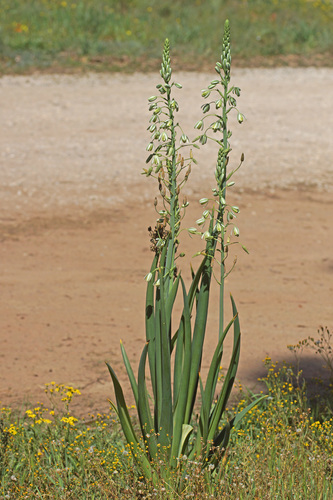
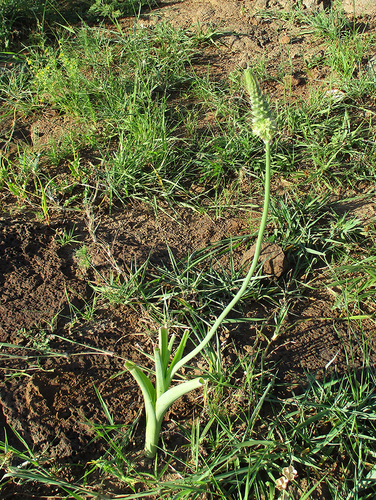
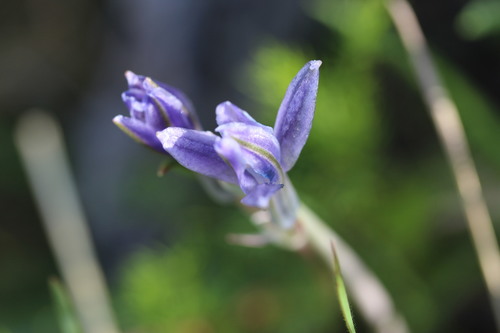
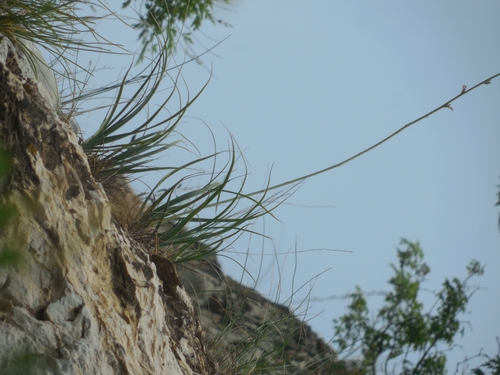
Polygonatum officinale
(Allen) Moench.
Drug Solomonseal, Hopiqdyuqdyuq
iNaturalist· cc-by-nc
(c) Владимир, some rights reserved (CC BY-NC)
iNaturalist· cc-by-nc-sa
(c) Roland Kaiser, some rights reserved (CC BY-NC-SA)
iNaturalist· cc-by-nc-sa
(c) Roland Kaiser, some rights reserved (CC BY-NC-SA)
Description
An evergreen herb. It grows 20-50 cm high. The roots are yellow. They grow horizontally and have many branches. The stem is red. The leaves are red at the edges. They are 4-6 cm long by 1.5-2 cm wide. They have 3 easy to see veins. The upper surface is green and underneath is pale green. The flowers occur singly or in pairs. They are whitish-green. The fruit are round and dark blue in colour.
Edible Uses
The leaves and rhizomes are milled and eaten. The roots can be boiled or fried. The fruits are eaten fresh or dried in small amounts. Young shoots can be boiled briefly and eaten like asparagus shoots. The flowers can be steamed or eaten with salads.
Traditional Uses
The leaves and rhizomes are milled and eaten. The roots can be boiled or fried. CAUTION: The rhizome may be toxic. The fruit are eaten fresh or dried. (They should not be eaten in large amounts) The young shoots can be boiled fro s short time and eaten like asparagus shoots. The flowers can be steamed or eaten with salads.
Medicinal Uses
It is used in medicine and contains fructose, glucose and arabinose.
Known Hazards
Polygonatum odoratum is used in traditional Chinese medicine and Traditional Korean medicine, where it is called yùzhú (玉竹) and dunggulle (둥굴레) respectively. In Korea, the root of the plant is used to make tea. This plant species is described in the work Plantas Medicinales (medicinal plants) of Pius Font i Quer. According to it, its rhizome contains asparagine, mucilage, a cardio-tonic glycoside, saponin, and quinine gluconate. It has been used for intestinal problems and pain, for rheumatism, gout, water retention, and as a diuretic. He says that the scientific medicine has used it to treat diabetes. He also describes a digestive liquor that uses the rhizome of this plant. The young shoots of the plants may be boiled and served like asparagus. The stems, leaves, and berries, however, must be treated with caution, as they are thought to be toxic if consumed in large quantities. Its rhizome contains scattered raphides, but only in the cortex (outer layer).
Distribution
It is a temperate plant. In Yunnan.
Where It Grows
Asia, China, Europe, Indochina, Manchuria, Myanmar, North America, SE Asia, Siberia,
Cultivation
Plants can be grown by seeds or cuttings.
Notes
There are about 50 Polygonatum species. It is used in medicine. Chemical composition: contains fructose, glucose and arabinose. Also put in the family Convallariaceae.
Synonyms
References (8)
- BARANOV,
- Esperanca, M. J., 1988. Surviving in the wild. A glance at the wild plants and their uses. Vol. 2. p 233
- Fl. Pedem. 1:131. 1785
- Hani Medicine of Xishuangbanna, 1999, p 315
- Hedrick, U.P., 1919, (Ed.), Sturtevant's edible plants of the world. p 510
Show all 8 references Hide references
- Lim, T. K., 2015, Edible Medicinal and Non Medicinal Plants. Volume 9, Modified Stems, Roots, Bulbs. Springer p 67
- READ,
- UPHOF,