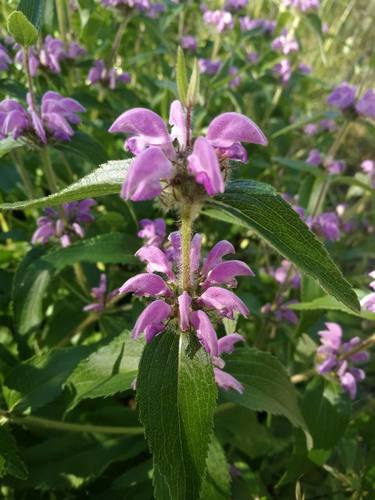
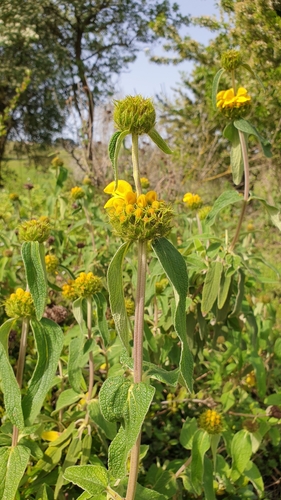
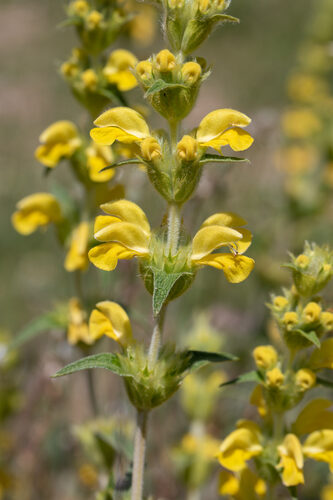
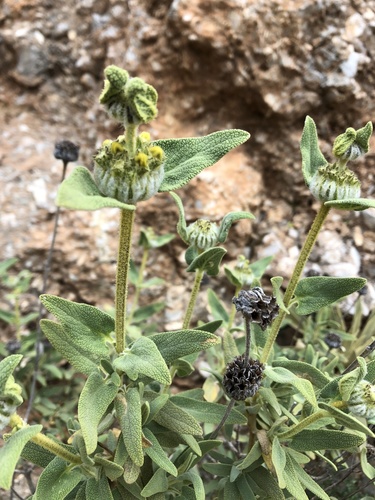
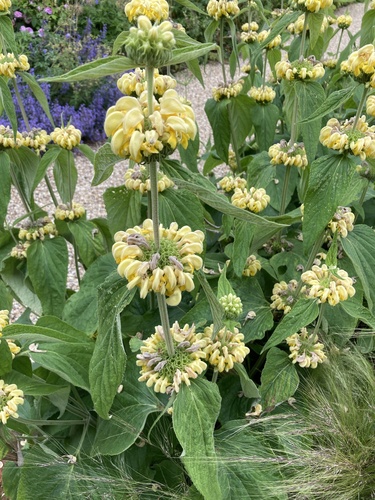
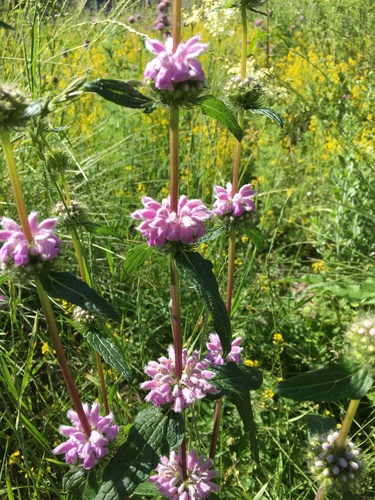
Poliomintha incana
(Torr.) A. Gray
Rosemary mint, Frosted mint, Purple sage
iNaturalist· cc-by-nc
(c) Tom Groves, some rights reserved (CC BY-NC), uploaded by Tom Groves
iNaturalist· cc-by
(c) Alex Abair, some rights reserved (CC BY), uploaded by Alex Abair
iNaturalist· cc-by-nc
(c) Nathan Taylor, some rights reserved (CC BY-NC), uploaded by Nathan Taylor
Summary
Source: WikipediaPoliomintha incana is a species of flowering plant in the mint family which is known as frosted mint. It is native to dry and desert areas of the southwestern United States and northern Mexico. It is a strongly aromatic shrub with dark green foliage covered in small white hairs. Scattered about the foliage are fuzzy, tubular flowers in shades of light purple and blue with tiny purple spots. Frosted mint is eaten fresh or dried or used as a flavoring by Native American groups, particularly the Tewa and Hopi.
Description
A shrub. It grows 50 cm tall. It has many branches. They are straight, slender and erect. They are silvery colour and covered with small hairs. The leaves are directly attached to the branches. The leaves are long and narrow and 1-3 cm long. They are covered with white wooly hairs. The flowers are 6-7 mm long and in groups of 1-3 below the axils of the leaves.
Edible Uses
The leaves can be eaten raw or cooked, and may be dried for later use. The flowers are used cooked, serving as a flavouring in seed mushes and other dishes.
Traditional Uses
The fresh leaves and flowers are eaten. They are eaten with scrambled eggs, boiled or dipped in salt. The dried leaves are used for flavouring. They can also be dried and stored.
Medicinal Uses
The plant has been used externally to treat sores, rheumatism, and ear problems. The leaves have also been used to improve the flavour of other medicinal herbs while enhancing their potency.
Distribution
It is a temperate plant. It grows in desert and scrubland. It has been recorded between 1,000-1,300 m above sea level.
Where It Grows
North America, USA,
Propagation
No propagation information provided.
Other Uses
None known.
Synonyms
Also Known As
Hoary rosemary mint
References (9)
- Anderson, B. A., (Rev.) 1996, Desert Plants of Utah. Utah State University Extension p 84
- Beckstrom-Sternberg, Stephen M., and James A. Duke. "The Foodplant Database." http://probe.nalusda.gov:8300/cgi-bin/browse/foodplantdb.(ACEDB version 4.0 - data version July 1994)
- Desert Survivors Online Plant Database
- Facciola, S., 1998, Cornucopia 2: a Source Book of Edible Plants. Kampong Publications, p 133
- Kermath, B. M., et al, 2014, Food Plants in the Americas: A survey of the domesticated, cultivated and wild plants used for Human food in North, Central and South America and the Caribbean. On line draft. p 674
Show all 9 references Hide references
- Moerman, D. F., 2010, Native American Ethnobotany. Timber Press. p 421
- Proc. Amer. Acad. Arts 8:296. 1870
- Wiersema, J. H. & Leon, B., 2013, World Economic Plants. A Standard Reference CRC Press. 2nd Ed. p 547
- World Checklist of Useful Plant Species 2020. Royal Botanic Gardens, Kew