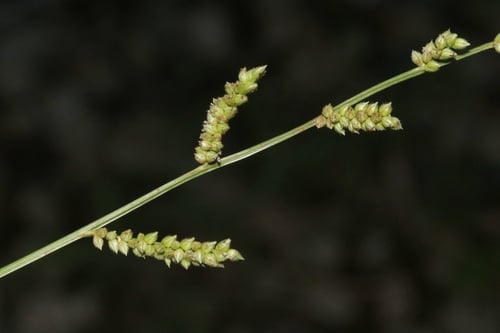
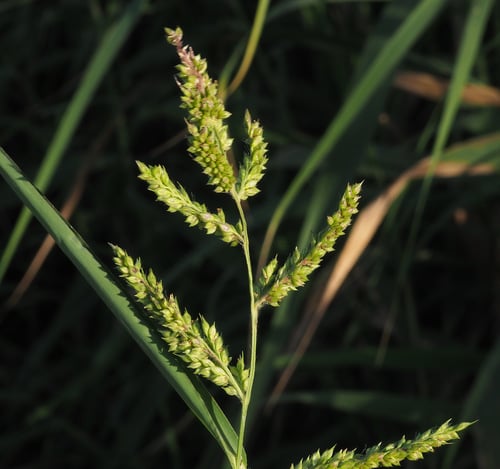
Andropogon gayanus
Kunth
Rhodesian bluegrass
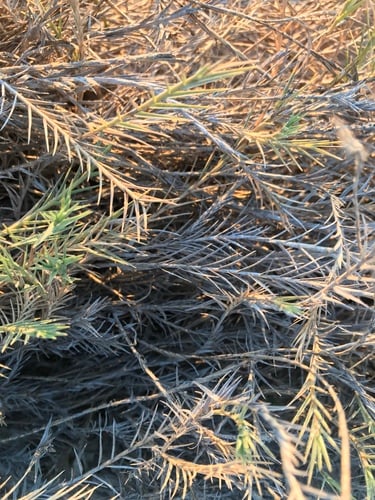
iNaturalist· cc-by-nc
(c) neuroptlove, some rights reserved (CC BY-NC)
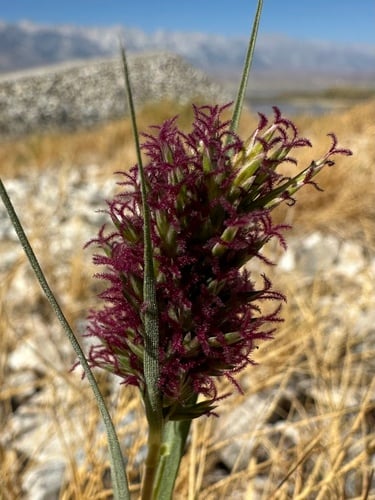
iNaturalist· cc-by-nc
(c) Guilherme A. Fischer, some rights reserved (CC BY-NC), uploaded by Guilherme A. Fischer
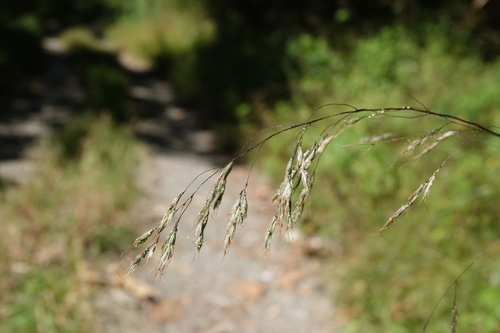
iNaturalist· cc-by-nc
(c) Russell Cumming, some rights reserved (CC BY-NC), uploaded by Russell Cumming
Summary
Source: WikipediaAndropogon gayanus, commonly known as gamba grass, Rhodesian blue grass, tambuki grass, and other names, is a species of grass native to most of the tropical and subtropical savannas of Africa.
Description
A grass that keeps growing from year to year. It forms tussocks. It grows 1.3 m high. The leaves can be woolly below. The grass has a blue-green colour. There are several varieties.
Edible Uses
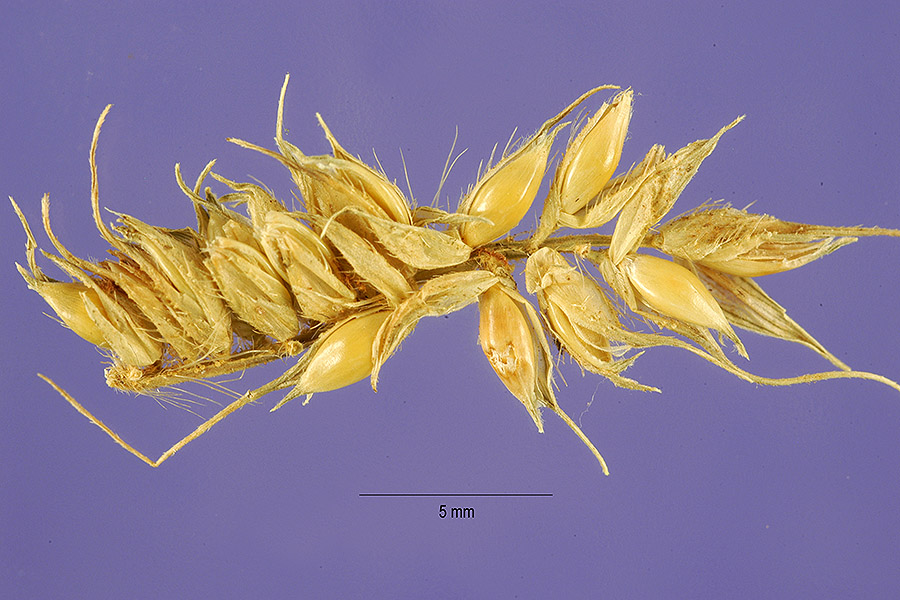
The seeds are eaten raw or cooked and used as a cereal grain.
Traditional Uses
The seeds are eaten raw or cooked.
This uses section is brief — help expand it
Distribution
A tropical plant. It grows naturally on clayey and sandy soils. In Swaziland it is rare and in the low veld only. It grows between 400-1,500 m altitude. It can tolerate frost. It often grows over limestone materials. It can grow in acid, neutral and alkaline soils. It can tolerate shade and drought. It can grow in arid places.
Where It Grows
Africa, Angola, Asia, Australia, Benin, Botswana, Brazil, Burkina Faso, Burundi, Cameroon, Cape Verde, Central Africa, Central African Republic, CAR, Chad, Colombia, Congo, Côte d'Ivoire, East Africa, Eswatini, Ethiopia, Gabon, Gambia, Ghana, Guianas, Guinea, Guinée, Indochina, Ivory Coast, Jamaica, Kenya, Laos, Liberia, Malawi, Mali, Mauritania, Mozambique, Namibia, Niger, Nigeria, Sahel, SE Asia, Senegal, Sierra Leone, Somalia, South Africa, Southern Africa, South America, Sudan, Suriname, Swaziland, Tanzania, Togo, Uganda, West Africa, West Indies, Zambia, Zimbabwe,
Cultivation
A plant of the tropics and warm subtropics, where it can be found at elevations below 2,000 metres, though mostly below 1,000 metres. It prefers a mean annual rainfall within the range 750 - 1,260mm, but can tolerate 400 - 1,400mm. It can tolerate up to 2,500mm. It grows best in areas with seasonal rainfall and a dry season of 3 - 6 months. The plant is sensitive to lower temperatures; the leaves are killed by frost and growth is restricted where the mean minimum temperature of the coldest month is below 4.4°c. Optimal flowering is at 25°c. Grows best in full sun. Succeeds on a wide range of soils, including those of low fertility, from sands to black cracking clays, but prefers sandy clays of medium to high fertility. Succeeds in infertile, acid soils, tolerating a pH range from 4 - 7.5. Established plants are drought tolerant and some forms can also tolerate seasonal inundation of the soil. Grown in many areas for pasture, the plant has escaped from cultivation and invaded native areas. It is a vigorous, robust grass which can form dense stands, excluding native species. In the Northern Territory, Australia, it has invaded riparian vegetation (creek banks and flood-plain fringes), degraded areas, roadsides, pastures and Eucalyptus savannah, in areas where annual rainfall exceeds 600 mm. It has also become naturalized in Brazil. A highly productive grass that increases fuel loads, cures later than the native annual grasses and produces intense, late dry season fires which seriously damage native woody species. The plant has three types of roots - most are fibrous roots close to the surface that probably produce the vigorous early growth; thick cord roots which store starch and anchor the tussock; and vertical roots that can extract water at depth during the dry season. Plants are tolerant of grass fires. A short-day plant with a critical day length for flowering between 12 and 14 hours.
Propagation
Seed - sow in situ at a depth of 10 - 25mm. Division of root clumps.
Other Uses
The stems are used for weaving coarse grass mats and for thatching. The plant has been used for reclaiming badly overgrazed and eroded land. Ten metre wide strips of the grass have been planted in fields of millet to reduce wind erosion occurring at the start of the wet season. The strips captured more than 2,000 tonnes of sand per hectare within 3 years. When used in a rotation, especially in impoverished land, the plant has been found to build soil fertility. It can be planted along the banks of streams etc to control erosion.
Notes
There are about 100 Andropogon species.
Synonyms
Also Known As
Benempe, Bluegrass, Cabi, Cholongwe, Gamba grass, Tambuki grass
References (17)
- Bonou, A., et al, 2013, Valeur economique des Produits Forestiers Non Ligneux (PFNL) au Benin. Editions Universitaires Europeennes p 89
- Chapman, J. D. & Chapman, H. M., 2001, The Forest Flora of Taraba and Andamawa States, Nigeria. WWF & University of Canterbury. p 212
- CRÉAC'H
- Enum. pl. 491. 1833
- Famine foods
Show all 17 references Hide references
- Flora Zambesiaca. http://apps.kew.org/efloras
- Fowler, D. G., 2007, Zambian Plants: Their Vernacular Names and Uses. Kew. p 67
- Grivetti, L. E., 1980, Agricultural development: present and potential role of edible wild plants. Part 2: Sub-Saharan Africa, Report to the Department of State Agency for International Development. p 30
- Hussey, B.M.J., Keighery, G.J., Cousens, R.D., Dodd, J., Lloyd, S.G., 1997, Western Weeds. A guide to the weeds of Western Australia. Plant Protection Society of Western Australia. p 42
- Jardin, C., 1970, List of Foods Used In Africa, FAO Nutrition Information Document Series No 2.p 1
- Paczkowska, G. & Chapman, A.R., 2000, The Western Australian Flora. A Descriptive Catalogue. Western Australian Herbarium. p 95
- Purseglove, J.W., 1972, Tropical Crops. Monocotyledons. Longmans p 125
- Roger, D. D., et al, 2012, Nutritional properties of “Bush Meals” from North Cameroon’s Biodiversity. Advances in Applied Science Research, 2012, 3 (3):1482-1493
- Royal Botanic Gardens, Kew (1999). Survey of Economic Plants for Arid and Semi-Arid Lands (SEPASAL) database. Published on the Internet; http://www.rbgkew.org.uk/ceb/sepasal/internet [Accessed 6th May 2011]
- Swaziland's Flora Database http://www.sntc.org.sz/flora (As var. polycladus)
- van Oudtshoorn, F and van Wyck, E., 2004, Guide to Grasses of Southern Africa. Briza. p 58
- World Checklist of Useful Plant Species 2020. Royal Botanic Gardens, Kew