Pleurospermum camtschaticum
Hoffman
Ridge-fruited celery
iNaturalist· cc-by-nc
(c) Dmitriy Tarasov, some rights reserved (CC BY-NC)
iNaturalist· cc-by-nc
(c) Dmitriy Tarasov, some rights reserved (CC BY-NC)
iNaturalist· cc-by-nc
(c) Dmitriy Tarasov, some rights reserved (CC BY-NC)
Summary
A perennial reaching 1.5 meters tall, flowering from June to July with seeds ripening July to August. This hermaphrodite, insect-pollinated plant is self-fertile and adapts to light sandy, medium loamy, or heavy clay soils that are well-drained. It tolerates mildly acid to basic soil pH, grows in semi-shade or full sun, and prefers moist conditions.
Description
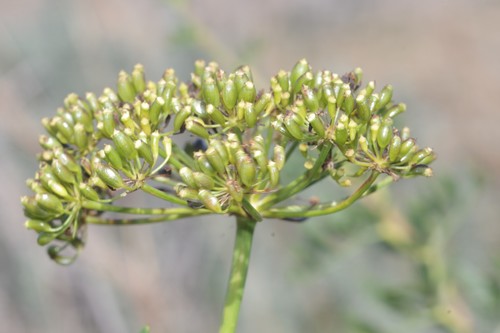
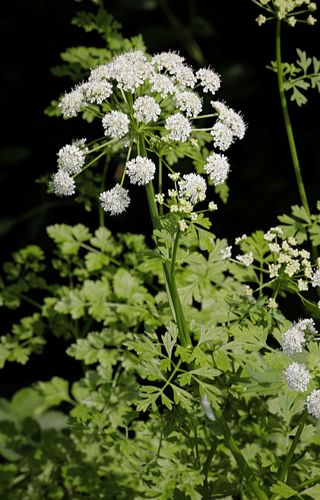
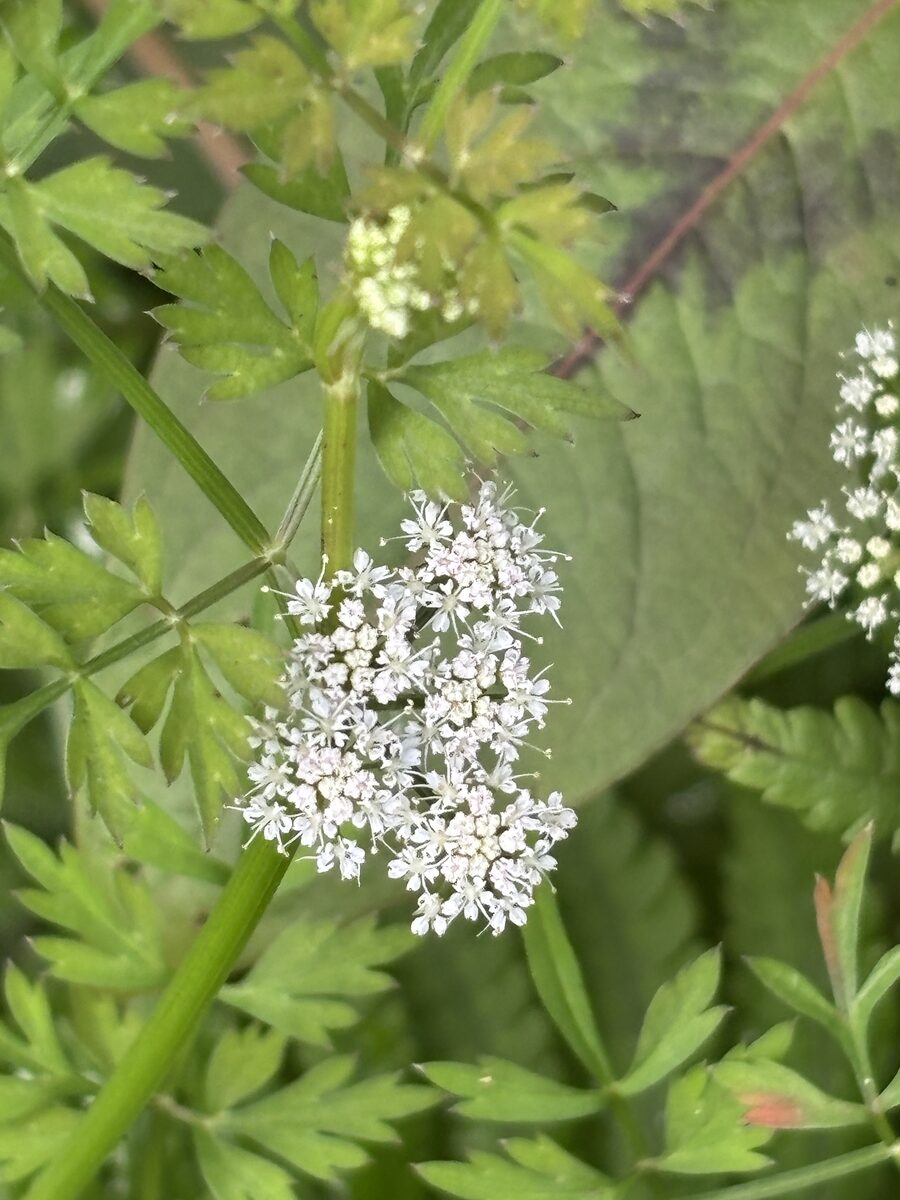
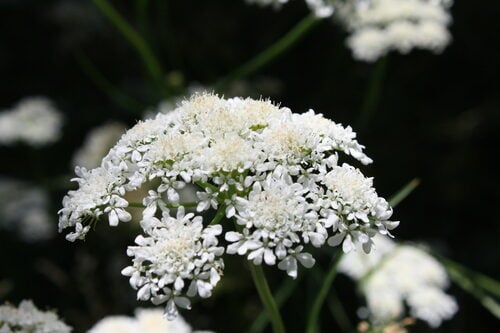
A herb. It keeps growing from year to year. It grows 1-2 m high. The stems are 2-3 cm across. They have lines of stiff hairs and are ridged. The leaves are oval or triangle shaped and 15-30 cm long and wide. They are divided 3 times. The end segments are 2-6 cm long by 1-3 cm wide. They have lobes and teeth. The flowers are in groups 10-20 cm across at the end of branches.
Edible Uses
The root is edible, though no further preparation details are available.
Traditional Uses
The young plants are gathered in spring and washed, drained, chopped with onion and seasoned with soysauce and eaten in salads.
This uses section is brief — help expand it
Medicinal Uses
None known
Distribution
It is a temperate plant. It grows in the shade of forests.
Where It Grows
Asia, China, Japan, Siberia,
Cultivation
We have very little information on this species and do not know if it will be hardy in Britain, though judging by its native range it should succeed outdoors in many parts of this country. This species is treated as a synonym of P. uralense in the Flora of China. The following notes are based on the general needs of the genus. Succeeds in any moderately fertile soil in full sun.
Propagation
No specific information is available for this species, but sowing seed in spring in a cold frame is recommended. Prick seedlings into individual pots when large enough and grow on in a greenhouse through their first winter, planting out early the following summer. Division can be carried out in spring.
Other Uses
None known
Synonyms
References (2)
- Hu, Shiu-ying, 2005, Food Plants of China. The Chinese University Press. p 604
- Plants for a Future database, The Field, Penpol, Lostwithiel, Cornwall, PL22 0NG, UK. http://www.scs.leeds.ac.uk/pfaf/