Plectranthus esculentus
N. E. Br.
Kaffir potato, Hausa potato
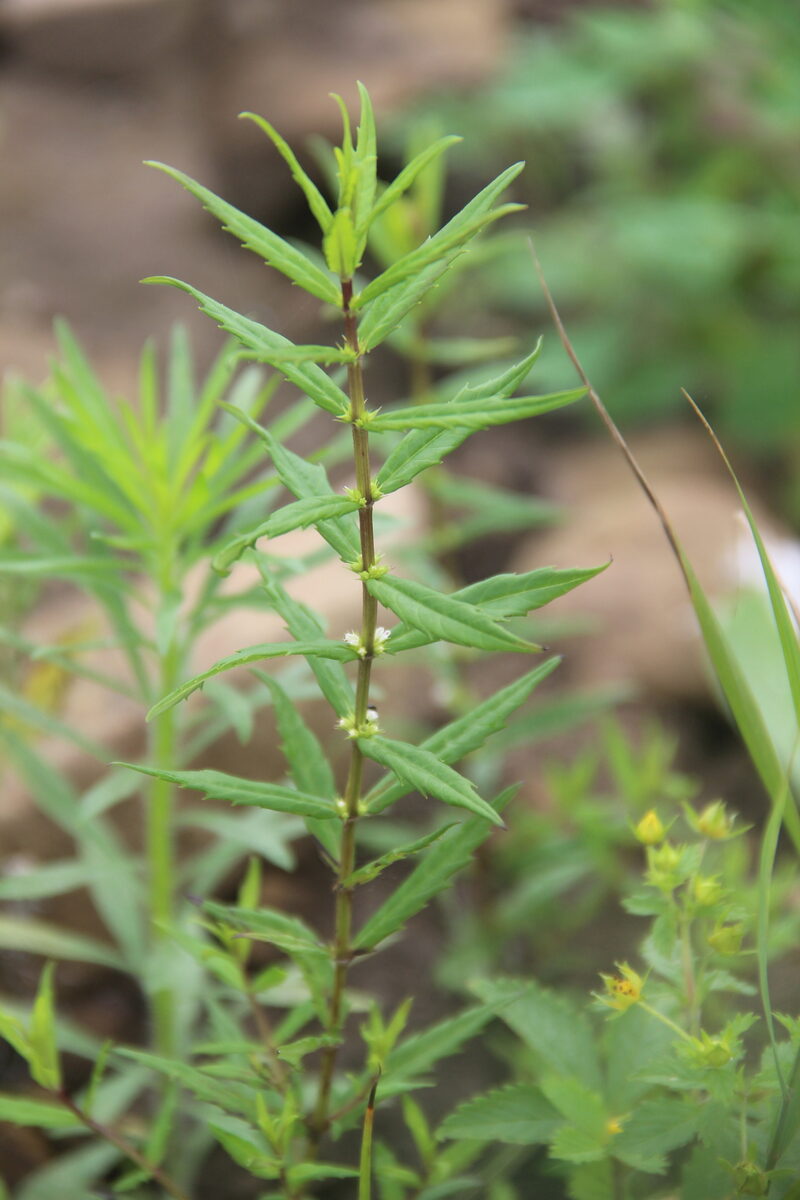
iNaturalist· cc-by-nc
(c) Troos van der Merwe, some rights reserved (CC BY-NC)
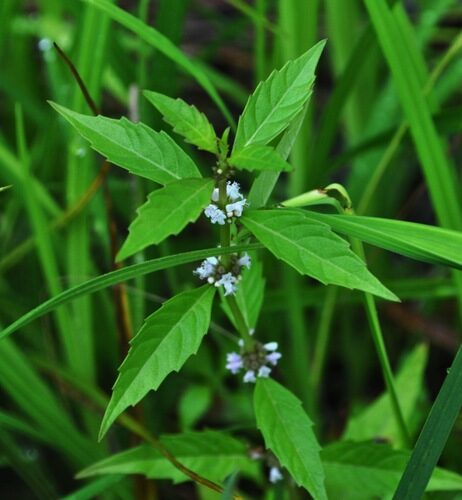
iNaturalist· cc-by-nc
(c) Troos van der Merwe, some rights reserved (CC BY-NC)
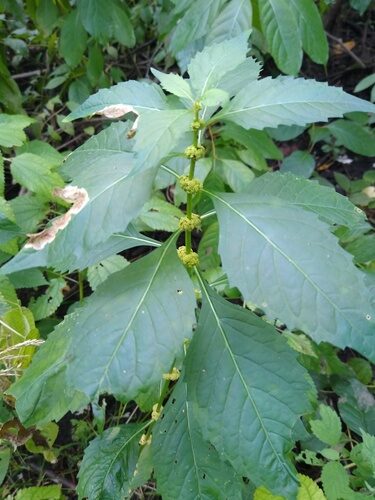
iNaturalist· cc-by-nc
(c) Troos van der Merwe, some rights reserved (CC BY-NC)
Description
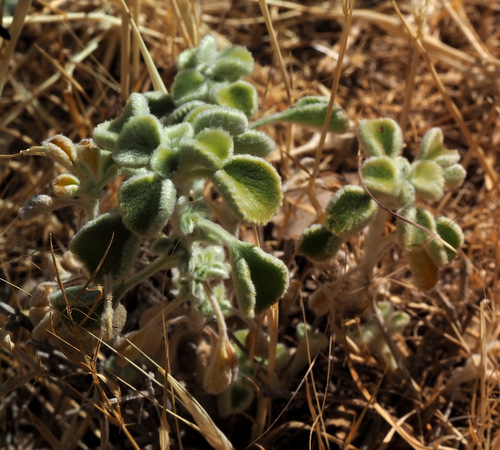
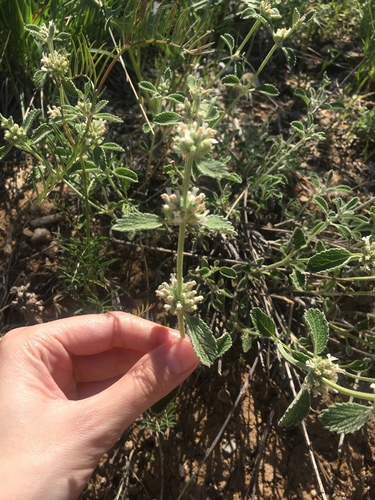
A herb or small shrub. It keeps growing from year to year. It grows 60 cm high. It can lie along the ground. It loses it leaves during the year. The leaves are fleshy and opposite. They are 5-8 cm long by 1-3 cm wide. They are narrowly oval. There are rounded teeth along the edge. The stems are angular. Some of the branches near the base bend down and grow into the ground to form long tubers. They grow from a central point like fingers on a hand. The tubers grow in clusters and are large. They can be 10 cm long and 2 cm wide. The flowers are yellow. They have a faint smell of tar.
Edible Uses
The tubers of Coleus esculentus are often used as a substitute for a potato or sweet potato. Directly after cultivation it can be boiled or roasted. The stems have been used to sweeten gruel (porridge). The leaves can be cooked in sauces as well. C. esculentus has been said to help with digestive problems also used to treat stomach ache and abdominal pain. It has also been used as anthelminthics.
Traditional Uses
The tubers are boiled and often added to other vegetables in soups. The tubers are washed then boiled in their skins. They can be dried and stored. They can also be pickled.
Medicinal Uses
The Livingstone potato is an aromatic herb that affects heart contractions and blood clotting. The plant also has cytotoxic and anti-tumour promoting activity and can be used in the treatment of cancer. A traditional treatment in India, the herb is used to treat a wide range of digestive problems including, wind, bloating and abdominal discomfort. It has an antispasmodic action, making it valuable in the treatment of respiratory complaints, including asthma and bronchitis. It is used as a remedy for headaches and is also said to be anthelmintic. Applied topically, the plant is used to treat skin conditions. The plant contains the substance forskolin. Research has shown that forskolin has various medical properties including: it lowers high blood pressure; it relaxes the smooth muscle; it increases the release of hormones from the thyroid gland, it stimulates digestive secretions; and it reduces pressure within the eye. It has been under scientific investigation as a possible treatment for congestive heart disease, glaucoma and chronic bronchial disease.
Distribution
A tropical plant. It grows naturally in southern tropical Africa. It grows in dry rocky and sandy soils. It grows between 600-1,900 m above sea level. It is hardy and needs frost free conditions. The best conditions for growth are 15-28°C. They need an annual rainfall of 700-1,100 mm. A soil pH of 6.5-7 is suitable. It can grow in arid places.
Where It Grows
Africa, Angola, Botswana, Burkina Faso, Cameroon, Central Africa, Central African Republic, CAR, Chad, Congo, East Africa, Equatorial Guinea, Eswatini, Guinea, Guinée, Malawi, Mali, Mozambique, Namibia, Niger, Nigeria, Senegal, South Africa, Southern Africa, Sudan, Swaziland, Tanzania, Uganda, West Africa, Zambia, Zimbabwe,
Cultivation
Plants are normally grown from cuttings. It can be grown from tubers and small bulbils in the axils.
Propagation
Seed - not normally used for propagation. Cuttings about 10 - 20cm long. They can be difficult to root. Division of sprouting tubers. Bulbils. Produced in the leaf axils, these can be potted up and grown on until large enough to plant out.
Other Uses
The leaves have a strong camphoraceous aroma and are used as a body rub to cleanse and deodorize the skin.
Production
Tubers are harvested 180-200 days after planting. Yields of 2-6 tonnes per hectare have been recorded. A tuber can weigh 1.8 kg.
Other Information
It is a commercially cultivated vegetable. They are sold in local markets. It is a popular food. It is eaten in large amounts.
Notes
There are about 250 Plectranthus species. They are mainly in the tropics. It has good food value.
Nutrition
| Part | Moisture | kJ | kcal | Protein | Vit A | Vit C | Iron | Zinc |
|---|---|---|---|---|---|---|---|---|
| Tuber | 78 | 351 | 84 | 1.9 | — | — | 6.4 | — |
Synonyms
Also Known As
African potato, Batata gitamba, Buye, Daju, Dazo, Emahlo, Ennumbu, Ibonda, Isiqwili, Itapile, Livingstone potato, Makwele e sechuana Mhlata, Mumbu, Mutada, Plectranthus, Pomme de terre d'Afrique, Rizuka, Shezha, Tapole, Tensa, Tsenga, Tsenza, Ugiloa, Ulucanqu, Uluhlaza, Umhlata, Umhlati, Ushizane
References (36)
- Akinola, R., et al, 2020, A Review of Indigenous Food Crops in Africa and the Implications for more Sustainable and Healthy Food Systems. Sustainability 2020, 12, 3493;
- Bull. Misc. Inform. Kew 1894:12. 1894
- Burkill, H. M., 1985, The useful plants of west tropical Africa, Vol. 3. Kew.
- Busson, 1965,
- Dalziel, J. M., 1937, The Useful plants of west tropical Africa. Crown Agents for the Colonies London.
Show all 36 references Hide references
- Facciola, S., 1998, Cornucopia 2: a Source Book of Edible Plants. Kampong Publications, p 125 (As Coleus dazo)
- Fowler, D. G., 2007, Zambian Plants: Their Vernacular Names and Uses. Kew. p 43
- Fox, F. W. & Young, M. E. N., 1982, Food from the Veld. Delta Books. p 245
- Goode, P., 1989, Edible Plants of Uganda. FAO p 26
- Grivetti, L. E., 1980, Agricultural development: present and potential role of edible wild plants. Part 2: Sub-Saharan Africa, Report to the Department of State Agency for International Development. p 73
- Jardin, C., 1970, List of Foods Used In Africa, FAO Nutrition Information Document Series No 2.p 18
- Kays, S. J., and Dias, J. C. S., 1995, Common Names of Commercially Cultivated Vegetables of the World in 15 languages. Economic Botany, Vol. 49, No. 2, pp. 115-152
- Kiple, K.F. & Ornelas, K.C., (eds), 2000, The Cambridge World History of Food. CUP p 1795
- Lautenschläger, T., et al, 2018, First large-scale ethnobotanical survey in the province of Uíge, northern Angola. Journal of Ethnobiology and Ethnomedicine (2018) 14:51
- Lim, T. K., 2015, Edible Medicinal and Non Medicinal Plants. Volume 9, Modified Stems, Roots, Bulbs. Springer p 26, 66
- Long, C., 2005, Swaziland's Flora - siSwati names and Uses http://www.sntc.org.sz/flora/
- Lukhoba, C. W., et al, 2006, Plectranthus: A review of ethnobotanical uses. Journal of Ethnopharmacology 103 (2006) 1–24
- Malaisse, F., 1997, Se nourrir en floret claire africaine. Approche ecologique et nutritionnelle. CTA., p 59 (As Coleus esculentus)
- Malaisse, F., 2010, How to live and survive in Zambezian open forest (Miombo Ecoregion). Les Presses Agronomiques de Gembloux. (As Coleus esculentus)
- Okigbo, B.N., Vegetables in Tropical Africa, in Opena, R.T. & Kyomo, M.L., 1990, Vegetable Research and development in SADCC countries. Asian Vegetable Research and development Centre. Taiwan. p 42
- Peters, C. R., O'Brien, E. M., and Drummond, R.B., 1992, Edible Wild plants of Sub-saharan Africa. Kew. p 118
- Purseglove, J.W., 1968, Tropical Crops Dicotyledons, Longmans. p 636
- Royal Botanic Gardens, Kew (1999). Survey of Economic Plants for Arid and Semi-Arid Lands (SEPASAL) database. Published on the Internet; http://www.rbgkew.org.uk/ceb/sepasal/internet [Accessed 19th April 2011]
- Ruiters-Welcome, A. K., 2019, Food plants of southern Africa. Ph.D. thesis. Univ. of Johannesburg p 70
- Scudder, 1962, 1971,
- Shava, S., 2000, The Use of Indigenous Plants as Food by a Rural Community in the Eastern Cape: an Educational Exploration. Masters Thesis Rhodes University. p 66
- Swaziland's Flora Database http://www.sntc.org.sz/flora
- Tindall, H.D., 1983, Vegetables in the Tropics, Macmillan p 241
- Tredgold, M.H., 1986, Food Plants of Zimbabwe. Mambo Press. p 76
- USDA, ARS, National Genetic Resources Program. Germplasm Resources Information Network - (GRIN). [Online Database] National Germplasm Resources Laboratory, Beltsville, Maryland. Available: www.ars-grin.gov/cgi-bin/npgs/html/econ.pl (10 April 2000)
- van Wyk, B., 2005, Food Plants of the World. An illustrated guide. Timber press. p 302
- van Wyk, Be., & Gericke, N., 2007, People's plants. A Guide to Useful Plants of Southern Africa. Briza. p 94
- van Wyk, B-E., 2011, The potential of South African plants in the development of new food and beverage products. South African Journal of Botany 77 (2011) 857–868
- Welcome, A. K. & Van Wyk, B.-E., 2019, An inventory and analysis of the food plants of southern Africa. South African Journal of Botany 122 (2019) 136–179
- Wiersema, J. H. & Leon, B., 2013, World Economic Plants. A Standard Reference CRC Press. 2nd Ed. p 541
- World Checklist of Useful Plant Species 2020. Royal Botanic Gardens, Kew